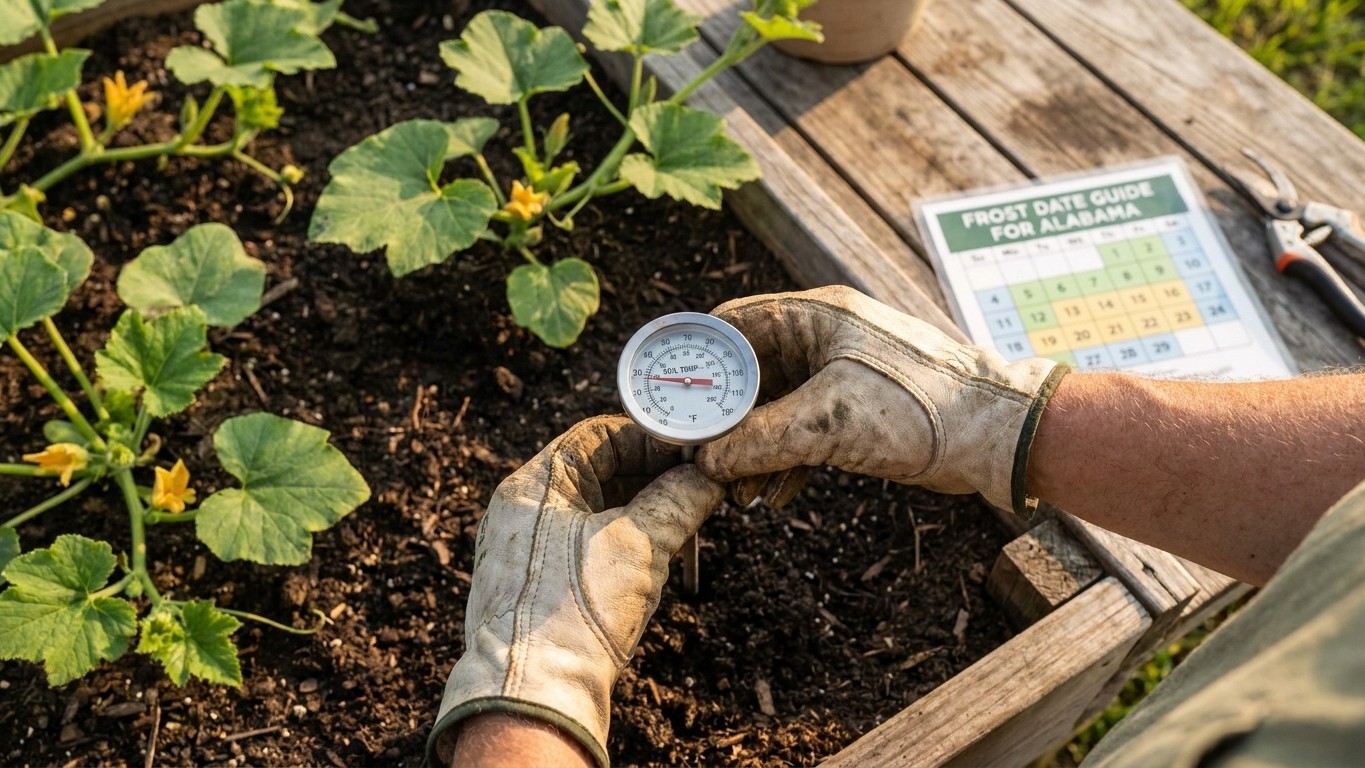

In most of Oklahoma, pumpkin seed goes into the ground once soil temperature hits 65°F, which usually lands in mid-to-late May, well after the last spring frost. From there, count forward: flowers need to open by early-to-late September so the fruit has 45 to 55 days to mature and harden before the first fall frost arrives. Check your county’s frost dates before locking in a date.
The short answer
Start with the end of the season, because that’s what actually limits a pumpkin crop in Oklahoma. The reference weather station used by NOAA’s Climate Normals puts the first fall frost between October 29 and November 8. That’s not a single day, it’s a probability band, and it’s built from an airport station. Gardens in the suburbs and out in the country tend to see that first freeze arrive earlier, sometimes by one to two weeks, and higher ground cools off faster still. So treat November 8 as an optimistic edge, not a promise.
Now work backward. Utah State University Extension’s guidance on pumpkins is specific: fruit needs 45 to 55 days after the flower opens to reach full size and harden its skin, and that clock starts at flowering, not at seeding or transplanting. This distinction matters more than almost anything else on this page, because a gardener who counts 45 days from the day seed went into the ground will plant far too late.
Run the subtraction against both ends of Oklahoma’s frost window and both ends of the maturation window, and you get the real target. Fifty-five days back from October 29 lands on September 4. Forty-five days back from November 8 lands on September 25. That gives a working range: the last pumpkin flowers of the season need to open somewhere between September 4 and September 25 to have a real shot at ripening before frost.
That’s a wide spread, and it’s wide on purpose. If your garden sits in a low spot, near a creek bottom, or outside the reference city entirely, lean toward the earlier end, September 4, and treat it as your real deadline. If your ground is protected, sits in town, and historically frosts late, you have more room to push toward late September. Either way, the fruit needs to be pollinated and setting by then, not just the vine still blooming. A flower that opens after your personal cutoff is not going to finish, no matter how healthy the plant looks.
When to sow here
Sowing dates get confused with frost dates constantly, and it’s worth separating them cleanly, because soil temperature and air temperature don’t move together. The last spring frost at the reference station falls between March 28 and April 10, but that date tells you almost nothing about when the ground is actually warm enough for pumpkin seed. Soil holds cold far longer than air does. In practice, bare Oklahoma garden soil often doesn’t cross the 65°F mark that Utah State University Extension calls for until several weeks after that last-frost window closes, commonly landing in early-to-mid May rather than early April.
- Mark the last spring frost window first. March 28 to April 10 is the reference figure, but don’t sow anywhere near it. This date is a starting point for later calculations, not a sowing date.
- Wait out the soil lag. Air can be frost-free while the top few inches of ground are still cold and slow. Push a soil thermometer two inches down before sowing; don’t guess from the calendar alone.
- Confirm 65°F, not just “warm enough.” This is the actual threshold Utah State University Extension gives for pumpkin seed. Cold, damp soil rots seed before it ever germinates, even weeks after the frost date has passed.
- Use row cover if you want to move earlier. Clear or lightweight row cover over the bed traps solar heat and can buy roughly two weeks on soil warming, letting a gardener sow that much sooner than bare, uncovered ground would allow.
- Set your final sow date by working backward from your flowering deadline. Section one puts the last safe flowering window at September 4 to September 25. Sow early enough, once soil is truly at 65°F, that the vine has the whole growing stretch to reach bloom well ahead of that date, not right up against it.
Nine familiar pumpkin names show up across Oklahoma seed racks and catalogs: Jack O’Lantern, Connecticut Field, Big Max, Cinderella, Howden, Baby Boo, Sugar Pie, Atlantic Giant, and Autumn Gold. None of them come with a published days-to-maturity figure in the sourced data here, so treat seed-packet timing as a separate check rather than folding it into the frost math above.
What goes wrong here
- A late flower that never colors up. This is the most common failure tied directly to Oklahoma’s season length. A bloom that opens after the safe window closes, especially past September 25, doesn’t get its full 45 to 55 days. The fruit stays small, pale, and soft-skinned. The fix is upstream: sow as soon as soil legitimately hits 65°F, and don’t let a slow, cool spring push flowering past that early-to-late-September deadline.
- A fruit caught green by an early freeze. Because the first fall frost at the reference station can arrive as early as October 29, and rural gardens often see it sooner than that, a pumpkin that’s still coloring in late October is at real risk. Watch the forecast closely once you’re past mid-October, and if frost is forecast on a fruit that’s mostly turned but not fully hard, cover the vine overnight with a sheet or blanket rather than betting it survives exposed.
- A vine that collapses before the rind hardens. Squash vine borers, powdery mildew, and heat stress can all take a vine down mid-season, cutting off the plant’s ability to keep feeding sugar into a maturing fruit. A pumpkin still on a dying vine won’t finish hardening. Watching foliage health through August, and keeping the root zone watered during Oklahoma’s hottest stretch, buys the vine the time it needs to carry fruit to harvest.
- Pest pressure compounding a tight season. Squash bugs and cucumber beetles both show up reliably in Oklahoma pumpkin patches and can weaken or kill vines exactly when they need to be finishing fruit. Both pests already have their own dedicated Oklahoma pages on this site covering identification and control, worth checking before assuming a struggling vine is purely a timing problem.
Common questions
Can I still sow pumpkins in June in Oklahoma?
It depends entirely on how close June sowing pushes flowering toward the September deadline. If soil is already at 65°F and the vine can reach bloom well before September 4, an early June sowing can still work. Late June sowing cuts the margin thin and raises real risk against the earlier end of the frost window.
Does the 45 to 55 day figure start when I plant the seed?
No. Utah State University Extension’s maturation window runs from the day the flower opens, not from seeding or transplanting. Counting from seed instead of from flowering is the single most common miscalculation gardeners make with this crop.
How do I know when soil has actually reached 65°F?
A soil thermometer pushed two to three inches into the bed is the only reliable check. Air temperature and calendar dates are poor substitutes, since soil in Oklahoma commonly lags several weeks behind the last spring frost window of March 28 to April 10.
What temperature should I store harvested pumpkins at?
The sourced guidance here doesn’t give a specific storage temperature or humidity figure, only that pumpkins should be kept where they will not freeze. Harvest with the stem attached before frost hits, and hold fruit in a cool, dry, frost-free spot until you’re ready to use it.