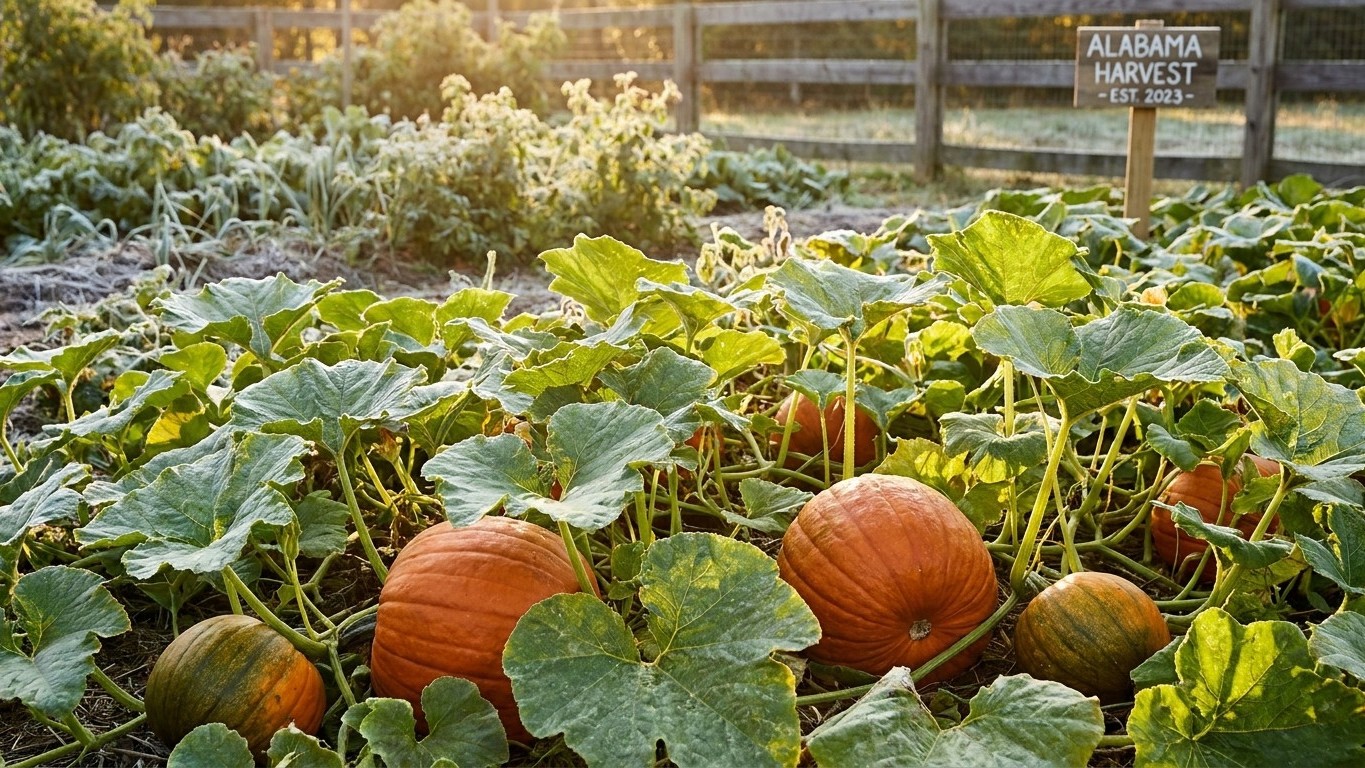

In Saskatchewan, a pumpkin flower needs to open by roughly the last days of July or the first days of August if the fruit behind it is going to Ripen Before Frost. That’s the whole calculation: 45 to 55 days of fruit development after pollination, set against a mean first fall frost of September 18 at the Saskatoon SRC station. Miss that flowering window and the vine runs out of season.
The short answer
The Saskatoon-area mean first fall frost date is September 18, drawn from Environment and Climate Change Canada’s Canadian Climate Normals (1981-2010) for the SASKATOON SRC station. That’s a mean, not a guarantee: in one year out of two, the first real frost lands later than September 18, and in the other half it arrives sooner. Treat it as the midpoint of a range rather than a safe date circled on the calendar.
Work backward from that midpoint using the maturity clock Utah State University Extension gives for pumpkins: 45 to 55 days from the day a flower opens and is pollinated, not from the day the seed went into the soil. Count 45 days back from September 18 and you land near August 4. Count 55 days back and you land near July 25. That puts the latest realistic flowering window somewhere between July 25 and August 4 for a fruit that still has a shot at coloring and hardening before frost.
Because the frost date itself is only an average, that late-July-to-early-August window is the optimistic edge, not the target. A flower that opens right at the deadline is betting on a later-than-average frost. Growers who get female blooms open by the middle of July, well ahead of that window, are the ones who build in the margin the mean date can’t give them on its own.
The outer boundary of the whole season matters here too. From the mean last spring frost on May 18 to the mean first fall frost on September 18 is a stretch of a bit over four months. Germination, vine growth, and the run-up to flowering all have to happen inside that stretch before the 45-to-55-day fruit-fill period even starts. A slow spring, a cool July, or a delayed sowing eats directly into the days a flower has left to open in time, which is exactly why late-flowering vines in Saskatchewan so often end the season with green, unhardened fruit still on them.
When to sow here
Getting a pumpkin to flower on time starts with the ground, not the calendar on the wall.
- Start the clock from the mean last spring frost, May 18, but don’t treat that as the sowing date. It only marks when the air has mostly stopped freezing, not when the soil is warm enough to sprout a seed.
- Check soil temperature directly with a probe thermometer a few inches into the bed rather than guessing from how warm the air feels. Utah State University Extension’s guidance for pumpkins is to wait until the soil reaches 65°F before sowing.
- Expect that 65°F mark to arrive well after the frost date itself passes. Bare soil warms slower than the air above it, and Saskatchewan springs can stay cool and damp for weeks after the last frost has technically come and gone.
- Use a row cover or cold frame over the bed in the days before sowing to trap daytime heat in the ground. This kind of cover can effectively buy around two weeks against the natural wait for soil to warm, which matters when the flowering deadline is already tight.
- Sow directly into the ground where possible rather than starting transplants indoors. Pumpkins are commonly direct-seeded because their roots resent disturbance, and a stalled or shocked transplant only eats further into the days left before the late-July flowering deadline.
- Watch the plants for the first female flowers, identifiable by the small swelling at the base of the bloom, rather than counting a fixed number of days from sowing. It’s the flowering date that has to line up with the season’s end, not the planting date.
What goes wrong here
The short growing season here produces a handful of predictable failures, and most of them trace back to timing rather than bad luck.
- A late flower never colors. A bloom that opens after the early-August cutoff rarely has 45 days left before frost, so the fruit behind it stays green and soft. The remedy is to pinch off new blossoms once the calendar passes that point, so the plant puts its remaining energy into fruit that already has a chance of finishing. Vine stress from squash bugs or cucumber beetles makes this worse by slowing the plant down when it can least afford it.
- A fruit is caught by frost while still unripe. Even a fruit that’s close to done can be knocked back by an early, colder-than-average September. Covering vines with frost cloth or old blankets on nights with a frost forecast can buy a few more days. If frost is unavoidable, harvest the fruit with the stem attached and move it somewhere it will not freeze, which is the extent of the storage guidance Utah State University Extension publishes; it gives no specific temperature or humidity range for keeping pumpkins, only that they need to stay above freezing.
- The vine dies back before the skin hardens. Pest pressure, disease, or simple exhaustion can kill a vine weeks before the fruit’s rind has toughened enough to store or carve. Keeping the vine healthy longer, through early scouting for squash bugs and cucumber beetles and by ensuring the fruit gets full sun rather than sitting shaded under dense foliage, gives the skin more of a chance to finish before the vine gives out.
Common questions
What if my pumpkin flowers don’t open until August?
A flower opening in early August is right at the edge of the 45-to-55-day window measured against the September 18 mean frost. It can still work in a year where frost arrives late, but it’s a gamble rather than a plan. Pinching off any later blooms and focusing the plant’s energy on that fruit gives it the best remaining odds.
Does black plastic mulch help pumpkins ripen faster in Saskatchewan?
Warming the soil earlier in spring helps the bed reach that 65°F sowing threshold sooner, which can shift the whole flowering window earlier in the season. That’s a soil-warming effect at planting time, not a way to speed up the 45-to-55-day maturity clock once a flower has already opened.
Will a light frost kill an unripe pumpkin outright?
Utah State University Extension’s guidance doesn’t publish a specific temperature threshold for frost damage to pumpkin fruit, only that they need to be kept where they will not freeze once harvested. The safest approach is to cover vines and fruit whenever frost is forecast, rather than assuming a first light touch is harmless.
How should I store pumpkins harvested early because of frost?
Harvest with the stem attached and move the fruit somewhere it will not freeze. That’s the full extent of the storage instruction from Utah State University Extension for this crop; no specific temperature, humidity level, or keeping time is published, so treat “won’t freeze” as the working rule rather than assuming a cellar or garage automatically qualifies.