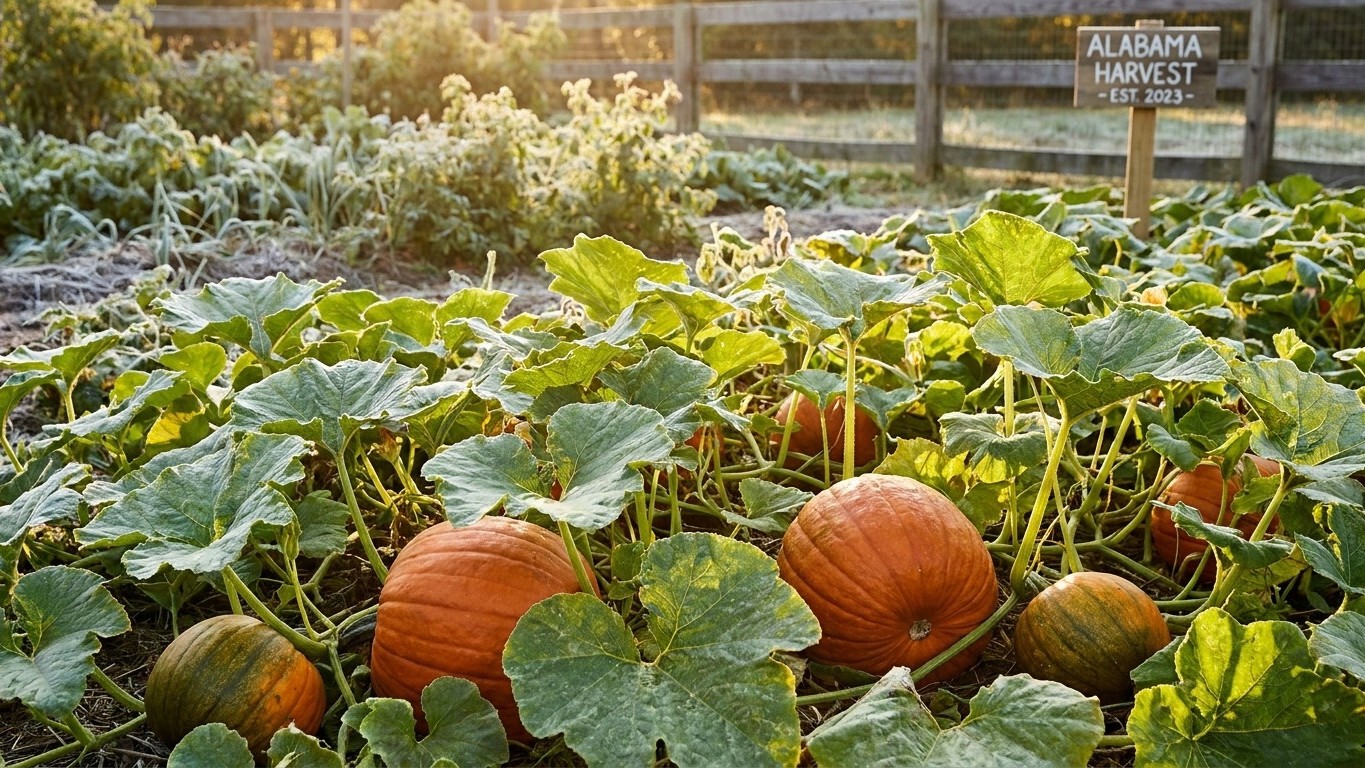

South Carolina’s first fall frost lands somewhere between November 20 and December 5, depending on where in the state you garden. Counting back 45 to 55 days from that window, the last safe window for a pumpkin flower to open falls in early to mid-October. Miss that flowering deadline and the vine runs out of season before the rind can turn from green to orange.
The short answer
Yes, pumpkins can Ripen Before Frost in South Carolina, but the timing only works if the plant flowers early enough. The 45 to 55 day maturation window that Utah State University Extension publishes for pumpkins starts counting from the day a female flower opens and sets fruit, not from the day the seed goes into the ground. That distinction changes everything about how a South Carolina gardener should plan the season.
Subtract 45 to 55 days from the state’s first fall frost window (November 20 to December 5), and the last safe flowering date lands somewhere between roughly the first week of October and the third week of October. Using the earliest frost date paired with the longer 55-day maturation gives the most conservative deadline, closer to early October. Using the latest frost date paired with the shorter 45-day maturation stretches that deadline closer to mid or late October. Either way, this is a window, not a single fixed day, because frost arrival itself is a range and different pumpkin fruits finish at different speeds.
That range matters more in some parts of the state than others. Peninsular Charleston sits milder than the inland weather station data used for statewide averages, so frost there tends to arrive later than the November 20 to December 5 window suggests. Upstate South Carolina runs the opposite direction: both the first fall frost and the last spring frost shift by several weeks compared to the coastal plain, which tightens the whole growing window on both ends. A gardener in Greenville working from the same October flowering deadline as someone in the Lowcountry is working with less margin, not more.
What this means practically is that a pumpkin vine that doesn’t set its first fruit-bearing flower until late October is already behind. Even if that flower opens and pollinates successfully, the fruit may not get its full 45 to 55 days before a hard freeze ends the season. Working backward from frost date to flowering deadline, then backward again to a sowing date, is the only way to know whether a given planting plan actually has enough season left in it.
When to sow here
Sowing date and frost date are not the same threshold, and treating them as interchangeable is the most common planning mistake for Pumpkins in South Carolina. The last spring frost falls between February 28 and March 17, but pumpkin seed needs soil at 65°F to germinate reliably, and soil temperature lags well behind air temperature. Frost can be over for weeks before the ground underneath actually holds steady at 65°F.
- Let the last spring frost window pass. In South Carolina, that’s February 28 to March 17, and it marks when the air stops freezing, not when the soil is ready.
- Check soil temperature directly rather than guessing from the calendar. A soil thermometer inserted a couple of inches deep at planting depth is the only reliable way to confirm the ground has reached 65°F, since soil warms on its own schedule after the frost risk ends.
- Consider row covers if soil is slow to warm. Covering the bed traps heat near the soil surface and can accelerate warming enough to buy roughly two weeks compared to bare, uncovered ground.
- Sow once the soil reads 65°F, whether that happens naturally or with the help of a row cover. Sowing into colder soil doesn’t kill the seed outright, but it stalls germination and pushes the entire season later.
- Work backward from the flowering deadline established earlier. If soil doesn’t reach 65°F until well into spring, and the vine still needs weeks to grow before it flowers, that compresses how much cushion exists before the early October to mid-October flowering cutoff.
The arithmetic here isn’t about a single date so much as a chain of thresholds: last frost passes, soil catches up to 65°F sometime after that, the seed germinates, the vine grows and eventually flowers, and only then does the 45 to 55 day countdown to a ripe pumpkin begin. Each link in that chain eats into the calendar, which is why a sowing date that looks comfortable on paper can still leave a pumpkin flowering too late to finish before frost.
What goes wrong here
Most pumpkin failures in South Carolina trace back to a mismatch between when the flower opens and how much season is left after that. The three most common problems all share the same root cause: not enough runway between flowering and frost.
- A late flower never colors up. If the first fruit-setting flower doesn’t open until well into October, the fruit may still be green or pale when frost arrives, because it never got its full 45 to 55 days. The remedy is upstream: sow early enough, using row covers if soil is slow to warm, so flowering happens with margin to spare rather than right at the deadline.
- A nearly ripe fruit gets caught by the first frost. Even a pumpkin that’s most of the way to orange can be lost if a hard freeze hits before harvest. Utah State University Extension advises harvesting with the stem still attached and moving the fruit somewhere it won’t freeze, rather than leaving it on the vine and gambling on a few extra days of color.
- The vine dies back before the rind hardens. Foliage can collapse from disease pressure or from pest damage well before frost technically arrives, which stops the fruit’s development early regardless of the calendar. Squash bugs and cucumber beetles are common culprits behind that kind of vine decline in South Carolina; the pages on this site covering squash bugs in South Carolina and cucumber beetles in South Carolina go into how to manage both.
Common questions
Can I still plant pumpkins in July in South Carolina?
It depends entirely on whether the vine can reach flowering with enough margin left before the first fall frost (November 20 to December 5). A July sowing can work in some years if soil and growth conditions cooperate, but every week added to sowing time subtracts from the cushion between flowering and frost, so later plantings carry more risk of an unripe fruit at season’s end.
What happens if frost hits before my pumpkins turn orange?
A green pumpkin caught by frost stops developing. Utah State University Extension’s guidance is to harvest before frost arrives whenever possible, cutting the fruit with its stem attached and storing it somewhere it won’t freeze, rather than leaving an unripe pumpkin exposed to the cold.
Does Upstate South Carolina have a shorter pumpkin season than the coast?
Yes. The Upstate’s frost dates run several weeks tighter on both ends compared to the coastal plain, which narrows the window between the last spring frost and the first fall frost. That leaves less total room for soil to warm, vines to grow, and fruit to mature before the season’s edge.
How long can a ripe pumpkin be stored before frost?
The available guidance from Utah State University Extension doesn’t publish a storage temperature or a specific keeping time. It only specifies harvesting before frost and moving fruit somewhere it won’t freeze, so anything beyond that isn’t documented here.