
Sow pumpkin seed once soil hits 65°F, but the number that really controls your calendar is the fall frost date. In South Dakota, first frost typically arrives September 24 to October 4, so every flower on the vine needs to open by early-to-mid August. Miss that window and you’re left with green, unripe fruit when the cold moves in.
The short answer
South Dakota’s first fall frost lands in a window of September 24 to October 4, based on 1991-2020 climate normals. That date is your hard stop. Pumpkins need 45 to 55 days after the flower opens (not after the seed goes in the ground) to reach full color and a hardened rind. Count backward from frost and you get the real deadline that matters: the last date a flower can open and still produce a ripe pumpkin.
Working from the earlier end of the frost window, September 24, and subtracting 55 days lands you around July 31. Working from the later end, October 4, and subtracting 45 days lands you around August 20. That gives a safe flowering window of roughly the end of July through the third week of August, depending on how mild the fall turns out to be. Because frost dates shift from year to year, treat July 31 as your cautious target and August 20 as the outer edge you’re gambling on.
This is where a lot of gardeners get the math wrong. They count 45 to 55 days from the day they drop seed in the soil, not from the day the female flower opens and sets fruit. A pumpkin vine can take six to eight weeks just to start flowering after sowing, so the seeding date and the flowering date are two very different points on the calendar. If you plant late and your vine doesn’t flower until mid-August, you’ve already blown past the safe window even before the fruit starts sizing up.
The practical takeaway: work backward from your county’s expected first frost, not the state average. Airport weather stations, which is where these normals come from, often run one to two weeks behind what a rural garden or a low-lying valley actually experiences. If you garden outside a city center or at higher elevation, assume your first frost could show up before September 24, not after October 4. That shifts your entire flowering deadline earlier and shrinks the margin you thought you had.
When to sow here
Sowing pumpkins isn’t about watching the calendar for the last spring frost and planting the next morning. Soil temperature is the actual trigger, and soil warms up on its own schedule, lagging well behind the air. In South Dakota, the last spring frost falls between April 29 and May 9, but the ground rarely reaches the 65°F mark pumpkins need that early. Cool spring soil holds heat poorly, and it typically takes several extra weeks of warming air and longer daylight before that threshold is reliably crossed, often pushing the real sowing window into late May or even early June.
- Confirm your last frost has passed. April 29 to May 9 is the reference window for South Dakota, but don’t sow the day after. This date only tells you the air is unlikely to freeze, not that the soil is warm enough for seed.
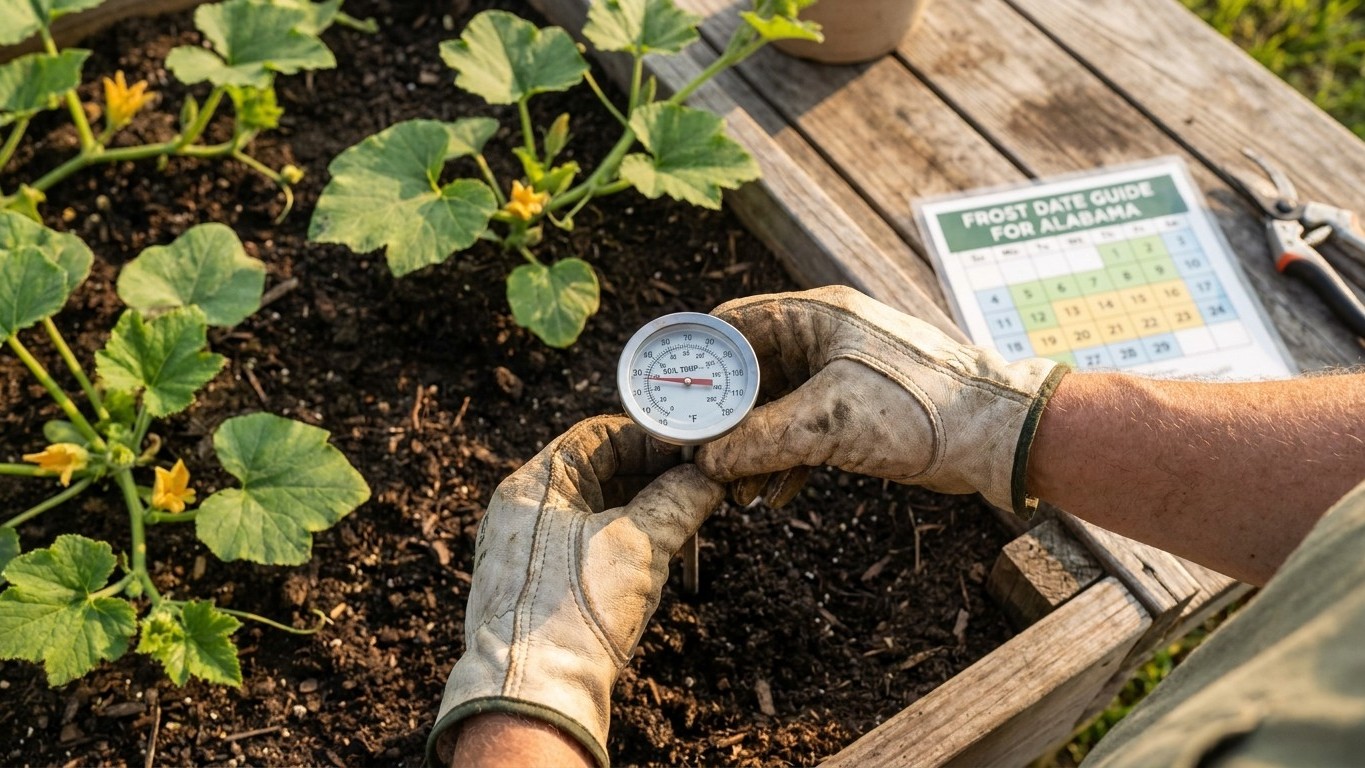
- Check soil temperature directly. A simple soil thermometer pushed a few inches down is the only reliable way to know you’ve hit 65°F. Guessing from air temperature alone leads to seed that rots in cold, damp ground instead of germinating.
- Use row covers to buy roughly two weeks. A lightweight row cover traps heat and can let you sow a bit earlier than bare soil would allow, effectively pulling your calendar forward without risking a cold snap killing young seedlings.
- Target late May into early June for direct sowing. Given the gap between the last frost and 65°F soil, most South Dakota gardens won’t be ready for pumpkin seed until several weeks after that April 29 to May 9 frost date has passed.
- Work backward from your flowering deadline. Whatever sowing date you land on, make sure it leaves enough time for the vine to grow, flower, and still hit that late-July-to-August flowering window described above.
Never treat the last spring frost date and the 65°F soil threshold as the same milestone. They’re weeks apart, and sowing on the frost date instead of the soil-temperature date is one of the most common reasons pumpkin seed fails to come up at all.
What goes wrong here
South Dakota’s compressed growing season leaves little room for delay, and a handful of predictable failures show up every year when the timing slips.
- A late flower that never colors up. If the vine doesn’t set fruit until late August, there simply isn’t enough time left before frost for the pumpkin to finish its 45 to 55 days of ripening. The remedy is sowing as soon as soil hits 65°F rather than waiting for a “safer” week, and choosing a spot with full sun to speed flowering along.
- A fruit caught by frost before the rind hardens. Given the September 24 to October 4 window, any pumpkin still soft-skinned when that first cold night hits is at risk. Harvest with the stem attached before frost arrives rather than betting on a mild fall; a softening rind at harvest is a sign the fruit was cut close to its limit.
- A vine that collapses before the fruit finishes. Powdery mildew, vine borers, or simple exhaustion late in the season can kill foliage that the pumpkin still needs for final sizing and color. Watching vine health through August and addressing stress early (adequate water, not overcrowding plants) keeps the plant productive through the finish line.
- Insect pressure slowing the plant down mid-season. Squash bugs and cucumber beetles are common setbacks that stall growth and delay flowering just enough to push fruit past the safe window. For identification and control specific to this state, see our guides on squash bugs in South Dakota and cucumber beetles in South Dakota.
Common questions
Can I still plant pumpkins in June in South Dakota?
It depends on the variety and how quickly it flowers, but June planting leaves a thin margin. Count 45 to 55 days back from your expected flowering date, then check whether that flower would still have time to ripen before the September 24 to October 4 frost window. Smaller pumpkin types generally flower and mature faster than larger ones, giving late planters slightly better odds.
Does the 45 to 55 day maturity clock start at seeding or at flowering?
Flowering. This is the detail most gardeners miss. Seed to first flower can take six to eight weeks on its own, so a pumpkin sown in early June might not even open its first flower until late July, leaving only the tail end of the safe window before frost.
What happens if frost hits before the pumpkin’s rind hardens?
The published guidance calls for harvesting with the stem attached before frost, and storing where the fruit won’t freeze, though no specific storage temperature or keeping time is given. A frost-touched pumpkin with a soft rind is unlikely to store well regardless of where it’s kept afterward.
Should I trust the state average frost date for my own garden?
Treat it as a reference point, not a guarantee. The September 24 to October 4 window comes from an airport weather station, and rural or low-lying gardens across South Dakota often see frost arrive one to two weeks earlier than that. Checking your own county’s typical pattern gives a more accurate flowering deadline than relying on the state figure alone.