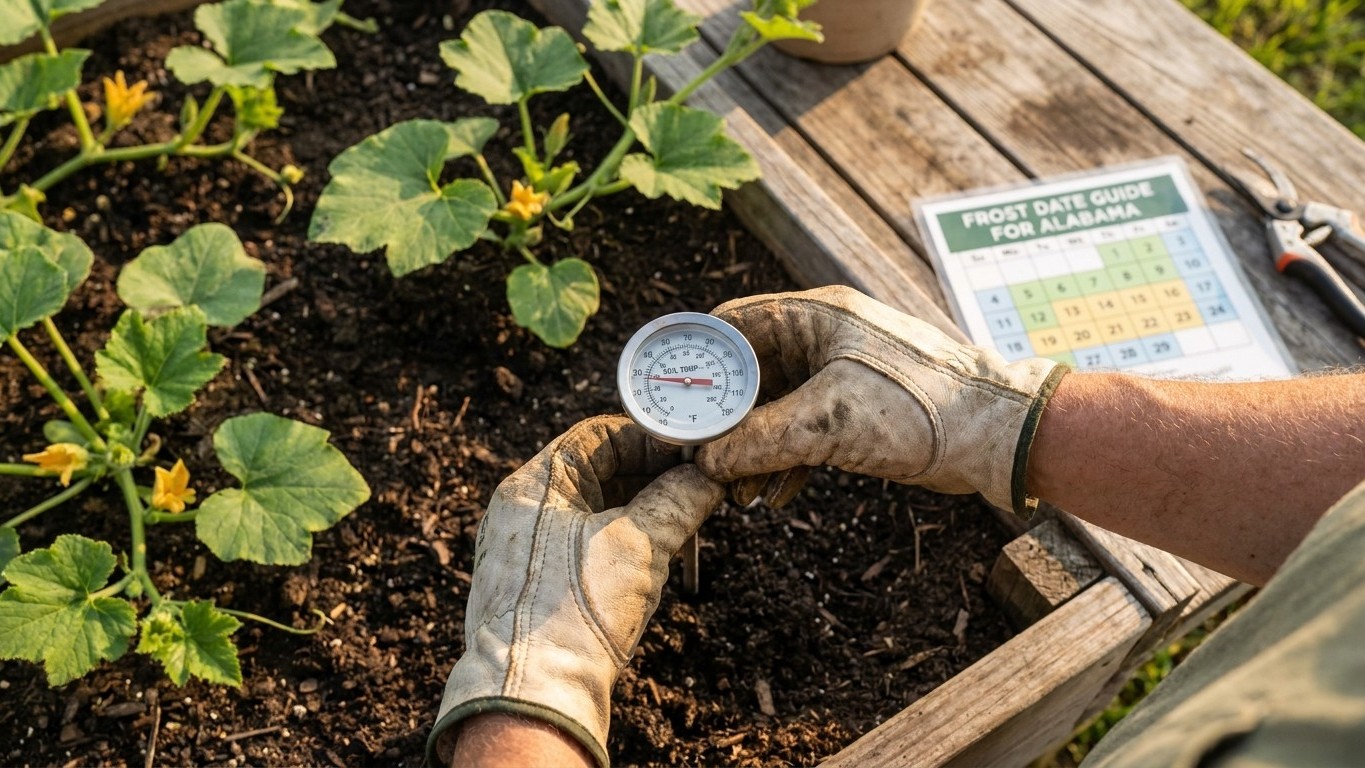

In western Washington, sow pumpkin seed only after soil temperature reaches 65°F, not on the last frost date. That threshold typically arrives in late May to early June along the Puget Sound corridor. Counting forward from there, and working backward from the region’s first fall frost window of November 13 to November 30, gives growers roughly the right timing to get flowers open, and fruit ripened, before the season closes.
The short answer
Start from the end of the season, not the beginning. Western Washington’s first fall frost lands somewhere between November 13 and November 30, based on 1991-2020 NOAA climate normals for the region. That’s the wall every pumpkin vine is racing toward. The question isn’t when you plant seed. It’s when the flower that becomes your pumpkin has to open.
Pumpkins need 45 to 55 days from flowering, not from seeding or transplanting, to reach maturity, according to Utah State University Extension. That gap between flower and ripe fruit is the number that actually governs the calendar here. Subtract it from the earlier, more conservative edge of the frost window, November 13, and the math points to a cutoff of September 19 to September 29 for the last flower that can still turn into a usable pumpkin. Push flowering past late September and you’re gambling on a mild fall, since the window stretches out to November 30 in some years but there’s no guarantee of that.
That gives a working rule: any flower that opens after the last week of September in this climate is running on borrowed time. If frost arrives on the early side of the window, a fruit that set in early October may never finish coloring. If it arrives on the late side, that same fruit might just squeak by. Since nobody knows in advance which end of the window a given year will land on, the safer target is the earlier cutoff, not the later one.
This is why sowing date matters so much in a maritime climate like this one. Western Washington doesn’t get brutal winters, but it also doesn’t get an early, warm spring. Cool, wet soil in April and May holds pumpkin vines back regardless of how mild the air temperature reads on a given afternoon. The frost dates bookend the season; the flowering cutoff is what actually decides whether a plant sown in a given week has any real shot at a ripe fruit.
When to sow here
Soil temperature, not the calendar date of the last frost, is the trigger for sowing pumpkin seed. That distinction matters more in western Washington than almost anywhere else, because the last spring frost here (February 27 to March 18) comes well before the ground is anywhere near warm enough to sprout a pumpkin seed. Treating the frost date as a green light is one of the most common mistakes gardeners make in this region.
- Let the frost window pass, then keep waiting. The last spring frost falls between February 27 and March 18 in western Washington. That date tells you when the air stops freezing. It does not tell you when the soil is ready.
- Wait for the soil, not the air, to warm. Pumpkin seed needs soil at 65°F to germinate reliably. In this maritime climate, soil lags well behind the last frost date, often by two months or more, since low spring light and persistent damp keep garden beds cool long after the air has moderated. Practically, that means most western Washington soil doesn’t reach 65°F until late May or into early June, roughly ten to twelve weeks after the last frost window closes.
- Use row cover to buy time. A floating row cover over the planting area can advance effective soil warming by about two weeks. That shifts a realistic sowing date from early June to roughly the third week of May for gardeners willing to manage the cover.
- Check the soil directly rather than guessing from air temperature. A simple soil thermometer pushed a few inches into the bed removes the guesswork. Air temperature in the 60s doesn’t mean the root zone has caught up yet.
- Count forward against the flowering cutoff. Once seed goes in, it still has to grow to flowering size before the September 19 to September 29 cutoff established above. Sowing in late May to early June leaves a reasonable runway; sowing much later starts eating directly into that margin.
What goes wrong here
The gap between a mild spring frost date and a genuinely warm soil, paired with a fall frost that can arrive as early as mid-November, squeezes the pumpkin season from both ends in this state. Most failures trace back to one of three specific breakdowns.
- A late flower that never colors. When sowing gets pushed into late June or July, either from a cold spring or simple scheduling, the plant’s first flowers may not open until early or mid October. With only 45 to 55 days needed after flowering, that fruit is still green when frost arrives. The remedy is sowing as soon as soil reliably hits 65°F, using row cover to move that date up by roughly two weeks rather than waiting past early June out of caution.
- A fruit caught by frost before it finishes ripening. Even a flower that opens within the safe window can produce a fruit that’s still a few days short of full color when an early frost lands on the November 13 edge of the window instead of the November 30 edge. The remedy is watching the fruit closely as the window approaches and harvesting with the stem attached the moment the rind hardens and color sets, rather than waiting for a “perfect” finish that frost may not allow.
- A vine that dies back before the skin hardens. Western Washington’s wet, cool fall weather can knock foliage down through disease or cold stress before the fruit’s rind has fully cured, even if the fruit itself has changed color. A weakened vine can’t finish hardening the skin, which shortens how well that pumpkin holds up afterward. The remedy is protecting foliage health through the final weeks with attentive watering and airflow, and cutting fruit free with stem intact once the rind resists a fingernail press, storing it, per Utah State University Extension, somewhere it will not freeze.
Vine stress from pests can compound all three problems by weakening plants earlier in the season, which delays flowering and pushes the whole timeline closer to the frost cutoff. Guides specific to squash bugs and cucumber beetles in Washington cover management for those separately.
Common questions
Can I sow pumpkins earlier than 65°F soil in Washington?
Seed sown into colder soil tends to rot or sprout unevenly rather than get ahead of schedule. The 65°F threshold from Utah State University Extension isn’t a suggestion to hurry past; it’s the point below which germination becomes unreliable, regardless of how mild the air feels.
What happens if I sow too late in the season?
A late sowing pushes flowering closer to, or past, the September 19 to September 29 cutoff calculated from the 45 to 55 day maturity window and the earlier edge of the fall frost range. Fruit that sets after that point risks being caught green when frost arrives between November 13 and November 30.
Does this timing apply to eastern Washington too?
No. The frost dates and soil-warming pattern described here reflect the mild, maritime climate west of the Cascades. Eastern Washington’s high desert climate runs on a shorter, differently shaped season, and applying this western window there would be inaccurate.
How do I know my soil has actually reached 65°F?
A soil thermometer inserted a few inches into the planting bed is the direct way to check. Air temperature readings in the 60s don’t reliably mean the soil has caught up, especially in a climate where spring soil lags noticeably behind air temperature.