
Yes, sweet corn ripens reliably across most of Alabama. The state’s frost-free window runs roughly seven months, from mid-March or early April to early-to-mid November, and that’s far more room than sweet corn needs. For a detailed breakdown of the question, see Will Sweet Corn Ripen in Alabama?. The catch isn’t frost. It’s soil temperature, timing between corn types, and the state’s long stretch of 90-degree days. Get those three right and a home garden here can expect full ears well before the first fall freeze.
The short answer
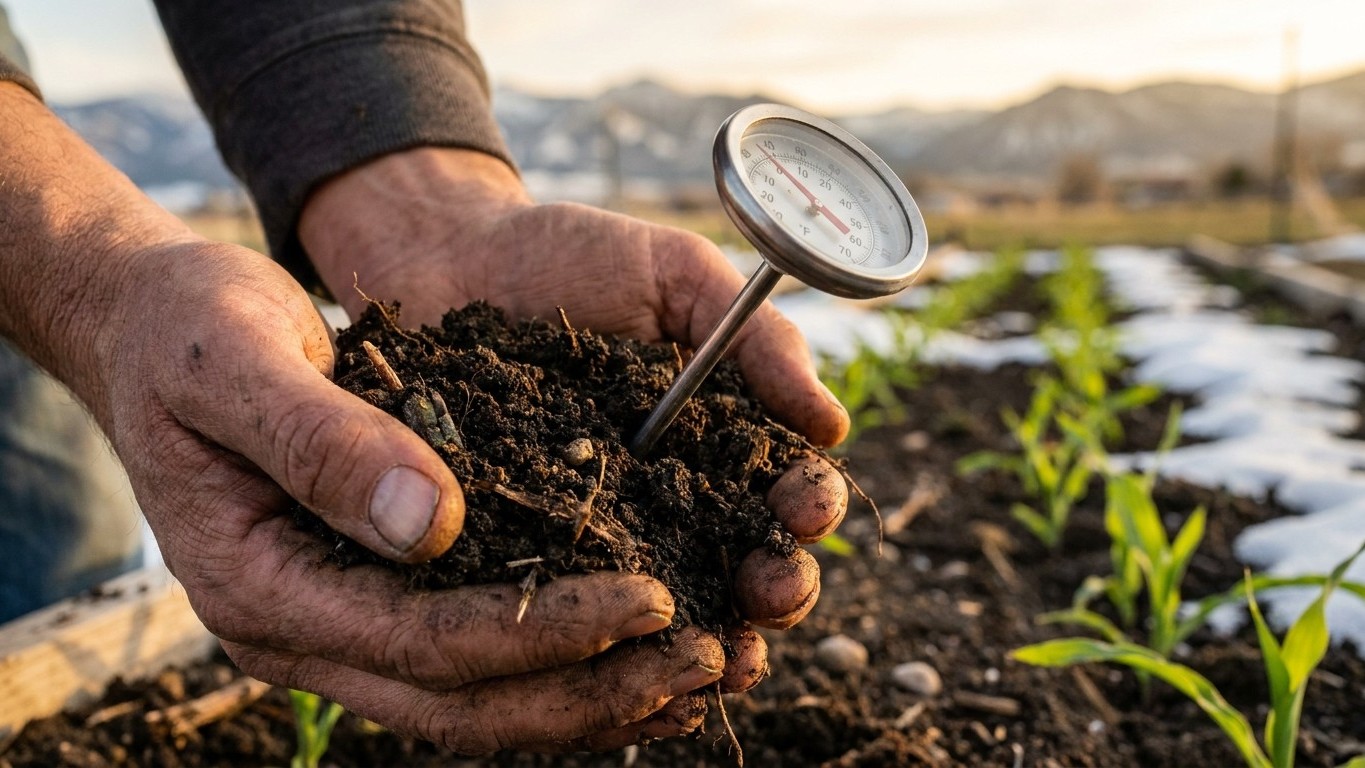
Frost isn’t the number that matters most for sweet corn. Soil temperature is. And here’s the part gardeners miss: soil crosses the 60-degree mark sweet corn needs for solid germination well after the last frost has passed, not on the same week. A patch of ground can be frost-free and still too cold to plant into. The soil has to warm through several weeks of consistent air temperature before it holds steady at 60 degrees F, which typically pushes planting into mid-to-late spring rather than the moment the frost risk clears. For a closer look at When to Sow Sweet Corn in Alabama, it helps to track soil temperature trends alongside the frost dates.
At the reference station used for Alabama climate data, the last spring frost falls between March 19 and April 3. That’s the frost date, not the planting date. Soil warms after that, and a gardener who drops seed the week frost ends is often planting into ground too cold for the seed to push through cleanly. The safer read is to watch the soil itself, not the calendar, and wait until it’s held above 60 degrees F for several days running.
Once that threshold is met, the math works strongly in Alabama’s favor. Sweet corn needs 60 to 90 days from planting to harvest, depending on variety. The first fall frost at the reference station lands between November 2 and November 16. Even with a planting delay into late spring while the soil catches up, there’s a wide cushion between “soil is finally warm enough” and “the first freeze is coming.” A 90-day variety planted in May, for instance, matures long before November arrives. A 60-day variety planted at the same time has even more slack.
The other number worth knowing is heat, not cold. The reference city averages 58.5 days a year at 90 degrees F or hotter. That’s not a frost risk, it’s a summer stress risk: it shapes how much water the crop needs, how much heat stress hits during flowering, and why timing plantings to avoid the very peak of midsummer heat matters more here than avoiding an early frost ever would. Alabama’s growing season isn’t short. It’s hot, and that changes what “goes wrong” from a cold-climate problem into a heat-and-timing problem.
Does a late variety fit here?
Given how wide Alabama’s frost-free window runs, this is one region where the season rarely disqualifies a variety on time alone. Still, it’s worth working through both ends of the range, because the margin shrinks if soil warms late or planting gets pushed back for other reasons.
A 60-day variety
Start with the fastest sweet corn types, maturing in about 60 days from planting. Even in a cautious scenario where soil doesn’t hold steady at 60 degrees F until well into spring, a 60-day variety planted in that window matures with months to spare before the first fall frost between November 2 and 16. This is the safest choice for a gardener who wants an early harvest, wants to plant a second round later in the season, or simply wants the widest possible buffer against any surprise. It also sidesteps more of the hottest 90-degree stretch, since it tassels and fills out earlier in the summer than a slower variety would.
A 90-day variety
Now stretch the clock to a 90-day type, the slow end of the sweet corn range. Counting from a realistic planting date after soil has warmed, 90 days still lands comfortably ahead of the November frost window. Alabama’s growing season is long enough that this variety fits without forcing the calendar. The one thing to weigh isn’t whether it ripens. It’s when its tasseling window falls relative to the stretch of 90-degree days. A 90-day variety planted late enough that its flowering coincides with the hottest weeks of summer can see pollination suffer from heat stress, even though the season itself has plenty of days left on the calendar. So the late variety fits the frost dates easily. It just rewards planting on the early side of the window rather than the late side.
What Goes Wrong here
- Soil sown too cold. The most common misstep is planting the week the frost risk ends instead of waiting for the soil itself to hold above 60 degrees F. Seed dropped into cold ground germinates unevenly or rots before it sprouts. The fix is patience: check soil temperature directly rather than counting days since the last frost, and hold off until it’s been consistently warm for several days.
- A variety pushed too late into summer heat. Alabama’s season is long enough that frost rarely cuts a crop short, but planting a slow variety too late in spring can push its tasseling into the thick of the 90-degree stretch, which the reference data puts at 58.5 days a year. Heat during pollination is the real risk here, not an early freeze. The remedy is planting earlier within the window rather than later, especially for 90-day types.
- Sweetness lost to the neighbor, not the climate. This one has nothing to do with Alabama’s weather. Sweet corn comes in different genetic types (su, se, and sh2), and if two types tassel at the same time near each other, cross-pollination flattens the sweetness of the sh2 and se types. There’s no published safe distance to lean on here. The fix is timing: stagger plantings of different types so they don’t tassel in the same window, and plant each variety in its own block of three or more rows so pollen from within the block, not from a neighboring patch, does the work.
Checking this against your own county
The frost dates above come from a single reference weather station, and gardens away from that station, especially in suburban yards, rural low spots, or anywhere with some elevation, commonly see the last spring frost later and the first fall frost earlier, sometimes by one to two weeks. That shifts the safe planting window in both directions.
Rather than guess, check with the Alabama Cooperative Extension System, at https://www.aces.edu/. County extension offices track local frost patterns, soil conditions, and variety performance specific to your part of the state, and they’re the most reliable way to confirm whether the dates above hold true for your particular garden or need adjusting.
Common questions
How do I know when the soil is actually warm enough to plant?
Check the soil directly with a thermometer rather than counting days from the last frost. Sweet corn needs the soil holding above 60 degrees F, and that threshold typically arrives later than the frost date, not on the same week.
How do I know when an ear is actually ready to pick?
Look for three signs together, not just one: the silks have turned dry and brown, the husk is still moist and green, and a punctured kernel releases milky juice rather than clear liquid or a dry, doughy interior.
Is the 60-to-90-day figure the same as the time from silk to harvest?
No, and mixing these up causes confusion. The 60-to-90-day range counts from planting to maturity. A separate, shorter window of roughly 17 to 24 days runs from silk emergence to harvest, and that’s the number to watch once tassels appear, not the planting-to-harvest figure.
Can I grow two different sweet corn varieties in the same garden?
Yes, as long as they don’t tassel at the same time. Stagger the planting dates so flowering windows don’t overlap, and keep each variety in its own block of three or more rows so pollination stays within the block.