
Will Sweet Corn Ripen in Hawaii? Yes, it does, and it does so on a completely different clock than nearly everywhere else in the country. There’s no last frost date to circle on the calendar, no first fall frost to race against before harvest. The lowland tropics simply don’t freeze. What actually decides whether an ear fills out sweet and full here has almost nothing to do with cold, and everything to do with heat, rain, and where on the island a garden sits.
The short answer
Soil temperature is usually the number mainland gardeners wait on every spring, and it typically shows up weeks after the last frost has passed. In Hawaii, that sequence doesn’t really apply. NOAA’s 1991-2020 climate normals for station USW00022521 flag every freeze percentile as not-computable, and the annual count of days at or below 32 F sits at zero. In plain terms, the statisticians couldn’t calculate a frost date because the event they were measuring almost never happens where people garden. Frost belongs to the summits of Mauna Kea, Mauna Loa, and Haleakala, not to backyard plots.
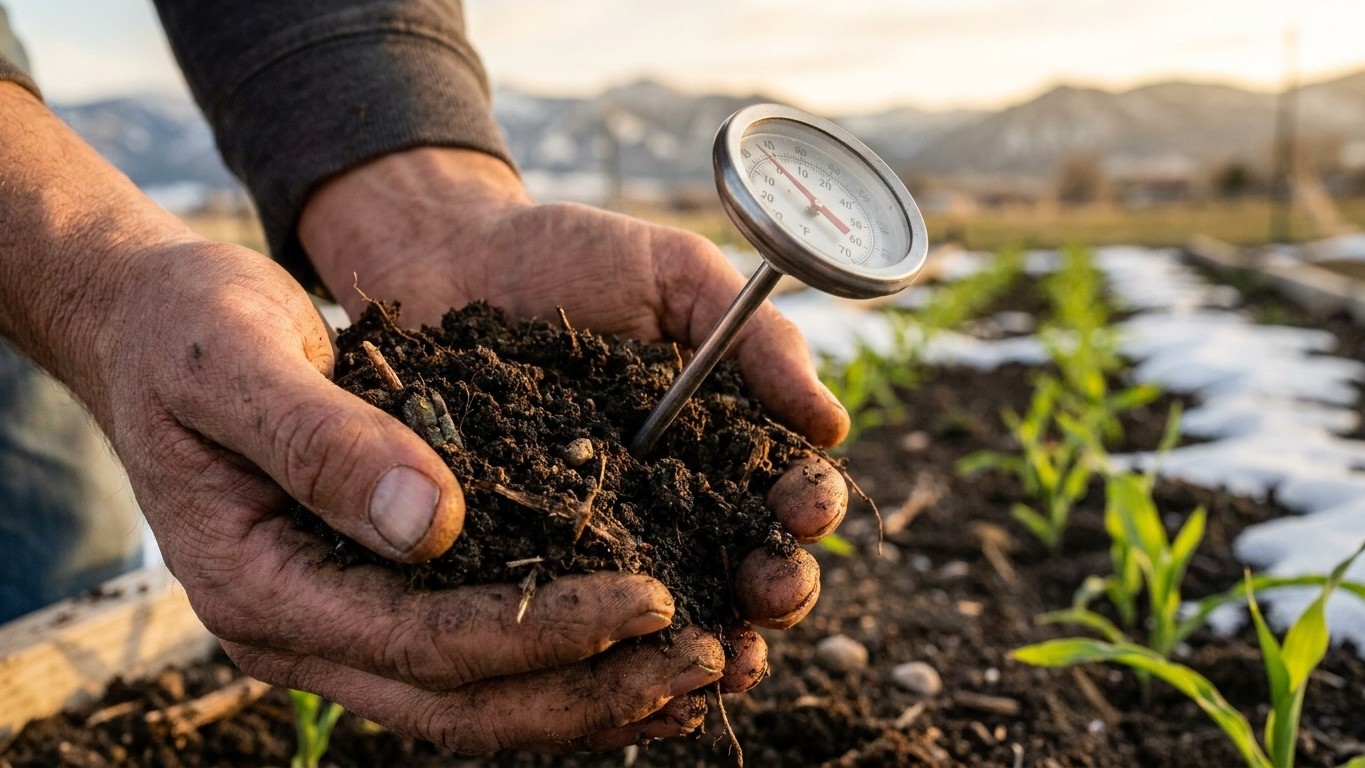
Without a cold season pulling ground temperatures down, soil in Hawaii’s inhabited lowlands sits above the 60 F threshold sweet corn needs for germination for most of the year. That’s a reasonable inference from the absence of any freeze record, not a separate measurement, but it lines up with what any Hawaii gardener already knows: the ground stays warm here in a way it never does in a temperate state.
The 60-to-90-day window that sweet corn needs from planting to harvest also behaves differently once frost drops out of the equation. On the mainland, that window has to close before the first fall frost arrives, or the crop simply runs out of season. Hawaii has no such deadline. The clock isn’t capped by autumn cold, so on paper, almost any planting date should have time to reach maturity.
What replaces frost as the real constraint is heat load. The Honolulu reference station averages 18.7 days a year at 90 F or above, and that number matters more to a corn crop here than any frost date ever could. Days that hot push water demand up and can stress pollen and silk right when a plant needs both to function cleanly. Add to that the fact that growing conditions in Hawaii swing hard with elevation and with windward versus leeward exposure, and rainfall becomes as important as temperature in deciding when to Sow Sweet Corn in Hawaii. A coastal leeward garden in Kona and an upcountry plot in Kula are, climate-wise, almost different states. Sweet corn will ripen in either one, but the calendar that gets it there looks nothing alike.
Does a late variety fit here?
A 60-day variety
A quick sweet corn type built to finish in around 60 days has an easy time in lowland Hawaii. With no fall frost to beat, there’s no deadline forcing the harvest to land by a certain week, so a fast variety simply gives a grower more flexibility in choosing when to plant and when to expect the ears. The main planning question isn’t whether it fits the season. It’s whether the 60-day window happens to fall across the driest, mildest stretch available at that particular site, since even a short-season crop still needs its pollination days to avoid the worst of the heat load.
A 90-day one
A slower, 90-day type also fits in Hawaii, and that’s a real difference from mainland gardens where a late variety can simply run out of time before frost. Here, nothing shuts the door on a long-season crop the way frost does elsewhere. That said, “fits” doesn’t mean “identical to the seed packet.” At higher elevation, cooler night temperatures slow corn’s development, and a 90-day variety can easily stretch past its nominal maturity date in practice. On windward coasts, a long wet stretch can waterlog soil and delay the fieldwork that keeps a long-season crop on schedule, even though the crop itself is never at risk from cold. The late variety does fit in Hawaii, plainly, but a grower planting one should expect to track actual plant development rather than trust the number on the packet, and should time the planting to keep tasseling out of the hottest, wettest weeks rather than out of frost’s way.
What goes wrong here
- Soil sown too cold. Even without a frost season, ground temperature can dip below the 60 F threshold sweet corn needs, particularly at higher elevation sites like upcountry gardens where cooler nights bring soil temperatures down for weeks at a time. Seed sown into cold, wet ground rots before it germinates. The fix is simple: check the actual soil temperature at planting depth before sowing, rather than assuming a tropical location guarantees warm ground year-round.
- A variety too late for the season it was planted into. This isn’t a frost problem in Hawaii, since no autumn cutoff exists, but a rainfall problem. Planting a long-season variety right as a wet stretch sets in on a windward site can mean saturated soil, stalled growth, and pollination pushed into the hottest days of the year. The remedy is matching variety length to the rainfall pattern of that specific coastline, not to a generic season length.
- Sweetness lost for reasons that have nothing to do with climate. If two different types of sweet corn, say a standard sugary variety and a supersweet one, tassel at the same time near each other, cross-pollination turns sweet kernels starchy and tough. No isolation distance is published for this; what matters is timing. The types must not tassel at the same time, and each planting should be grown in blocks of three or more rows rather than thin single rows, since that shape gives pollen a much better chance of reaching every ear cleanly.
Checking this against your own county
Everything above comes from statewide station data and general sweet corn biology, not from a single garden’s conditions. Hawaii’s real variation happens block by block: a plot two miles up the mountain from another can run several degrees cooler, and a windward valley can see rain totals a leeward neighborhood never gets close to. Before committing to a planting date or a variety length, it’s worth checking those specifics with the University of Hawaii CTAHR Cooperative Extension, which covers county-level growing conditions across the islands. Their staff can speak to how a particular elevation band or coastline handles a 90-day crop compared to a 60-day one, and can flag whether the coming weeks look like a good stretch for tasseling or a risky one.
Common questions
Does Hawaii have a frost date gardeners should plan around?
No. NOAA’s climate normals for the reference station show zero days a year at or below 32 F, with every freeze percentile flagged as not-computable. Frost occurs only on the high summits, never in gardened areas.
Can sweet corn be grown at higher elevation in Hawaii?
Yes, but growth slows in the cooler night temperatures found upcountry, so a variety can take longer than its stated maturity to actually finish.
What’s the biggest risk to sweet corn quality in Hawaii?
Two things: heat stress during pollination on the hottest days, and cross-pollination between different sweet corn types tasseling at the same time, which turns sweet kernels starchy.
Do I need to test my soil before planting sweet corn here?
It’s worth checking, especially at higher elevation. Sweet corn needs soil above 60 F to germinate well, and cooler upcountry ground can sit below that mark during parts of the year even though frost never touches it.