
In most years, sweet corn does ripen in North Dakota, but only if the planting date and the variety both respect a calendar that runs later than most gardeners expect. Soil takes weeks after the last frost to warm enough for corn seed to germinate, and that delay eats into a season that’s already short. A quick-maturing variety clears the window with room to spare. A slow one is gambling against both ends of the growing year.
The short answer
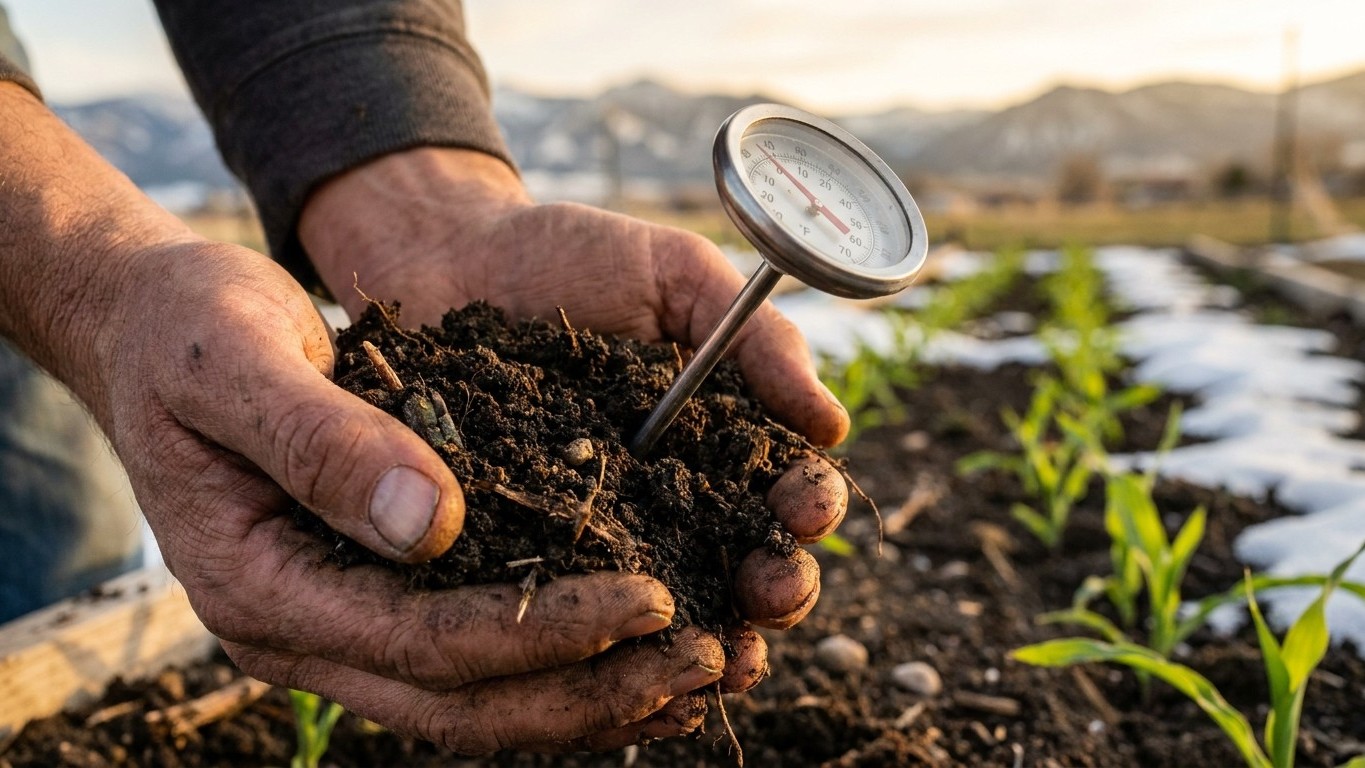
Start with the dirt, not the sky. NOAA’s climate normals for the Fargo reference station put the last spring frost between May 4 and May 15. That date tells you when frost risk drops, but it tells you almost nothing about When to Sow Sweet Corn in North Dakota. Corn seed needs soil consistently above 60°F to germinate, and that threshold shows up well after the frost has cleared, often after several more weeks of sun have had time to bake through the top few inches of ground. Plant on the strength of the frost date alone and the seed sits in cold, damp soil. It rots before it sprouts, or it comes up so weak and uneven that half the stand never catches up.
That lag shrinks the growing season from the front end before a single leaf appears. On the back end, the first fall frost at the same reference station normally arrives between September 25 and October 5. Subtract a planting date pushed well into late spring by the 60°F soil requirement, and the number of usable days between planting and frost is noticeably smaller than the raw span between the two frost dates would suggest.
Summer heat helps make up some of that lost time. The reference station averages 11.7 days a year at 90°F or hotter, which is enough heat load to push corn through its growth stages at a decent clip once it’s actually up and growing. That’s the piece working in the gardener’s favor here: once soil warms and the seed germinates, the plant doesn’t crawl through summer, it moves.
Put the two ends together and Will Sweet Corn Ripen in North Dakota? holds true for a 60-to-90-day variety, but the margin depends heavily on which end of that range the variety falls on. A crop that needs 60 days from planting to maturity clears the season with weeks to spare in nearly any year. A crop pushing toward 90 days is asking the calendar for almost everything it has to give, and a late spring or an early frost, both of which happen here, can close that gap fast.
Does a late variety fit here?
The 60-to-90-day maturity window that Utah State University Extension gives for sweet corn only tells you whether a variety fits a season, given when it goes in the ground and when frost is expected to end things. Applied to this region’s numbers, the two ends of that range land in very different places.
A 60-day variety
A fast variety planted once soil has cleared 60°F, likely later in spring here than the frost date alone would suggest, still has a wide cushion before the September 25 to October 5 frost window closes. Even accounting for a soil warm-up that drags into late spring, 60 days from planting lands comfortably in mid-to-late summer, weeks ahead of the first frost risk. This is the safer bet for anyone gardening outside a warm microclimate, and it’s the maturity range worth favoring if only one variety is going in the ground this year.
A 90-day one
A 90-day variety needs almost the entire span between a delayed planting date and the earliest fall frost risk, with little room left for a cool spring that keeps soil below 60°F longer than usual, or a frost that arrives on the early side of the September 25 to October 5 window. Add in the caution that outlying gardens away from the reference station often see frost arrive one to two weeks earlier than the airport figures suggest, and the math gets uncomfortable. A 90-day sweet corn does not reliably fit this territory’s season. It can work in a warm year with an early, lucky planting, but it isn’t a dependable choice, and it shouldn’t be the only variety a gardener here plants.
What goes wrong here
- Soil sown too cold. Seed goes in on the strength of the frost date instead of a soil thermometer, and it sits in ground still well under 60°F. The fix is simple: check soil temperature directly, ideally over several consecutive mornings, and hold off until it’s reliably above that mark rather than planting by the calendar.
- A variety too late for the season. A 90-day type is planted expecting it to behave like it would in a longer growing region, and it runs out of season before the ears fill out, or it finishes right as an early frost damages the crop. The remedy is choosing toward the shorter end of the 60-to-90-day range for this territory, and treating anything near 90 days as a risk rather than a default.
- Sweetness lost to timing, not weather. This one has nothing to do with climate. Standard (su), sugary-enhanced (se), and supersweet (sh2) types cross-pollinate if they tassel at the same time, and the supersweet ears end up starchy and disappointing instead of sweet. The fix is to keep types separated by planting date so they don’t tassel together, and to plant each type in its own block of three or more rows rather than a single thin row, which also improves pollination generally.
Checking this against your own county
Every figure above comes from a single reference weather station, and NOAA itself notes that gardens away from an airport, especially in low-lying or rural spots, commonly see the last spring frost later and the first fall frost earlier than the station data shows, sometimes by one to two weeks or more at elevation. That’s enough to turn a workable 90-day variety into a losing bet, or to push a safe 60-day planting date later than it needs to be.
Before committing a season to a particular variety, check current frost and soil guidance with North Dakota State University Extension, which tracks conditions at the county level rather than a single airport station. Their sweet corn and vegetable planting guidance can be found through the NDSU Extension office serving your county.
Common questions
Can I plant sweet corn before the last frost date in North Dakota?
No. Corn seed needs soil above 60°F, a threshold that arrives after the frost date, not on it. Planting earlier risks seed rot in cold, wet soil.
Is a 90-day sweet corn variety ever a safe choice here?
It can work in an unusually warm year with an early planting, but it leaves almost no margin for a late spring or early fall frost, both common in this region. A 60-day variety is the more dependable choice.
Why did my supersweet corn taste starchy this year?
It likely tasseled at the same time as a standard or sugary-enhanced type nearby. The fix is timing plantings so different types don’t tassel together, not distance alone.
How do I know if an ear is actually ready to pick?
Look for all three signs together: silks that have turned dry and brown, husks that are still moist and green, and milky (not clear or thick) juice from a punctured kernel. One sign alone isn’t a reliable test.