
Will Sweet Corn Ripen in Quebec? Sweet corn can ripen in Quebec, but only if the calendar is read correctly. The soil has to sit above 60°F before a seed will germinate reliably, and that day arrives well after the last spring frost. Once planted, sweet corn needs 60 to 90 days to finish before the first fall frost shuts the season down. Weigh those numbers against Quebec’s average dates and a 60-day variety has real room to spare; a 90-day one is cutting it close.
The short answer
Start with the date most gardeners fixate on: the average last spring frost at the Montreal/St-Hubert reference station lands on May 6. That’s a mean drawn from three decades of data, not a promise. In one year out of two, frost actually falls later than that date, sometimes considerably later. So treat May 6 as the midpoint of a window, not a green light — see When to Sow Sweet Corn in Quebec for how to pin down the actual planting date.
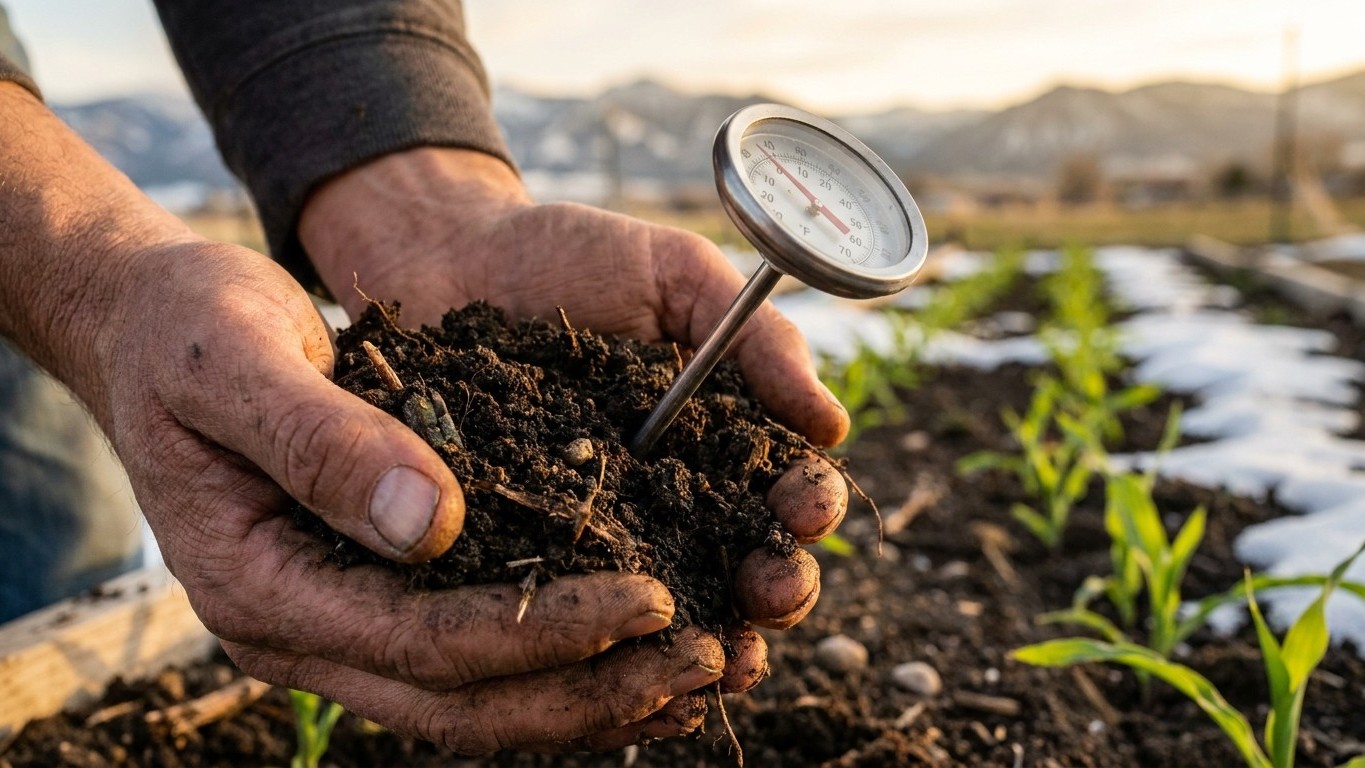
Air temperature and soil temperature are not the same clock. Ground warms behind the air, sometimes by several weeks, especially in a spring with cool nights or heavy cloud cover. A calendar can say the frost risk has passed while the soil a few inches down is still too cold for a corn seed to do anything but sit and rot. Sweet corn needs that soil above 60°F before it’s worth planting, and in this territory that threshold typically isn’t reached until well into the back half of May, sometimes not until early June, depending on how the spring behaves.
On the other end of the season, the average first fall frost at the same reference station falls on October 5. Same caution applies here as with the spring date: this is a mean, so in half of all years the first frost shows up earlier. That’s the second squeeze on the growing window.
Between a soil that warms late and a fall frost that can arrive ahead of schedule, the usable stretch for sweet corn in an average year still comes out to something in the neighborhood of four months. That’s workable for the 60-to-90-day range the crop needs, but the margin isn’t identical at both ends of that range. One more detail worth knowing: this reference station records zero days a year at 90°F or above. Quebec’s summers don’t hand the crop the kind of scorching heat load that pushes corn through its stages fast. Growth here depends on stringing together a long enough stretch of moderate warmth, not on a handful of blazing days, which is exactly why the width of the window matters more than its peak temperature.
Does a late variety fit here?
A 60-day variety
Run the numbers on the fast end of the range. Even in a slow spring where the soil doesn’t clear 60°F until well into June, a 60-day variety planted at that point would be ready to harvest by mid-August. That leaves more than six weeks of cushion before the October 5 average fall frost, and that cushion absorbs the uncertainty built into both mean dates. A short-season type is the comfortable choice for this climate, with margin left over even in a year that runs cooler or later than average.
A 90-day one
Now run the same math on the slow end. Plant in mid-June because that’s when the soil finally cooperates, and 90 days out lands the harvest around mid-September. That’s only about three weeks ahead of the October 5 mean frost date. Since that date is an average and not a floor, half of all years bring frost sooner, and a spring that runs late on top of that eats into the little buffer left. A 90-day variety does not comfortably fit this territory’s window. It might finish in a favorable year with an early soil warm-up and a late fall frost, but it’s not a bet a grower should plan around. The season here is built for varieties that finish faster, not for pushing the outer edge of the maturity range.
What goes wrong here
- Sowing before the soil is actually warm. The single biggest mistake in this climate is trusting the frost date instead of the soil. Seed planted into ground still under 60°F sits, rots, or germinates so unevenly that the stand never recovers. The remedy is simple and unglamorous: check the actual soil temperature before planting, not the date on a calendar, and wait until it holds above 60°F.
- Choosing a variety too late for the season. A 90-day type asks for more warm weeks than this climate reliably offers, especially once a late spring and an early fall frost stack against each other. The remedy is picking a variety toward the shorter end of the 60-to-90-day range so there’s slack left for a bad year instead of a perfect one.
- Losing sweetness to a neighboring planting, which has nothing to do with weather. Sweet corn comes in different genetic types, and if two of them tassel at the same time nearby, cross-pollination dulls the sweetness the second type was bred for. This is a timing and layout problem, not a climate one. The fix is to stagger plantings so the types don’t shed pollen together, or to plant only one type in a given season, and to grow corn in blocks of three or more rows rather than a single thin row, since that shape improves how well each planting pollinates itself.
Checking this against your own county
The dates and averages here come from a single reference station, and Quebec is not one climate. A garden in a river valley, on high ground, or well north of Montreal can run days or weeks behind the figures used above, which shifts both the safe planting date and how tight the fall margin really is. Before committing to a variety, check conditions specific to your own area with Quebec’s ministry of agriculture, MAPAQ, at mapaq.gouv.qc.ca. Regional agronomy guidance there can confirm whether local soil warms on the same schedule as the reference station, and whether the fall frost risk in your particular area runs earlier or later than the average used in this piece.
Common questions
Can I plant sweet corn as soon as the last frost passes?
No. The last frost date only tells you the air has stopped freezing. The soil lags behind it, often by weeks, and sweet corn seed needs that soil above 60°F to germinate reliably. Planting on the frost date alone risks seed sitting in cold, wet ground.
Will a 90-day sweet corn variety mature before Quebec’s first fall frost?
It’s tight. In an average year the math works, but the October 5 first-frost date is a mean, meaning frost arrives earlier in half of all years. A 90-day type leaves little room for error and isn’t the safer pick for this climate.
How do I know when the corn is actually ripe?
Look for three signs together, not just one: silks that have turned dry and brown, husks that are still moist and green, and milky (not clear or doughy) juice from a punctured kernel. Separately, once silks first appear, kernels generally take about 17 to 24 days to fill in, which is useful for timing a check but isn’t a substitute for the physical test.
Do different sweet corn types need to be kept apart to stay sweet?
Yes, but the issue is timing, not distance. If different sweet corn types tassel at the same time nearby, cross-pollination flattens the sweetness of the more delicate types. Stagger plantings so tasseling doesn’t overlap, or stick to one type per season, and grow in blocks of rows rather than a single line for better pollination overall.