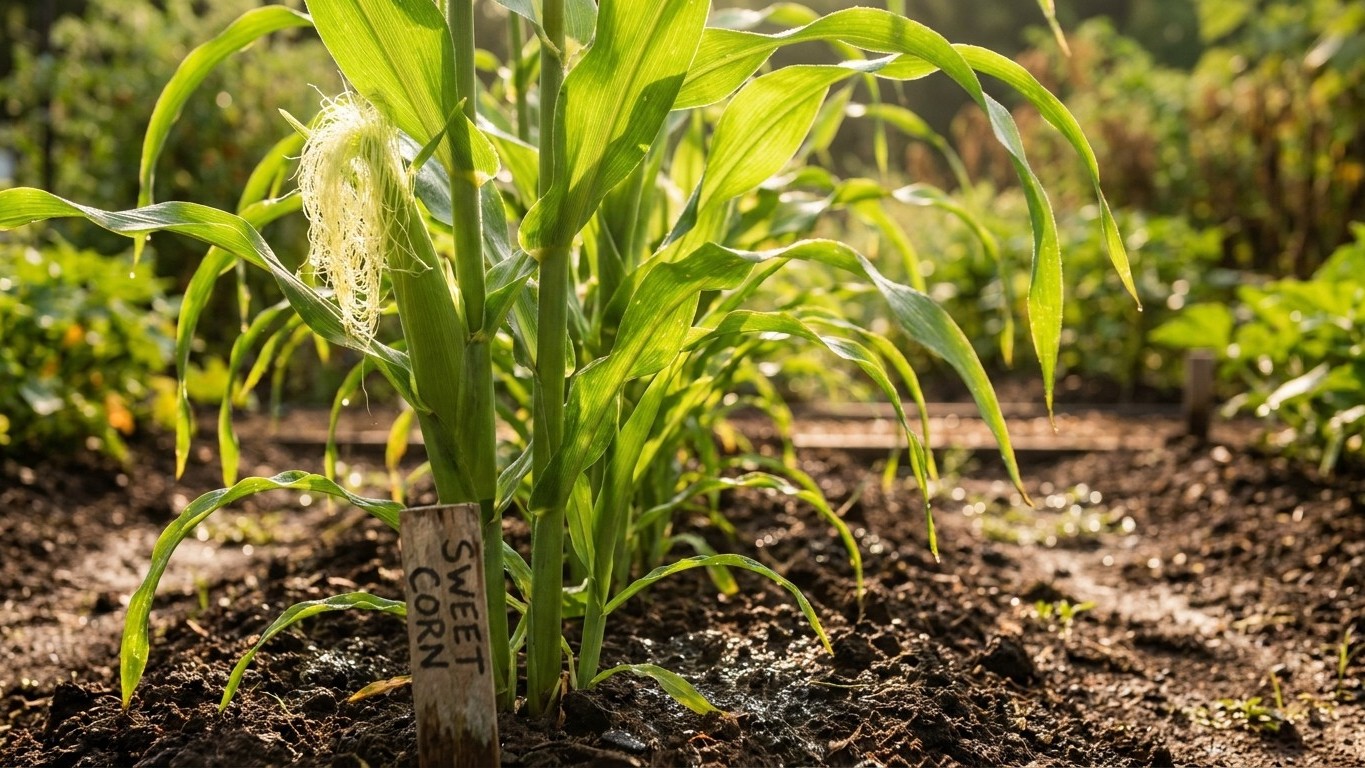

Sweet corn ripens in Nebraska in a typical year, but the calendar math is tighter than most gardeners expect. Between soil that warms slowly in spring and a fall frost that can arrive by mid-October, a 60-day variety is a safe bet almost everywhere in the state, while a 90-day type leaves much less room for error and depends heavily on where your garden sits relative to the reference weather station.
The short answer
Soil temperature is the real starting gun for sweet corn, not the last frost date. At the reference weather station, the last spring frost falls between April 12 and April 23. But that date only tells you when the air stops freezing at night, it says nothing about the ground. Soil below a garden bed warms on its own schedule, driven by sun exposure, soil type, and how much mulch or leftover crop debris sits on top of it. Sweet corn needs soil above 60 F before the seed will germinate reliably, and that threshold is reached well after the last frost date, sometimes by two to three weeks or more depending on the spring you get.
That gap matters because every week you wait for warm soil is a week subtracted from the growing season on the other end. The first fall frost at the reference station arrives between October 15 and October 26. Count the days between the last spring frost and the first fall frost and you get somewhere between 176 and 197 days of frost-free time on paper. That sounds generous. In practice, once you push the effective planting date back to account for the soil-warming lag, the usable window shrinks to something closer to 150 to 165 days for most gardens, still comfortable, but no longer the full six-month span the raw frost dates suggest.
Sweet corn needs 60 to 90 days from planting to harvest, so even the shrunken window covers the full range with margin to spare. That’s the reassuring part. The less reassuring part is Nebraska’s summer heat load: the reference station averages 28.1 days a year at 90 F or hotter. That heat doesn’t shorten the calendar, but it does stress pollination during silking, and it pushes water demand higher right when the crop needs consistent moisture to fill out the ears. A corn plant that runs short on water during tasseling can produce ears with gaps in the kernel rows, even if the days-to-maturity count says it should have ripened just fine.
The other caution worth repeating: those frost dates come from one airport weather station, not from your backyard. Suburban and rural gardens typically see the last spring frost arrive later and the first fall frost arrive earlier than the reference figures, often by one to two weeks, and more if your property sits at higher elevation or in a low spot where cold air pools. Treat April 12 to April 23 and October 15 to October 26 as a starting reference, then check your own county’s frost history before you commit to a variety.
Does a late variety fit here?
A 60-day variety
A short-season type built around 60 days from planting fits Nebraska’s window with room to spare, even in a cool, slow spring. If soil hits 60 F in mid to late May, which is a realistic scenario given the lag behind the April frost dates, a 60-day crop reaches maturity by late July or early August. That leaves the entire back half of summer as buffer, and it means an early frost arriving on the leading edge of the October 15 to October 26 range poses no threat at all. This is the safer, more forgiving choice for a first attempt at sweet corn in this climate, and it also sidesteps the worst of the mid-summer heat stress since pollination happens before the hottest stretch of days above 90 F typically sets in.
A 90-day variety
A longer-season 90-day type still fits, but the margin for error is thinner. Working from a mid to late May planting once soil clears 60 F, a 90-day crop matures around late August to early September, well ahead of even the earliest end of the fall frost range. On paper, that’s a safe outcome. The catch is that this calculation assumes a normal spring and a garden that tracks close to the reference station. If your soil warms late, or if your property sits in a spot that historically gets frost earlier than the airport figures suggest, the safety cushion narrows fast. A 90-day variety also spends more of its life cycle inside the stretch of summer where 90-degree-plus days are most frequent, raising the odds that heat stress during silking costs you some kernel fill even if the harvest date itself arrives on schedule. It fits the territory, but it fits with less forgiveness than the shorter option.
What goes wrong here
- Soil sown too cold. Planting by calendar date instead of by soil temperature is the most common mistake in this climate, because the April frost dates create a false sense that the ground is ready right after the last freeze. Seed sown into soil still below 60 F germinates unevenly or rots before it sprouts. The remedy is simple: check soil temperature directly with a probe thermometer at planting depth rather than trusting the frost date alone, and wait until it holds at 60 F or above for a few consecutive days.
- A variety too late for the season. Choosing a 90-day type without accounting for a slow spring, or without checking your own property’s frost history against the reference station’s numbers, can leave a crop caught by an early fall frost before the ears finish filling. The remedy is to count backward from your realistic local frost date, not the reference date, and to lean toward the shorter end of the 60- to 90-day range if your garden runs cooler or sits in a frost pocket.
- Sweetness lost to the wrong neighbor. This failure has nothing to do with Nebraska’s weather. Su, se, and sh2 sweet corn types cross-pollinate if they tassel at the same time, and the result is starchy, disappointing ears regardless of how well the season’s temperatures cooperated. The remedy is timing, not distance: stagger planting dates so different types don’t tassel together, and grow each type in its own block of three or more rows so pollination stays consistent within the block rather than drifting in from a neighboring planting.
Common questions
Can I just plant on the last frost date and skip checking soil temperature?
You can, but germination will likely be poor or delayed, since soil at the reference station’s last-frost window of April 12 to April 23 is typically still below the 60 F threshold sweet corn needs. Waiting for measured soil warmth rather than a calendar date consistently produces a more even stand.
Is a 90-day variety ever a bad idea in Nebraska?
Not inherently, since the frost-free window here generally accommodates it. The risk grows if your specific property sees frost earlier than the reference station’s October 15 to October 26 range, or if a cool spring delays soil warming further than usual. In those cases, the margin for a 90-day crop shrinks considerably.
Does the number of days above 90 F actually affect ripening time?
Not the days-to-maturity count itself, but it affects the quality of what you harvest. At 28.1 days a year averaging 90 F or hotter, pollination during tasseling can suffer if heat and dry soil coincide, leading to ears with uneven kernel fill even when the harvest date lands right on schedule.
How do I keep two sweet corn types from tasseling at the same time?
Stagger your planting dates by enough time that one type finishes tasseling before the next begins, and keep each variety in its own solid block of three or more rows rather than mixing rows of different types together. The source publishing this guidance gives no specific distance requirement, only the timing rule: the types must not tassel together.