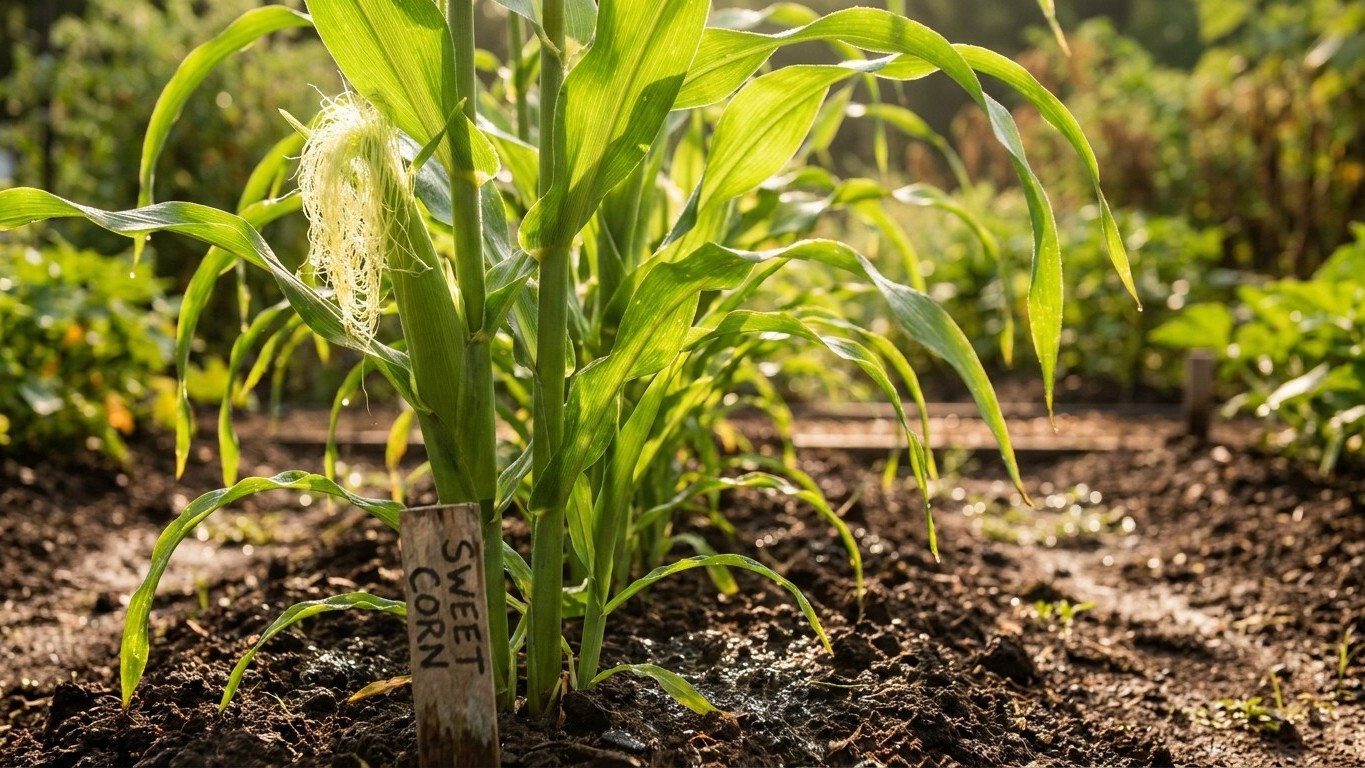

Sweet corn can ripen in North Dakota, but only if the calendar cooperates. Soil here needs to climb past 60°F before planting even makes sense, and that threshold arrives well after the last spring frost. Once the soil is warm enough, growers typically have somewhere between 100 and 120 days before the first fall frost, which is enough room for a 60 to 90 day variety in most seasons, though the shorter end of that range is the safer bet.
The short answer
Start with the soil, not the frost date. NOAA climate data for the Fargo reference station puts the last spring frost between May 4 and May 15. That date matters for tender seedlings, but sweet corn seed doesn’t care about frost risk the way transplants do. What it cares about is soil temperature, and 60°F soil is a different milestone entirely, one that typically shows up weeks after the air has stopped freezing at night. Soil warms far more slowly than air, so treating the last frost date as your green light to plant is a common misstep. Corn seed dropped into cold, wet soil often rots or sprouts unevenly, and a patchy stand is hard to fix later.
Once the soil does cross that 60°F line, the clock that matters starts running. Sweet corn needs 60 to 90 days from planting to harvest, depending on the variety. On the other end of the season, the first fall frost at the Fargo reference station arrives between September 25 and October 5. That gives a working window of roughly four months from frost-free spring to frost-risk fall, but the usable planting-to-harvest window is shorter than that raw span because soil doesn’t hit 60°F immediately after the last frost.
Do the arithmetic honestly. If soil warms up in the back half of May or into early June in a typical garden, and the first fall frost risk begins around September 25, that leaves somewhere in the neighborhood of 110 to 120 days of usable growing time. A 60-day variety fits with room to spare. A 90-day variety fits too, on paper, but it eats up nearly the entire window and leaves almost no cushion if the season runs cool or a planting gets delayed by a wet spring.
That cushion matters more in North Dakota than in milder states because the growing season here is compressed on both ends. Suburban and rural gardens away from the airport reference station typically see the last frost arrive later and the first fall frost arrive earlier than the station figures, sometimes by one to two weeks or more at elevation. A garden in a low-lying or northern county should plan around a tighter window than the reference dates suggest, not the wider one.
Does a late variety fit here?
The 60 to 90 day range covers a lot of ground, and where a specific planting falls in that range decides whether it ripens comfortably or barely squeaks by. Since the source names no variety, think in terms of the number of days to maturity printed on any seed packet, and measure that number against the local window rather than assuming any packet will work.
A 60-day variety
A 60-day sweet corn is the forgiving choice for this state. Even accounting for soil that doesn’t reach 60°F until late May or early June, a 60-day crop can be planted, grown, and harvested with roughly a month of slack before the first fall frost risk begins in late September. That slack is what protects the crop from a cool, wet spring that delays planting, or a summer that runs a little cooler than average. For a gardener who wants predictability more than variety, the short end of the maturity range is the safer bet across nearly every county in the state.
A 90-day variety
A 90-day sweet corn is a different story. It uses up nearly the entire window between soil warm-up and first fall frost, and in a state where the frost-free season is already short, that leaves almost no buffer. If soil warm-up runs later than usual, or if a home garden sits in a spot where the first fall frost historically arrives earlier than the reference-station date, a 90-day variety may not reach maturity before frost cuts the season short. Plainly, the 90-day end of the range does not fit comfortably in North Dakota. It can work in a warm year with an early planting, but it’s a gamble rather than a plan, and gardeners who want a reliable harvest should lean toward the shorter maturity numbers instead.
What goes wrong here
- Soil sown too cold. Planting on the calendar date of last frost, rather than waiting for the soil itself to warm, is the most common failure. Seed sits in cold ground, rots, or sprouts thin and uneven. The fix is simple: use a soil thermometer and wait until it reads 60°F or above before dropping seed, regardless of what the frost date says.
- A variety too late for the season. A 90-day variety planted after a slow, cold spring can run out of season before the ears fill out, especially in northern or low-lying gardens where fall frost tends to arrive earlier than the reference-station date. The fix is choosing a maturity number that leaves a real buffer, not one that uses up the entire window on paper.
- Sweetness lost to a neighboring tassel. This one has nothing to do with North Dakota’s climate. Standard (su), sugary-enhanced (se), and supersweet (sh2) sweet corn types cross-pollinate if they tassel at the same time, and the result is starchy, disappointing ears even when the plants themselves look healthy. The fix isn’t a fixed distance, since none is published for this crop, it’s timing. Stagger plantings so different types don’t tassel in the same window, or grow only one type per season. Planting in blocks of three or more rows, rather than a single long row, also helps pollen reach the ears it’s supposed to reach instead of drifting toward a different type nearby.
Common questions
How do I know when sweet corn is actually ripe?
Check for three signs together, never just one: the silks have turned dry and brown, the husk is still moist and green, and a punctured kernel leaks milky juice rather than clear liquid or dry starch. All three need to line up before you pick.
How long after silks appear should I wait to harvest?
That’s a separate clock from the planting-to-harvest maturity number. Once silks emerge, most sweet corn is ready to pick roughly 17 to 24 days later. The days-to-maturity figure on a seed packet tells you whether the crop fits the season at all; the silk-to-harvest window tells you which week to actually check the ears.
Does the last frost date tell me when to plant sweet corn?
Not directly. The last frost date describes air temperature risk to tender plants, while sweet corn seed needs the soil itself to reach 60°F, which typically happens later. Treating the frost date as a planting signal is one of the more common mistakes gardeners make with this crop.
Can I grow more than one type of sweet corn in the same garden?
Yes, but not if they tassel at the same time. Su, se, and sh2 types cross-pollinate readily when their tassel timing overlaps, and the sweetness of every affected ear suffers. Stagger planting dates so tasseling windows don’t coincide, and plant in blocks rather than single rows to keep pollination clean.