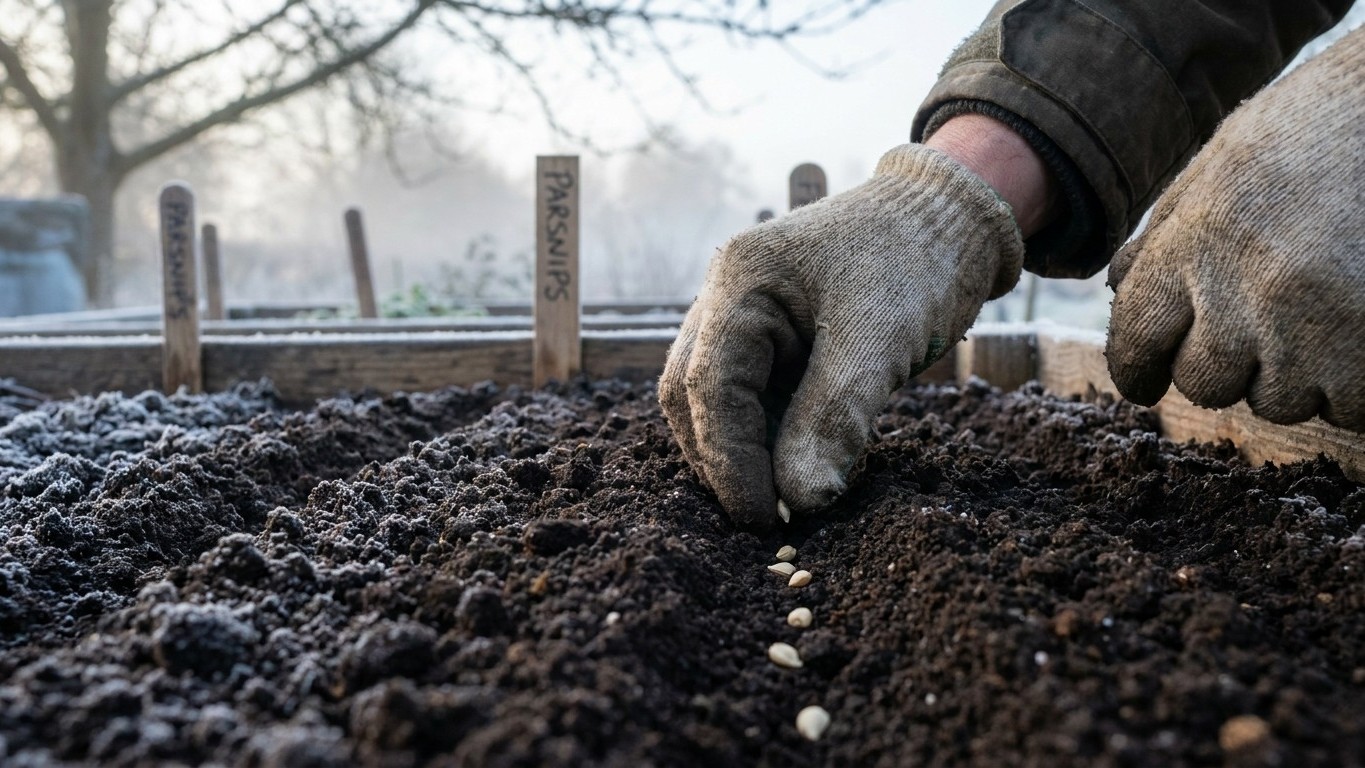

Sow parsnip seed directly in the ground two to three weeks before the last spring frost, which lands between March 31 and April 12 across most of Tennessee. That puts the sowing window in mid-to-late March for much of the state, though the mountains and the Cumberland Plateau run cooler and later. The state’s winters bring enough frost to sweeten the roots properly, so a fall harvest here is worth the wait.
The short answer
Before picking a sowing date, ask a different question first: does Tennessee actually deliver the kind of cold that turns a bland parsnip into a sweet one? The mean daily minimum of the coldest month, measured at the Nashville reference station, sits at 30.1°F. That figure matters more than any hardiness zone map, because it describes what nighttime temperatures typically do during the coldest stretch of winter, not just the rare record low that shows up once a decade.
A mean minimum that sits right at the freezing line tells you something specific: cold air routinely dips below 32°F for stretches of the coldest month, not just on one bad night. That’s the mechanism parsnips depend on. According to Utah State University Extension, parsnips taste best after several weeks of cool, frosty weather, because the cold converts starch stored in the root into sugar. A single light frost won’t do that job. It takes repeated exposure over weeks.
Tennessee’s winter profile fits that requirement. A coldest-month average low of 30.1°F means the state isn’t skating along the edge of frost the way a mild coastal region might. Freezing nights recur often enough, over a long enough stretch, to give the roots real exposure. That’s different from a hardiness zone rating, which only tells you whether a plant survives the winter, not whether the conditions are cold enough often enough to sweeten a root crop. A gardener could live in a zone comfortable enough for the plant to overwinter and still never get a sweet parsnip if the frosty stretch is too short or too shallow. Tennessee doesn’t have that problem.
So the short answer holds up under scrutiny: sow in spring, let the roots grow through summer and early fall, and leave them in the ground once the first frosts of autumn arrive. The exposure Tennessee’s winters provide, several weeks with nighttime temperatures near or below freezing, is exactly what pushes the starch-to-sugar conversion that makes the wait worthwhile. Gardeners in the eastern mountains and on the Cumberland Plateau can expect that conversion to happen even more reliably, since those areas run colder and see frost arrive earlier than the Nashville reference point suggests.
Does the season fit?
Parsnips need 100 to 120 days from seeding to reach harvest size, and that clock starts the day the seed goes into the ground, not the day it sprouts. Comparing that requirement against Tennessee’s frost calendar shows exactly how much room there is to work with.
- Sowing window: the last spring frost falls between March 31 and April 12 across most of the state. Sowing two to three weeks earlier puts seed in the ground somewhere between mid-March and late March, depending on location.
- Germination lag: parsnip seed is slow. Utah State University Extension notes it takes 14 to 21 days to germinate, so a mid-March sowing won’t show green until early-to-mid April. That’s normal, not a failed batch, and it’s not a signal to dig up the bed and try again.
- Growth to maturity: counting 100 to 120 days from the original seeding date, not from emergence, brings the roots to full size somewhere around late June to mid-July.
- The gap before frost: the first fall frost doesn’t show up until October 28 to November 8. That leaves roughly four months between the roots reaching mature size and the first frost that starts the sweetening process.
- What that gap means: there’s no rush to harvest the moment roots reach size. The long buffer between maturity and frost means the roots can sit in the ground through summer’s tail end and into fall, waiting for the cold to do its work before anyone reaches for a shovel.
That arithmetic says the season fits comfortably in Tennessee, with weeks of slack at both ends. Gardeners in the cooler eastern counties and on the Cumberland Plateau should lean toward the later end of the sowing window, since spring arrives later there and the last frost date can lag behind the Nashville reference by a meaningful stretch.
What goes wrong here
- Forked roots in heavy or stony clay: Tennessee’s clay-heavy ground is common outside the sandier river bottoms, and parsnip roots split or fork when they hit compacted soil or buried rocks. Utah State University Extension recommends deep sandy soil, and where the native ground is heavy, double digging to break up the bed 12 to 15 inches down before sowing.
- Forked roots from overwatering: this is a separate cause from heavy soil, and it’s easy to confuse the two. Roots that sit in soil kept too wet also tend to fork or grow stubby side shoots. Keep watering even and moderate rather than heavy, especially once the taproot has started developing.
- Giving up on slow germination: parsnip seed takes 14 to 21 days to show above ground, and an impatient gardener who re-sows after a week or two ends up with two overlapping plantings competing in the same row. Wait out the full three weeks before assuming the seed failed.
- A season that runs short in the mountains: the Cumberland Plateau and East Tennessee see a later last frost and an earlier first frost than the Nashville reference station, which tightens the window on both ends. Sowing at the earliest safe date in those areas, rather than waiting for the calendar average, keeps the 100 to 120 day clock from running past the first hard frost of fall.
- Roots that grow well but never sweeten: this usually isn’t a Tennessee climate problem, since the coldest month’s mean minimum of 30.1°F provides enough frost exposure. It happens instead when roots are dug too early, before the first fall frosts arrive. Leave the roots in the ground through several frosty weeks after the first fall frost before harvesting, rather than pulling them the moment they look mature.
Common questions
Can I sow parsnips in fall for a Tennessee garden?
The sowing guidance here centers on a spring planting timed two to three weeks before the last frost, which gives the 100 to 120 day growing period enough runway to finish before winter sets in. A fall sowing would need to reach maturity before the ground turns hard, and Tennessee’s frost calendar (first frost October 28 to November 8) doesn’t leave that kind of room after a summer sowing.
Why hasn’t my parsnip seed sprouted after two weeks?
That’s normal. Germination takes 14 to 21 days according to Utah State University Extension, so a bed that looks bare after two weeks isn’t necessarily a failed sowing. Digging it up and re-sowing before the three-week mark just risks two overlapping plantings in the same row.
Do I need to mulch parsnips over a Tennessee winter?
The source material doesn’t cover mulching specifics, but the general principle behind leaving parsnips in the ground through frost is to let the roots stay accessible for digging as the sweetening process runs its course over several frosty weeks. Whatever keeps the ground workable enough to harvest without the soil locking solid serves that goal.
What kind of soil do parsnips need in Tennessee?
Utah State University Extension recommends deep sandy soil for straight, unforked roots. Tennessee’s clay-heavy ground outside the sandier bottomland areas should be double dug 12 to 15 inches deep before sowing, since heavy or stony soil is one of the two documented causes of forked roots, the other being overwatering.