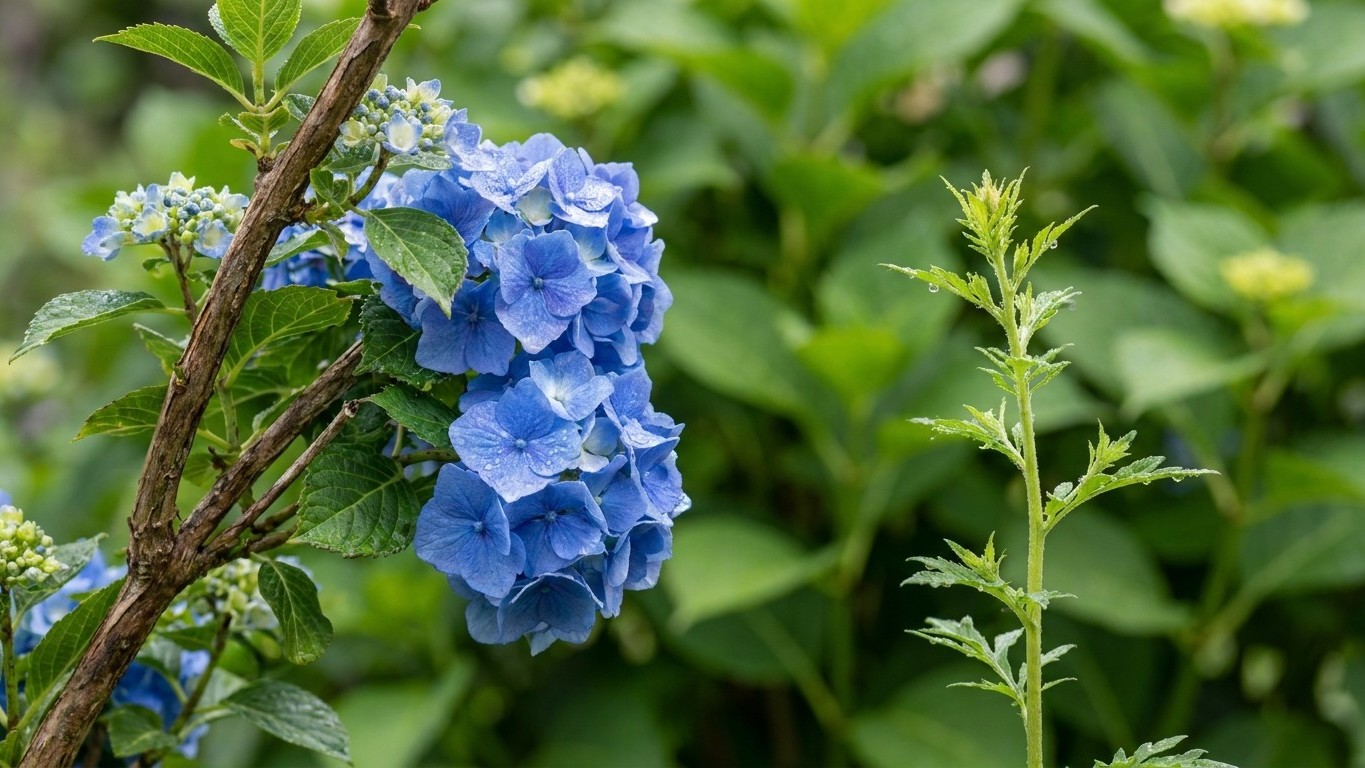

Nearly every hydrangea sold at Tennessee garden centers survives the cold itself. The state’s USDA hardiness zones run from 5b to 8a, and the rated hardiness of panicle, smooth and oakleaf types, and of most bigleaf types, covers nearly all of that range. The flower buds are what separate them. Types that bloom on the current year’s growth normally flower every summer, even after a hard winter. Types that bloom on last year’s wood can come through January fine and still skip a year of flowers.
What this comes down to in Tennessee
Around Nashville, the last spring frost (32°F) typically falls between March 31 (the median) and April 16 (the date after which only one year in ten still has a freeze), and the first fall frost between October 22 (the date before which only one year in ten has one) and November 3 (the median), according to NOAA’s Climate Normals for the Nashville station. Every hydrangea below lives through the winter between those windows, but they differ in how much of next summer’s bloom they carry through it.
The real risk sits at the front of that spring window. Old-wood types start swelling buds during warm spells in March, and a frost that lands inside the window kills what the winter spared. The cultivars below run from least to most exposed to winter bud loss. Plants that flower on the current year’s growth come first, and plants that depend on buds made the summer before come last.
Quick Fire
A panicle hydrangea rated for zones 3 to 8. Its white flowers open early in the season, age to pink and then deep rose, and form on new wood. A late freeze cannot take its buds because they do not exist yet, so it suits the whole state.
Annabelle
A smooth hydrangea rated roughly zones 3 to 9, with big white round blooms on new wood. It often dies back to the ground in a hard winter and rebuilds by June. The stems are soft and flop after heavy rain, which is a nuisance, but cold rarely ends the show.
Incrediball
A smooth hydrangea rated zones 3 to 8, with white blooms on new wood like Annabelle. Its stems are noticeably sturdier, so the flowers stay upright through summer storms. It handles every zone in the state.
Limelight
A panicle hydrangea rated zones 3 to 8. The blooms open lime green, turn white, then blush pink as fall arrives, all on new wood. It flowers a little later than Quick Fire but finishes well ahead of the fall frost window.
Snow Queen
An oakleaf hydrangea, a species native to the Southeast, rated roughly zones 5 to 9. It blooms on old wood, with white cones that age to pink. The buds are tougher than a bigleaf’s, so they usually come through, though the coldest corners of the state are at its edge.
Endless Summer
A bigleaf hydrangea rated zones 4 to 9, with blue or pink flowers depending on soil acidity. It blooms on both old and new wood. If winter or a spring frost kills the old-wood buds, it still flowers later on new growth.
Nikko Blue
A classic bigleaf, typically rated zones 6 to 9, blue in acid soil and pink in alkaline soil. It blooms on old wood only. A hard winter or a freeze after bud break leaves a healthy green shrub with no flowers that year, and the colder parts of the state make that likely.
Working it out for your own garden
Two checks cover most situations: whether the plant has time to bloom, and what winter actually damaged. Both start from the Nashville frost window, so shift them later if your yard runs colder.
How do you tell if a hydrangea will bloom before the first fall frost?
Take the spring window, March 31 to April 16, and add two to three weeks so the soil has warmed and a late freeze is behind you. That gives a planting window after the last frost for a container-grown shrub. Quick Fire flowers early in the season on new growth. Set out at the late end of that range, it still has growing weather before the fall window opens on October 22. It blooms with months to spare.
Now run a bigleaf that blooms only on old wood, such as Nikko Blue. Planting date matters little for it, because the flowers for any summer are set the summer before. Those buds form in late summer and must then sit through every freeze between the fall window (October 22 to November 3) and the spring window (March 31 to April 16) before they open. A cold snap in January, or a March warm spell followed by a hard frost, can end the bloom for that plant. That is where the line falls. New-wood types finish inside one summer, and old-wood types finish only if the winter spares them.
How do you tell what winter did to a hydrangea?
Wait until neighboring shrubs are fully leafed out, usually well into May, because hydrangeas leaf out late and bare stems in April prove nothing. Then scratch the bark of a stem with a thumbnail. Green underneath means the stem is alive, and dry brown means it is dead.
Dead stems with fresh shoots from the base mean the top froze and the roots are fine. A smooth or panicle type will still bloom on that new growth. A bigleaf that leafs out normally but never sets flowers lost its buds, and the plant itself is healthy. No growth at all from the base by late spring points to root loss, usually from soggy winter soil.
What changes across the state
Tennessee is long and varied, and the Nashville window is one reference point. The USDA Plant Hardiness Zone Map, which sorts the country by a single variable, the average annual extreme minimum temperature, puts the state anywhere from zone 5b to 8a. The coldest zones sit in the high mountains of the east, and the warmest include Chattanooga and the lowlands along the Mississippi in the southwest.
Elevation does a lot of the work. East Tennessee and the Cumberland Plateau run cooler and later in spring than Nashville, so the last frost arrives later there. Gardeners on the Plateau or in the mountains have a shorter season for new plantings and a higher chance that a bigleaf’s buds die. West Tennessee is flatter and warmer, and winters there are milder, though spring freezes still catch early-leafing shrubs.
Your own lot shifts things as well. Cold air drains downhill and pools in low spots and valley floors, so frost lingers there. A south-facing wall or a spot near a house foundation stays warmer and wakes buds sooner, which is an advantage in January and a hazard in March. In cooler parts of the state, lean on new-wood types and treat old-wood bigleaf as a bonus.
The mistakes this state punishes
Planting into cold soil after a warm spell is the classic one. A string of 70-degree days in March tempts people to plant, but the spring window runs to April 16 at Nashville and later in cooler regions, and a freeze after planting stresses a root system that has not settled in. Wait for the window to close, then give it two to three weeks.
Choosing a bigleaf that blooms only on old wood in a cold part of the state is the second. It looks great in a catalog and can give you green leaves and no flowers. Pick a reblooming bigleaf, an oakleaf, or a new-wood type instead.
Pruning at the wrong time costs flowers too. Cutting old-wood types in fall, winter or early spring removes the buds that survived. Prune them right after they bloom, and cut new-wood types back in late winter if you want to.
Two quieter errors round it out. Heavy fertilizer late in summer pushes soft growth that the first hard frost burns. Clay that stays soggy through winter rots roots, so improve drainage before planting. When buds are swelling and a frost is forecast, drape a sheet over the shrub for the night and take it off in the morning.
Checking this against your county
A state-wide frost window is a starting point, and your yard may run earlier or later. Your county office of University of Tennessee Extension can tell you how local conditions shift those dates, and what soil type and typical winter lows to expect where you live. For general care once the right plant is in the ground, see the guide to growing hydrangeas in Tennessee.
Common questions
Do hydrangeas die back in a Tennessee winter?
Smooth and panicle types often drop their leaves and sometimes die back to the ground, then regrow in spring. Check for green under the bark before you pull anything out.
Which hydrangea is the safest pick if winters worry me?
A new-wood type such as Quick Fire, Limelight or Incrediball. These bloom on the current season’s growth, so a hard winter or late frost is very unlikely to take the flowers.
Why did my bigleaf hydrangea leaf out but never bloom?
The flower buds probably froze over winter or in a spring freeze. Old-wood bigleafs like Nikko Blue lose their flowers this way, while a reblooming type such as Endless Summer can still flower later on new growth.
Should I cover hydrangeas in winter?
Mulch around the base helps insulate the roots, and a sheet over the shrub works when buds are swelling and a spring frost is forecast. Wrapping the whole plant for months is rarely worth the effort here.