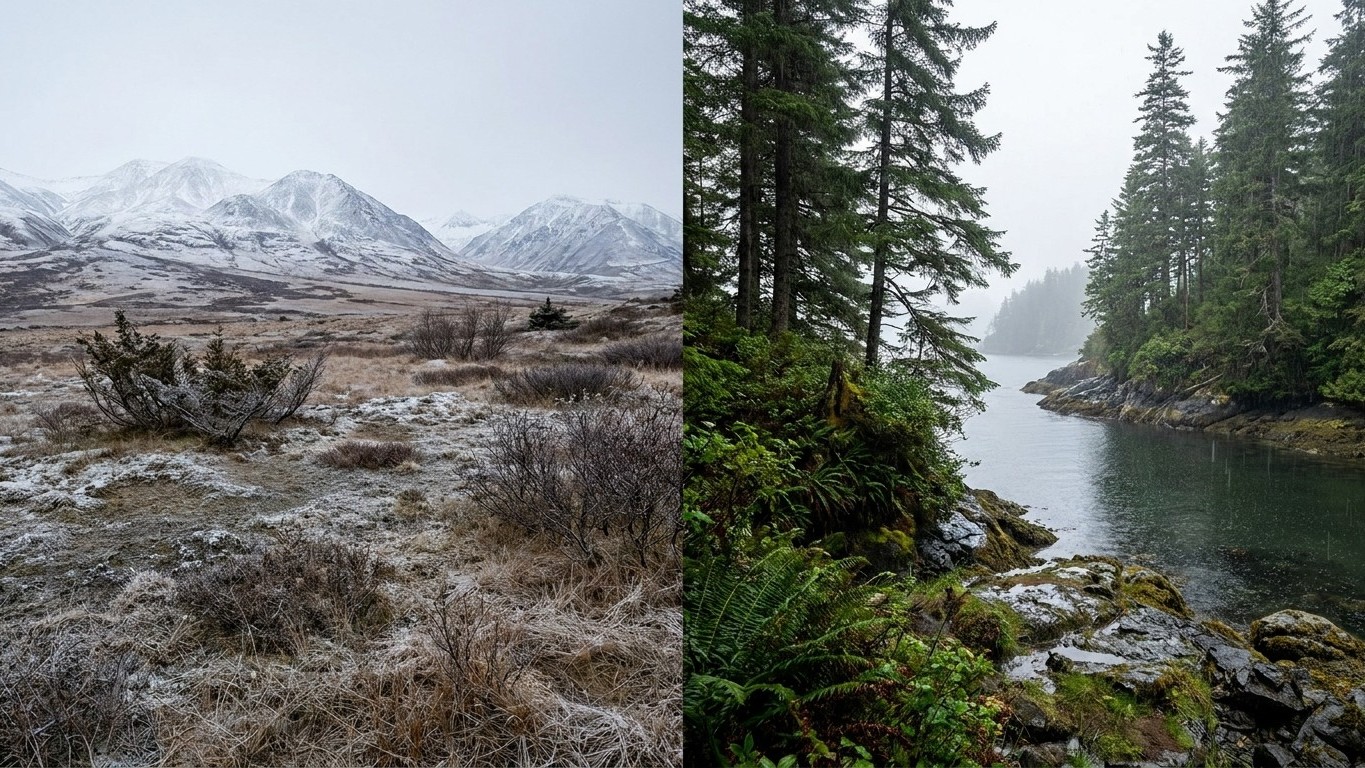

Wisconsin’s USDA hardiness range runs from 3b in the north to 6a along the Lake Michigan shore and the far south. Of the 65 trees, shrubs and perennials this site tracks, 30 survive winter anywhere in that range, 34 survive in only part of it, and 1 survives nowhere in the state at all. Which bucket a plant falls into changes the answer for every reader, depending on where in Wisconsin they garden.
What will not survive a winter in Wisconsin

Start with the range itself: 3b to 6a, USDA system, built on one number, the average annual extreme minimum temperature. That range covers a lot of ground, from northern Wisconsin winters cold enough to challenge almost anything woody, down to a milder pocket near the lake and the Illinois border. Even at that milder end, though, the state stays too cold for a small slice of what gardeners elsewhere in the country plant without a second thought.
Out of the 65 species this site documents, exactly one fails everywhere in Wisconsin: the common fig, Ficus carica. It’s a useful example of what “will not survive” actually means here, because fig failure in Wisconsin isn’t marginal. Even the state’s warmest zone, 6a along the lakeshore, doesn’t reach the winter minimum a fig needs to come through dormant and alive. Gardeners in warmer states plant it in the open ground with no special care; in Wisconsin, it’s a plant for a container that comes indoors, not a landscape plant.
| Plant | Mismatch | Notes |
|---|---|---|
| Ficus carica (fig) | Too cold, across the entire state | Fails in every Wisconsin zone from 3b to 6a; source: North Carolina Extension Gardener Plant Toolbox, crossed against the state’s hardiness range |
One species out of 65 is a small number, but it doesn’t mean 64 others are guaranteed. It means only that this site’s list contains just one plant with a hardiness range that misses Wisconsin entirely at both ends. And a plant surviving here isn’t the same as it thriving here: the warm edge of a plant’s hardiness range is frequently a heat ceiling rather than a cold one, so something rated hardy through zone 6a can still sulk through a Wisconsin summer even though it lives through the winter just fine. Survival and comfort are two different questions, and this page only answers the first one.
That’s also why the more useful list on this page isn’t the one-plant failure column above. It’s the much longer middle group: plants that make it through winter in some parts of Wisconsin and not others. That’s where most of the state’s real planting decisions get made.
The plants that work in part of the state and not the rest
Thirty-four of the 65 species this site tracks are hardy in part of Wisconsin’s range and not the rest. That’s more than half the list, and it’s the reason a single state-level yes-or-no answer would be wrong for a big share of readers. A gardener in Superior, up near zone 3b, and one in Kenosha, down in 6a, are working with genuinely different plant lists, even though they share a state and a mailing address format.
Fails only at the coldest edge
Twenty of the 34 plants in this middle group fail only in the state’s coldest zone, 3b. Everywhere else in Wisconsin, from 4a up through 6a, they’re rated hardy. That group includes several fruiting plants (Diospyros virginiana, Morus rubra, Prunus domestica, Pyrus communis, Rubus idaeus, Rubus occidentalis, Sambucus canadensis), a run of perennials (Heuchera americana, Monarda didyma, Phlox paniculata, Salvia nemorosa, Hylotelephium spectabile), shrubs (Ilex glabra, Kalmia latifolia, Weigela florida), and trees (Betula nigra, Cercis canadensis, Nyssa sylvatica, Platanus occidentalis, Quercus rubra). For a gardener anywhere south of that coldest strip, these are simply on the table.
Fails across the colder third of the range
Eleven plants need more than just an escape from zone 3b; they also fail in 4a and 4b, and only become viable from 5a upward. That group includes Asimina triloba, Fragaria virginiana, Fragaria x ananassa, Prunus persica, Amsonia hubrichtii, Lavandula angustifolia, Buxus sempervirens, Fothergilla gardenii, Itea virginica, Cornus florida, and Liquidambar styraciflua. A gardener in the state’s mid-tier zones needs to check their own zone against this list specifically, since “not 3b” and “not 3b, 4a, 4b” are not the same restriction.
Fails across most of the range
A smaller group of three, Hydrangea macrophylla, Lagerstroemia indica, and Magnolia grandiflora, fails in 3b, 4a, 4b, 5a, and 5b. That leaves only zone 6a, the warmest sliver of Wisconsin, where these are rated hardy at all.
None of this says why a given plant draws the line where it does. What matters practically is finding your own zone first. This site’s insulation page for Wisconsin carries the county-level zone picture for the state, and matching your county against that map is the step that turns this table from a list of names into an actual planting decision.
The soil and the summer they will be planted into
Wisconsin’s official state soil is the Antigo series, an Alfisol classified as loam to silt: about 20 percent sand, 10 percent clay, and 70 percent silt at the surface, with organic matter around 3.0 percent and a surface pH near 5.5, slightly acid. It’s also well drained, which matters more for a newly planted woody plant than almost any other soil trait, since winter wet kills more young trees and shrubs than winter cold does. Roots sitting in saturated ground for weeks at a time lose oxygen and rot before a hard freeze ever arrives.
That said, the Antigo series represents the state, not any individual backyard. It’s mapped from the surface horizon of 65 soil components across the series, and a reader’s own ground, especially anything near a riverbank, in hill country, or on a lot a builder has graded and filled, can differ from it completely. An organic-matter reading far above 3 percent in a home soil test usually signals a different situation than this series describes, something closer to a peat or muck layer than a garden bed. The Antigo numbers are a starting expectation, not a stand-in for a soil test on the actual planting site.
Summer rainfall across the state, measured at the same reference station used for the frost dates below, averages about 11.4 inches over June, July and August combined: 4.38 inches in June, 3.4 in July, the driest of the three, and 3.65 in August. That’s a meaningful amount of water, but the number means little without pairing it against the ground it falls on. An inch of rain on well-drained, silty Antigo-type ground behaves differently than the same inch on a dense clay pocket a mile away: the silt loam lets water move through and refill without pooling, while heavier clay holds it longer, then compacts and sheds the next storm as runoff instead of soaking it in. Neither reading turns directly into a watering schedule; both need a look at the specific bed, and ideally a rain gauge on the actual property, before that decision gets made.
When to plant, here
The average last spring frost across Wisconsin, at the same reference station, falls between April 16 and April 29. The average first fall frost falls between October 17 and October 29. Those two windows bracket the growing season, and they also bracket the two times of year woody plants typically go into the ground here.
The logic behind planting timing isn’t a date to obey so much as a question of root time. A newly planted tree or shrub needs to grow new roots into the surrounding soil before it’s asked to do anything demanding, whether that’s pushing out a full set of leaves in a dry June or surviving its first hard freeze in November. Spring planting gives roots a full growing season to establish before winter arrives. Fall planting gives them cooler, often wetter soil and less competition from top growth, but a shorter runway before the ground freezes.
| Window | What it suits | Main risk |
|---|---|---|
| Spring (after last frost, April 16-29) | Most trees, shrubs and perennials; a full season to establish roots before winter | Late frost damage if planted too early; dry spells right after planting |
| Autumn (before first frost, October 17-29) | Many trees and shrubs that benefit from cooler soil and less transplant stress | Not enough root growth before hard freeze, especially in the state’s coldest zones |
In the coldest part of Wisconsin’s range, the fall window closes faster than these dates suggest, since a first frost in the far north typically arrives well ahead of the October 17-29 average tied to the reference station. These frost dates are averages built from 1991-2020 climate normals at one station; they describe a typical year at that location, not a guarantee for any specific one. And whichever window gets used, a plant’s drought tolerance rating doesn’t apply the day it goes into the ground. Those ratings describe an established root system, which a first-season planting doesn’t have yet; regular water through that first year matters regardless of what the plant tag says about drought tolerance later on.
Where to read about each one
Among the 30 species hardy across all of Wisconsin, the trees include Acer rubrum, Acer saccharum, Amelanchier canadensis, Carpinus caroliniana, Ginkgo biloba, Juniperus virginiana, Picea abies, Pinus strobus, Quercus alba, Thuja occidentalis and Tilia americana. The shrubs include Aronia arbutifolia, Clethra alnifolia, Hydrangea paniculata, Ilex verticillata, Physocarpus opulifolius, Spiraea japonica, Syringa vulgaris and Viburnum dentatum. The perennials include Achillea millefolium, Asclepias tuberosa, Baptisia australis, Anacis verticillata, Echinacea purpurea, Iris sibirica and Rudbeckia fulgida. Any of these is a reasonable starting point for a Wisconsin planting list, whatever zone within the state a reader falls into.
The hardiness ranges behind every table on this page come from a university extension plant database, crossed against Wisconsin’s local zone breakdown by county. That’s a different kind of number from the fruit-variety adaptation ranges kept elsewhere on this site, which describe how well a specific apple variety performs in a climate, not whether a plant survives winter at all. The two shouldn’t be read as interchangeable, even where they cover some of the same species.
Confirming a county’s exact zone against the range printed here is the step that turns any of these names into an actual decision, rather than a guess based on which end of the state a reader happens to picture when they think of Wisconsin.