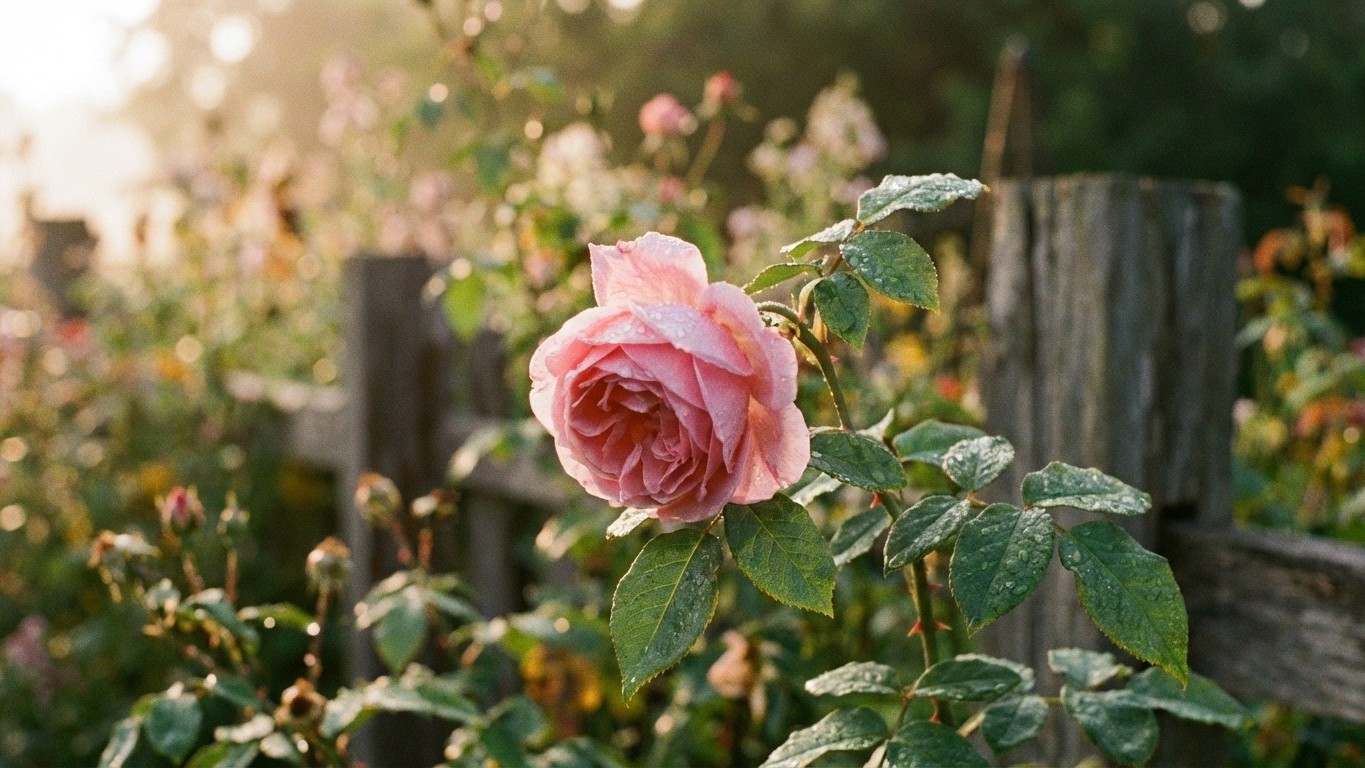

Roses in Alabama live or die by two things most gardeners underestimate: how well the soil drains after summer downpours, and how disciplined you are about blackspot before it ever shows up. The plant itself is forgiving. The climate and the fungus load are not, and that combination decides which roses thrive and which ones limp along covered in yellow, spotted leaves by July.
When to plant Roses in Alabama

Bare-root and container roses go into the ground during two windows: late winter dormancy (January into early March) or fall after the worst heat breaks (October into November). Spring planting works too, but you’re racing the heat that arrives by June, so the earlier in that window you plant, the more root system the rose builds before summer stress hits.
The frost data anchors the spring end of that window. At the reference station used by NOAA (Birmingham, station USW00003856), the last spring freeze falls between March 19 and April 3, based on 1991-2020 Climate Normals. That’s a 30-70% probability band, not a guarantee, and suburban or rural gardens typically see their last freeze run one to two weeks later, more at elevation in the northern part of the state. Near Mobile or the Gulf Coast, you’re often on the early side of that window or past it already.
Container roses can go in anytime after your local last-frost date, since they’re already established plants. Bare-root roses are more particular: order or buy them in January or February while still dormant, and get them in the ground before they break bud. Waiting until they’ve leafed out in the bag sets the plant back for the whole season.
Fall planting deserves more credit than it gets in Alabama. Roses planted in October have all winter to establish roots without fighting top growth or heat stress, and come out of dormancy in spring already anchored. Count back from the first fall frost, November 2 to November 16 at the same reference station, and aim to plant at least six weeks ahead so roots get established before the ground cools too far. That puts the fall planting target around mid-September through early October for most of the state, earlier in the north.
Roses aren’t started from seed by home gardeners in any practical sense, so there’s no seed-starting countdown here. What you’re really counting back from is bare-root dormancy and the frost windows above, and both point to the same conclusion: plant in the cool shoulder seasons, not in the middle of an Alabama summer.
Soil and site preparation
Roses want six hours of direct sun at minimum, and morning sun matters more than afternoon sun in this state, since it dries dew off the foliage early and cuts down the hours blackspot spores have to germinate on wet leaves. Full afternoon sun with no morning light is workable but stresses the plant more during July and August heat.
Drainage is the bigger issue across most of Alabama. Heavy clay subsoil is common, and roses left sitting in wet clay after a summer thunderstorm develop root rot fast. Dig the planting hole two to three times wider than the root ball but no deeper than the root mass itself, so the plant doesn’t settle into a sump. Work composted organic matter, aged manure or a bagged soil conditioner into the native soil rather than replacing it entirely with pure compost, which can create a bathtub effect where water pools in the amended hole and won’t drain into the surrounding clay.
Test drainage before you commit to a spot: dig a hole about a foot deep, fill it with water, and see how long it takes to empty. If water is still standing after several hours, raise the bed six to ten inches above grade or pick another spot. Raised beds and mounded planting are common workarounds in the flatter parts of the state where clay drainage is poor.
Bed prep timing
Start bed prep three to four weeks before you plant, not the weekend of. That gives amendments time to settle and lets you catch weeds that germinate in the disturbed soil before the rose goes in. Spacing depends on the type: hybrid teas and floribundas want two to three feet between plants for air circulation, which matters more here than in drier climates because good airflow is one of the few free defenses against fungal disease. Climbers and larger shrub roses need four feet or more, and anything against a wall or fence should sit at least a foot off the structure so air can move behind it.
Varieties that suit Alabama
The traits that matter most here are disease resistance to blackspot and powdery mildew, heat tolerance through long humid summers, and reliable rebloom rather than a single spring flush. Cold hardiness is a secondary concern for most of the state, since Alabama’s winters rarely test a rose’s hardiness limits the way a Midwest or New England winter would, though the far northern counties see harder freezes than the Gulf Coast.
Shrub roses bred for disease resistance have become the default recommendation here for a reason: they need far less spraying to look decent through a humid August. The Knock Out series is the most widely planted example, prized for shrugging off blackspot pressure that would defoliate an untreated hybrid tea by midsummer, and for blooming in flushes from spring into fall with minimal deadheading. Drift roses, a compact groundcover-type shrub, work well in smaller beds and share much of that same resistance.
Belinda’s Dream combines good blackspot tolerance with a more traditional, fuller flower form than the Knock Out types, appealing to gardeners who want an old-fashioned look without constant spraying. Antique and old garden roses such as Louis Philippe have a long history in Deep South gardens and tend to tolerate heat and humidity well, though their disease resistance varies by cultivar.
Climbing roses like New Dawn perform reliably on fences and trellises across the state and tolerate heat without much fuss, though they need structural support from day one. Hybrid tea roses, the classic long-stemmed florist type, generally demand the most spray schedule and the least forgiveness for skipped maintenance, so they suit gardeners willing to commit to a regular fungicide rotation more than the low-maintenance shrub types above.
No university or extension office is naming specific brand varieties as official recommendations here; these are widely available cultivars known in the trade for the traits described. Check with a local nursery for what’s actually performing well in your county before buying.
What to plant alongside
Roses pair well with plants that fill the bare lower stems, draw in pollinators, and don’t compete hard for the same root zone. Catmint, salvia and lavender are common companions for exactly this reason: they bloom at rose height or lower, attract bees, and their strong scent is sometimes credited with confusing pest insects, though this effect is more anecdotal than proven.
Garlic and chives planted at the base of roses are a traditional pairing, often claimed to repel aphids. The evidence is thin; treat it as a low-cost experiment, not a substitute for watching your plants. Marigolds get similar treatment, usually cited for suppressing root-knot nematodes in soil, a claim with some support in vegetable contexts but not well documented for roses specifically, so plant them for color and pollinator draw rather than expecting a pest-control miracle.
Ground covers like creeping thyme or low sedums help by shading soil, holding moisture and cutting down on splash-back during rain, which matters because blackspot spores spread partly by water splashing from soil onto lower leaves.
Keep roses well away from black walnut trees, which release juglone, a compound toxic to many plants including roses, from their roots and dropped leaves. Avoid crowding roses with other heavy feeders, and don’t plant new roses in a spot where roses have failed repeatedly before, since replant disease and lingering soil-borne fungal pressure can build up in rose-only ground over years.
Watering, feeding and support
Roses want deep, infrequent watering rather than a daily sprinkle. In Alabama’s clay-heavy soils, one deep soak of an inch to an inch and a half a week, adjusted upward during dry summer stretches, encourages roots to grow down instead of staying shallow near the surface. Water at the base with a soaker hose or drip line rather than overhead sprinklers, since wet foliage overnight is exactly what blackspot spores need to germinate.
Mulch two to three inches deep around the base, pulled back a few inches from the crown so it doesn’t trap moisture against the stem. Pine straw and shredded bark both work well and are widely available. Mulch holds soil moisture, moderates root temperature through summer heat spikes, and blocks the rain-splash pathway that spreads blackspot spores from soil to leaves.
Feed on a schedule tied to bloom cycles rather than the calendar alone: a first feeding at the start of spring growth, then follow-up feedings after each bloom flush through summer, tapering off by late summer so the plant isn’t pushing soft new growth right before fall dormancy. Soft new growth going into cooler weather is more vulnerable to dieback, so cutting off nitrogen feeding by August gives the plant time to harden off before frost.
Support depends on the type. Climbers need a trellis, arbor or fence tied in from the start, with canes trained horizontally where possible since this encourages more flowering along the cane’s length than growing straight up. Shrub and floribunda types generally stand on their own once established but benefit from a stake in the first year if planted in an exposed, windy spot.
Prune in late winter while the plant is still dormant, cutting back to healthy outward-facing buds and removing dead, crossing or weak canes. Watch grafted roses for suckers, shoots emerging from below the graft union that come from the rootstock rather than the named variety. These grow more vigorously than the desired top growth and will eventually take over the plant if not removed at the base as soon as you spot them.
Common problems

Blackspot is the defining rose problem across the humid Southeast, and Alabama’s summer humidity makes it close to unavoidable without some management. It shows up as circular black spots with feathered edges on lower leaves first, followed by yellowing and leaf drop that can strip a susceptible rose bare by midsummer. It thrives on wet foliage, so morning watering at the base, good air circulation between plants, and removing fallen infected leaves from around the base all cut down on pressure. Resistant varieties, covered above, are the single biggest lever most gardeners have against it.
Powdery mildew looks different: a grayish-white dusty coating on new leaves and buds, often distorting new growth rather than causing spots. It favors dry conditions with high humidity and poor air circulation, the opposite trigger from blackspot’s need for wet leaves, which is why both diseases can show up on the same plant in different weather stretches through the season. Spacing plants for airflow helps both problems at once.
Botrytis blight shows up mostly on flowers, especially after a rainy stretch, turning petals brown and mushy, sometimes with a grayish fuzzy mold on spent blooms. Deadheading promptly and clearing fallen petals reduces the spore load around the plant.
Rose rosette virus is the most serious problem to watch for, spread by a tiny mite and with no cure once a plant is infected. Symptoms include excessive thorniness, distorted red new growth that doesn’t green up normally, and clustered, witch’s-broom-like stem growth. Infected plants should be dug out and removed entirely, roots and all, since the disease can spread to nearby roses.
Poor bloom with lots of green growth and few flowers usually traces back to too much shade, too much nitrogen relative to phosphorus, or an old variety that only blooms once per season. Winter dieback on canes, especially after a hard freeze in the northern part of the state, is usually pruned out in late winter once you can see clearly which wood survived.
Pests that actually show up in Alabama
The Alabama Cooperative Extension System’s home garden insect list highlights a set of pests that show up across ornamental and vegetable plantings statewide, and several do real damage to roses specifically when the plants sit near a vegetable bed or in a mixed border.
Aphids are the one every rose grower in the state deals with sooner or later, clustering on new growth and flower buds from early spring onward. You’ll see tight clusters of small green, black or reddish insects on tender shoot tips, sometimes with sticky honeydew residue and distorted new growth if unchecked. A strong spray of water knocks most colonies off, and insecticidal soap handles the rest without wiping out the ladybugs and lacewings that naturally keep aphid numbers down.
Spider mites become the bigger threat as summer heat builds, thriving in hot, dry stretches and showing up as fine stippling or a bronzed, dusty look on leaves, sometimes with faint webbing on the undersides in heavy infestations. Because they favor dry conditions, a regular strong hosing of the foliage’s undersides during hot spells does double duty, disrupting mite populations while cooling the plant.
Stink bugs and leaffooted bugs, both flagged in the extension’s list as season-long problems, will feed on rose buds and stems if they’re in the area, causing distorted or discolored buds that fail to open properly, most noticeable from midsummer into late summer. Hand-picking is realistic for a home rose bed since populations on ornamentals are usually much lower than on vegetable crops; knock them into a bucket of soapy water in the cooler part of the morning, when they’re sluggish.
Check with your county extension office for positive identification if you’re unsure what you’re looking at. Pest pressure varies by region within the state, and a bug that’s a minor nuisance in one county can be a bigger problem two counties over.
Harvest and end of season
Cutting roses is really the only “harvest” involved, and timing it right extends vase life considerably. Cut in the cool of early morning, choosing blooms just as the outer petals start to unfurl rather than waiting for a fully open flower, and cut at an angle just above a five-leaflet leaf to encourage a strong new shoot from that point. Roses cut too tight in bud, before any color shows, often fail to open properly once indoors.
Deadhead spent blooms through the growing season on repeat-flowering types to push the plant into another flush rather than letting it form hips (seed pods). Toward the very end of the season, though, many gardeners let the last flush go to hip rather than deadheading, which signals the plant to start winding down for dormancy.
As the first fall frost approaches, falling between November 2 and November 16 at the Birmingham reference station (expect it earlier in outlying and rural areas, and in the northern part of the state), stop feeding by late summer if you haven’t already, taper watering as growth slows, and hold off on any hard pruning until the plant is fully dormant in winter. A light mounding of mulch over the graft union in exposed northern Alabama sites offers some extra insurance against a harder-than-usual freeze, though most established roses in the state come through winter without special protection.
Local help
Frost dates and pest pressure both vary by county, sometimes significantly, within Alabama. For planting dates calibrated to your exact location, soil testing, and identification of anything chewing on your roses, contact the Alabama Cooperative Extension System, which maintains county offices across the state.
Common questions
Can roses survive an Alabama summer without constant spraying?
Disease-resistant shrub roses like the Knock Out series handle summer humidity with far less fungicide than older hybrid tea varieties, though even resistant types benefit from good airflow and morning watering to keep blackspot pressure down.
Is it better to plant roses in fall or spring in Alabama?
Fall planting, roughly six weeks before the first frost window of November 2 to November 16 at the Birmingham reference station, gives roots a full winter to establish before summer stress arrives, which many gardeners find gives a stronger first-year plant than spring planting.
Do I need to spray for insects on roses if I’m not seeing damage?
No. Reactive treatment based on what you actually see, aphid clusters, stippled mite damage, chewed buds, is more effective and less wasteful than a preventive spray schedule for insects, unlike some fungal disease programs which do work better as prevention. Preventive spraying makes more sense for blackspot in humid regions, since by the time spots appear the fungus is already established.
Why do my roses bloom heavily in spring but barely at all by August?
Heat stress, insufficient water during the driest stretch of summer, and a nitrogen feeding schedule that tapered off too early can all suppress summer rebloom even on repeat-flowering varieties. Deep watering and a light summer feeding often bring blooms back by late summer.
What’s the difference between blackspot and normal leaf yellowing?
Blackspot leaves show distinct black spots with ragged, feathered edges before yellowing around them, while general nutrient-related yellowing tends to be uniform across the leaf without spotting. If you see spots first, it’s fungal, not a feeding issue.