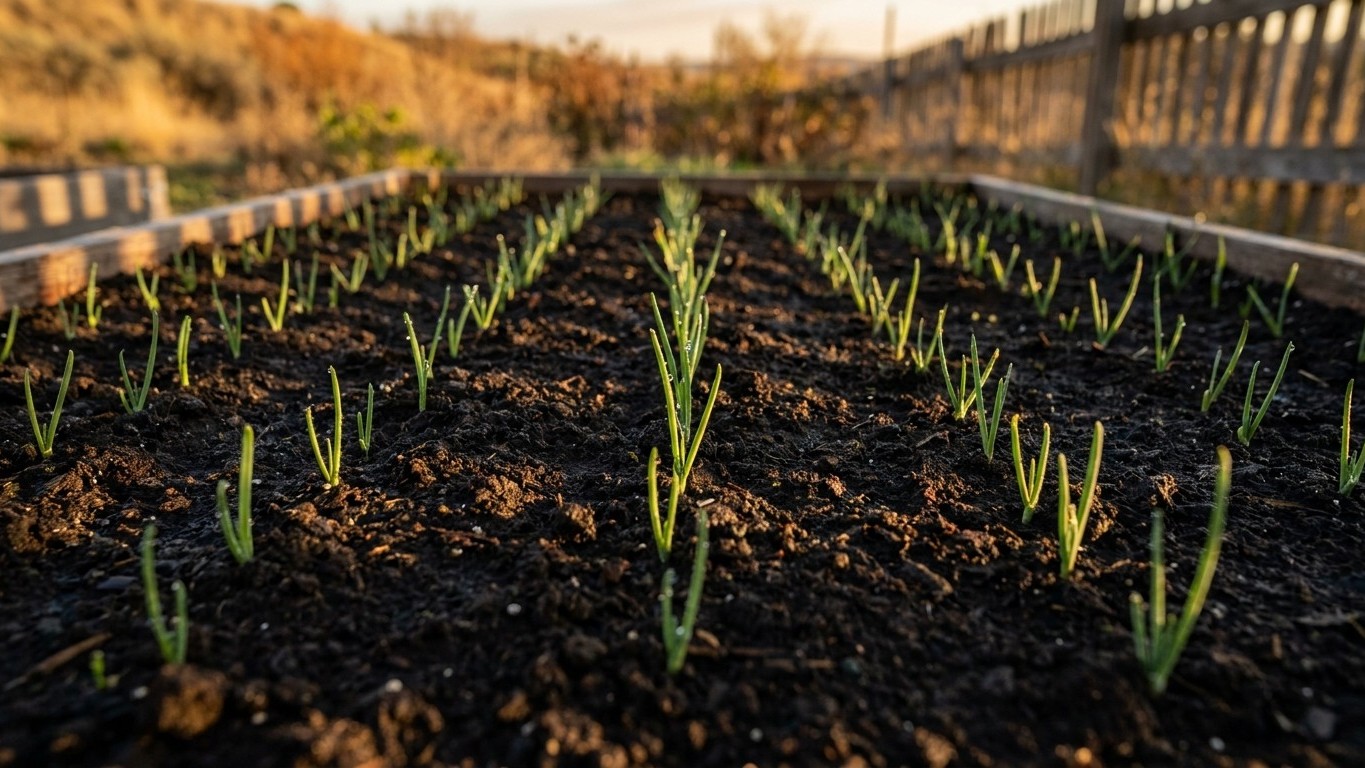

Garlic grown in Alaska faces a short list of pests, and only some of them ever touch the bulb. According to UAF Cooperative Extension, the species actually documented in this territory are aphids, cutworms, root maggots, slugs, and spruce beetle. Not all of those belong in a garlic bed conversation, and knowing which ones do is the first thing that saves a crop.
Which pests attack garlic in Alaska

UAF Cooperative Extension lists five pests for this territory: aphids, cutworms, root maggots, slugs, and spruce beetle. That is the full documented set, and there is no reason to pad it with anything else, because Alaska’s growing conditions and its short list of recorded pest pressure simply don’t support a longer roster here.
One of those five doesn’t belong in a garlic patch at all. Spruce beetle attacks spruce trees, boring into bark and cambium of standing conifers. It has nothing to do with an allium bulb sitting in a raised bed or a garden row, and a gardener who spots bark beetle damage on a nearby tree shouldn’t connect it to garlic trouble. That leaves four pests worth watching in a garlic planting.
Aphids cluster on the green foliage, piercing leaf tissue and pulling sap, which weakens the plant’s ability to build the bulb below ground. Cutworms work at soil level, severing young shoots near the base, sometimes overnight, so a gardener finds a toppled plant with no obvious chewing on the leaves themselves. Root maggots tunnel into the below-ground portion of the plant, the part that matters most for garlic since the crop is grown for its bulb. Slugs graze on leaf tissue and can work down into loose, moist soil around the neck of the plant, especially where mulch stays damp.
The detail that decides how much any of this matters is the length of the season these pests have to work with. Anchorage’s climate normal window runs roughly 143 frost-free days, based on NOAA NCEI 1991-2020 data for station USW00026451. That’s a short runway compared to much of the Lower 48, and it caps how many pest generations can build up before autumn cold shuts things down. Gardeners farther into the Interior or north of the station’s coverage area work with an even tighter window, since Anchorage sits among the mildest inhabited parts of the state.
When each one shows up, and what it does first
Garlic in this territory goes into the ground in autumn and gets lifted the following summer, so the pest calendar has to be read against that long overwintering period rather than against a single growing season. The bulb sits below ground through the cold months, and pest activity picks up as the soil warms and green growth resumes.
Aphids tend to show up first as a change in leaf color and vigor rather than visible insects. A gardener typically notices curled or yellowing leaf tips, sometimes a sticky residue on the foliage, before spotting the small soft-bodied insects themselves clustered near the newest growth. Cutworms announce themselves differently: a plant that looked fine the day before is simply down, cut through near the soil line, with the top still green and otherwise healthy-looking.
Root maggots give the least warning above ground. The first sign is often a plant that wilts or yellows despite normal watering, because the damage is happening out of sight at the root and bulb. By the time foliage clearly declines, the below-ground damage is usually already done. Slugs leave a more visible calling card: ragged holes in leaf tissue and a telltale slime trail across the soil surface or up the plant itself, most active during damp, cool stretches rather than dry spells.
The window that matters most for timing garden work around all of this is the fall frost date, and it’s a midpoint, not a guarantee. NOAA NCEI’s 1991-2020 climate normals put the first fall freeze for the Anchorage station at September 22 to October 1. In roughly one year out of every two, that first freeze arrives later than this range, which is exactly why it’s described as a midpoint rather than a safe date to plan around. Pest activity, particularly aphid buildup and slug feeding, tends to taper as the season closes in around that freeze window, but a late frost year gives all four pests extra weeks of activity a gardener might not expect.
Telling the damage apart from everything else
Not every ragged leaf or yellow tip in a garlic bed traces back to an insect. Alaska’s short season and often heavy, cold soils produce their own stress symptoms that look a lot like pest damage to an untrained eye, and mixing the two up leads to the wrong response.
The detail that separates insect damage from everything else is where the damage starts and how evenly it spreads. Pest feeding tends to be patchy and localized, concentrated on specific plants or specific leaves, while nutrient or moisture stress tends to show up more evenly across a bed.
| Symptom | Likely pest cause | What else it could be | What distinguishes it |
|---|---|---|---|
| Yellowing leaf tips | Aphids | Nitrogen deficiency, uneven watering | Look for clustered insects or sticky residue on the underside of leaves; deficiency symptoms spread evenly across the whole bed |
| Plant toppled at soil line | Cutworms | Frost heave, wind, mechanical damage from tools | A cutworm cut is clean and close to the soil surface; frost heave usually lifts the whole plant with roots exposed |
| Wilting despite watering | Root maggots | Waterlogged or compacted soil, disease | Dig gently near the bulb; maggot damage shows as tunneling or soft, damaged root tissue |
| Ragged holes in leaves | Slugs | Wind tatter, hail, mechanical injury | Slime trails on soil or foliage are the clearest sign; wind tatter has no slime and tends to be at leaf edges |
A gardener who isn’t sure which of these is at play shouldn’t guess at a diagnosis from a symptom list alone. The county extension office can look at a sample or a clear photo and say what’s actually happening in that specific bed.
What actually works here, and what is a waste of time
On a growing season this short, timing does more work than any single control method. Getting garlic into the ground and lifted on schedule around the fall planting and summer harvest cycle matters more than anything applied mid-season, because it limits the window pests have to build populations in the first place.
Physical barriers work well against slugs and cutworms specifically because they don’t rely on timing a treatment at all. A simple collar around young shoots blocks cutworms at the exact point they attack, near the soil line, and shallow barriers or traps reduce slug access to damp mulch and soil around the plant neck. Removing garden debris and excess mulch in fall also takes away the damp, sheltered spots slugs and overwintering cutworm larvae rely on through the cold months.
For aphids, checking the undersides of leaves regularly during active growth catches a buildup early, before it spreads through a bed, and a strong water spray can knock a light infestation back without any other intervention. Root maggots are harder to catch early since the damage is underground, which makes crop rotation and clean soil practices more useful than any reactive fix, since by the time wilting shows up, the below-ground damage is largely done.
What wastes time here is treating on a calendar month rather than watching the plants and the soil. A short season doesn’t forgive delayed action, and neither does it reward preventive treatments applied out of habit rather than in response to an actual sign of a pest. Specific products, active ingredients, and what’s legally approved for use in Alaska aren’t something to guess at from an article. That’s a question for the extension service, which knows what’s registered for use in the state.
Where to check this for your own county
UAF Cooperative Extension is the source for everything documented on this page, and it’s also the right first call for anything specific to one garden. The main office can be reached through its website, and from there a gardener can find the district office covering their own borough or census area.
What’s documented at the state level doesn’t mean every pest shows up everywhere, and a gardener’s actual experience can look quite different from a statewide list. Anchorage’s climate, with its roughly 143 frost-free days, is milder than most of the Interior and far milder than areas farther north, and pest pressure shifts with that. A slug problem common in a damp coastal garden may barely register in a drier interior valley, and vice versa for cutworm activity that favors different soil and temperature conditions.
The most useful next step for anyone seeing damage they can’t confidently identify is contacting the local extension office directly, ideally with a photo or a sample, rather than matching symptoms to a list found online. County-level staff know what’s actually been reported nearby that season, which is information no statewide article can carry.
Common questions
Do all five pests UAF Cooperative Extension documents affect garlic?
No. Spruce beetle is on the list for this territory but attacks spruce trees, not garlic or other allium crops. The four relevant to garlic are aphids, cutworms, root maggots, and slugs.
Is the fall frost date safe to plan garlic planting around?
It’s a midpoint, not a guaranteed cutoff. NOAA NCEI’s 1991-2020 normals place the Anchorage station’s first fall freeze between September 22 and October 1, but the freeze arrives later than that range in about half of all years.
Why is root maggot damage hard to catch early?
The damage happens below ground on the bulb and roots, so above-ground symptoms like wilting or yellowing usually appear only after the damage is already underway.
What should I do if I can’t tell pest damage from a nutrient or watering problem?
Contact the local UAF Cooperative Extension office with a photo or sample rather than guessing. Pest damage tends to be patchy and localized, while nutrient and moisture stress tends to spread evenly across a bed, but a county office can confirm which is at play.