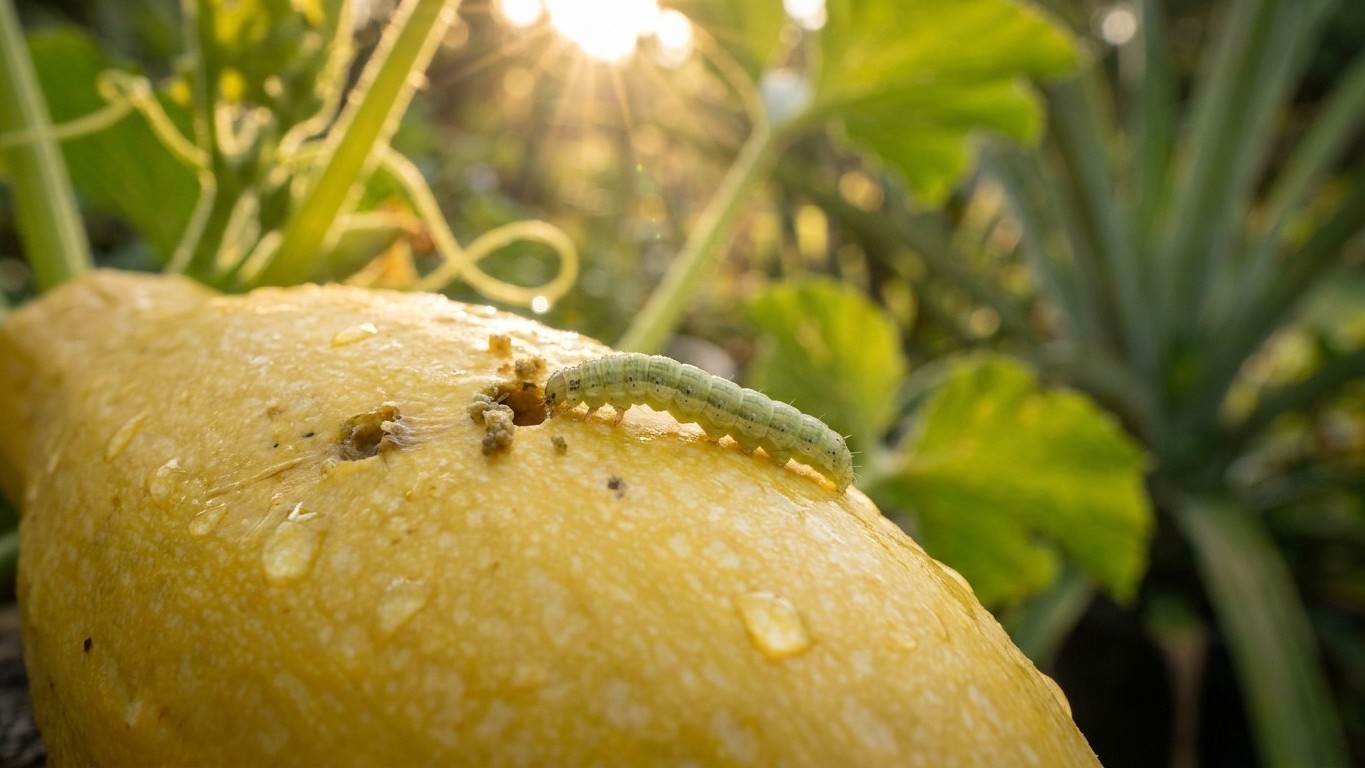

Ten insects appear often enough on New Mexico squash plants that the state’s extension service tracks them by name. Of those, only a handful actually feed on summer squash. The rest belong to other crops entirely, and confusing them wastes time better spent checking the plants that are actually at risk.
Which pests attack summer squash in New Mexico

New Mexico State University Extension documents ten insect pests active in home gardens and field crops across the state: Aphids, Bagrada bug (Bagrada hilaris), Beet leafhopper (Circulifer tenellus), Corn earworm, Grasshoppers, Lygus bugs, Spotted cucumber beetle, Squash bug, Striped cucumber beetle, and Thrips.
That list isn’t a squash-specific list, and treating it as one leads gardeners to blame the wrong bug. The Bagrada bug is a stink-bug relative that specializes in cabbage-family plants, cole crops like broccoli and mustard greens are its target, not vining squash. The Beet leafhopper feeds on beets, tomatoes, and beans, and it matters mostly because it spreads curly top virus among those crops, not because it damages squash foliage. Corn earworm is exactly what its name says, an ear-and-silk feeder on corn that also bores into tomato fruit; it has no particular interest in a squash leaf. Lygus bugs are a headache for alfalfa growers and cotton fields, occasionally showing up on vegetable buds, but they aren’t a squash specialist either.
That leaves the pests actually worth watching on squash: Aphids, Grasshoppers, Spotted cucumber beetle, Squash bug, Striped cucumber beetle, and Thrips. Squash bug and the two cucumber beetles are the ones built for cucurbits specifically, squash bugs feed almost exclusively on squash and pumpkin, while both cucumber beetle species chew leaves, blossoms, and stems of the whole cucurbit family. Aphids, thrips, and grasshoppers are generalists that hit squash along with dozens of other garden plants.
The single move that keeps you from misdiagnosing squash damage is checking the underside of the leaves before deciding what’s responsible, since squash bug eggs, cucumber beetles, and aphid colonies are all visible there, while wind and drought damage never leave anything behind to find.
When each one shows up, and what it does first
Timing here tracks the frost-free window, not a fixed month. Near the reference station used for New Mexico’s climate normals, the last spring freeze typically clears between March 31 and April 12, and the first fall freeze usually arrives between October 29 and November 9. Gardens outside town, especially those at higher elevation, often see frost linger later in spring and arrive earlier in fall, sometimes by one to two weeks or more.
Striped and spotted cucumber beetles are usually the first pest to show up, often within the first couple weeks after seedlings emerge or transplants go into the ground once frost risk has passed. They chew small round holes in the seed leaves and young true leaves, and they gather on open blossoms, where their feeding can look like petal damage rather than pest damage at first glance.
Aphids tend to build up a little later, as the vines start running, forming clusters on the undersides of newer leaves and along stem tips. The first sign is usually leaf curling or a slightly sticky, shiny residue on the foliage rather than visible holes.
Squash bugs arrive once the plant has real vine growth to offer, laying rows of bronze-colored eggs in neat clusters on the leaf underside. The first visible symptom is often a single wilted leaf on an otherwise healthy-looking plant, before the wilting spreads down that vine.
Thrips activity tracks the heat. New Mexico’s reference station averages 42.5 days a year at or above 90°F, and thrips populations build fastest during the hottest, driest stretches of that stretch, leaving leaves with a silvery or stippled sheen. Grasshoppers show up latest in the season, as surrounding vegetation dries out and they move into gardens looking for green tissue, leaving ragged, torn edges on the larger, tougher leaves rather than the small round holes beetles leave early on.
Telling the damage apart from everything else
Squash plants show a lot of stress symptoms that have nothing to do with insects, and treating for a pest that isn’t there doesn’t fix a watering or nutrient problem.
| Symptom | Possible pest | Common look-alike | What tells them apart |
|---|---|---|---|
| Wilting starting in one leaf, spreading down the vine | Squash bug feeding at the base of the stem | Drought stress during a hot stretch | Water the plant and check again in 24 hours; drought wilt recovers, pest wilt doesn’t |
| Yellow stippling or silvery patches on leaves | Thrips or aphids | Nitrogen deficiency | Tap the leaf over white paper, insects fall out; deficiency yellowing follows leaf age and shows no insects |
| Small round holes in leaves and blossoms early in the season | Striped or spotted cucumber beetle | Hail or wind-driven grit | Beetles are visible on the plant at dawn; weather damage hits every plant evenly, beetle damage clusters |
| Ragged, torn edges on larger leaves later in the season | Grasshoppers | Foot or pet traffic | Grasshoppers are easy to spot moving when the plant is disturbed; look for dark frass pellets on the leaf |
The 24-hour water test is the single fastest way to separate pest wilt from drought wilt, and it costs nothing but a day’s patience before reaching for anything else. For anything the table doesn’t resolve, a local diagnosis beats guessing from a photo online.
What actually works here, and what is a waste of time
Timing beats product choice in a growing season this short. Floating row covers placed over young plants right after the last frost risk clears keep cucumber beetles and squash bugs from ever reaching the foliage, but they have to come off once flowers open, since squash needs bee pollination to set fruit and a cover blocks the bees along with the pests.
Checking leaf undersides weekly for squash bug egg clusters and scraping them off works better than any spray timed by the calendar rather than by what’s actually on the plant. Crop rotation, moving squash to a different bed each year, denies overwintering squash bugs and beetles an easy return trip. Pulling and destroying spent vines before the first fall frost arrives (October 29 to November 9 near the reference station) removes the exact debris squash bugs shelter in over winter, cutting next year’s population before it starts.
What doesn’t help: spraying on a fixed schedule regardless of whether pests are present, which kills the pollinators and beneficial insects a squash patch depends on without actually reducing next month’s pest numbers. Planting into cold, still-wet soil before the frost-free window opens doesn’t get ahead of pests either, it just stresses seedlings and makes them more attractive to aphids once they do arrive. Any product decision, including what’s legal to use in New Mexico gardens, belongs with the state’s extension service rather than a general gardening article.
Where to check this for your own county
New Mexico State University Extension is the right place to confirm what’s actually active in a specific county this season. The statewide list doesn’t mean every pest on it shows up in every garden, elevation, soil, and local growing conditions shift which insects are common from Las Cruces to Taos.
The state’s hardiness range runs from zone 4b to 9a, a spread wide enough that a pest calendar built for one part of New Mexico can be weeks off for another. That’s exactly why a county-level check matters more than a statewide list.
NMSU Extension’s site (aces.nmsu.edu) links to county offices staffed by agents who know local pest pressure directly. Bringing a photo, or better, a sample in a sealed bag, to the county office gets a faster and more reliable answer than matching symptoms against a general description online. That’s the next step once a pest is suspected but not yet confirmed.