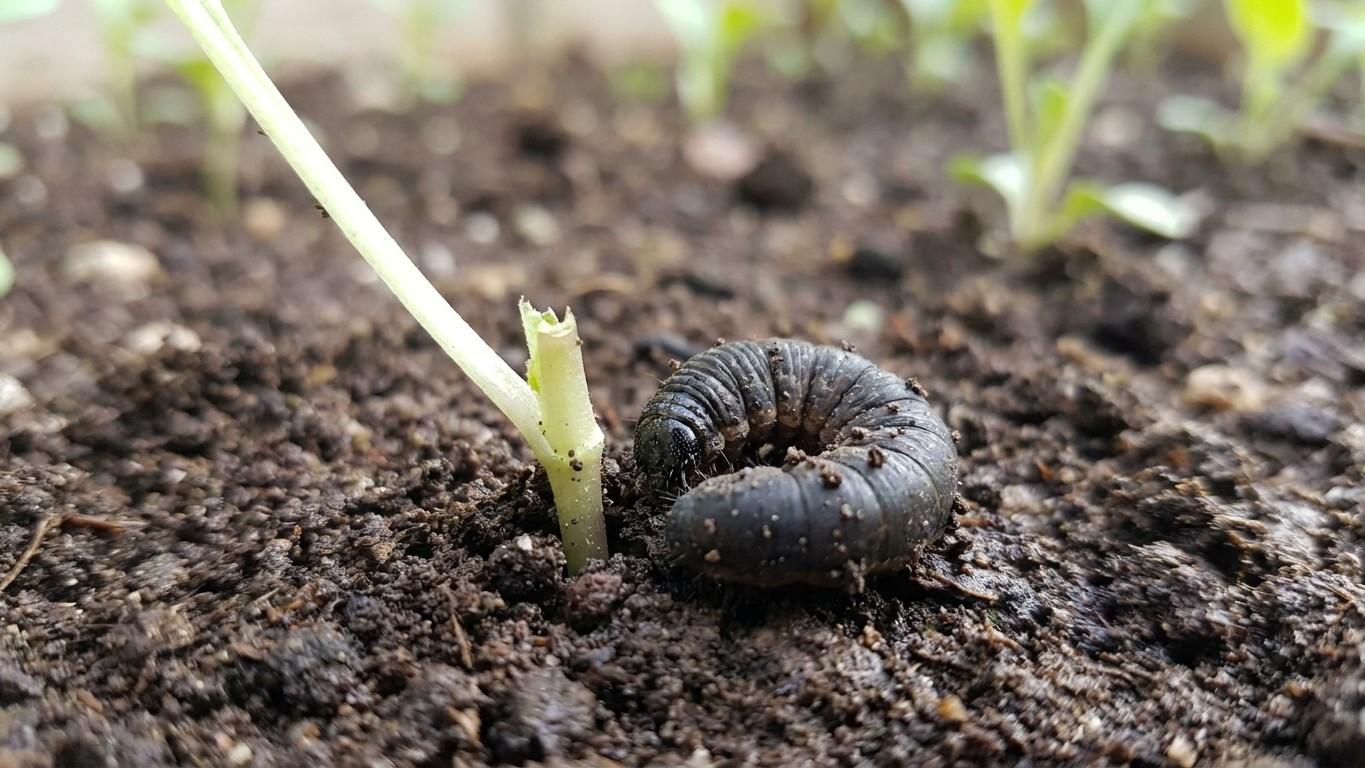

Black cutworm larvae start cutting through Virginia transplants in mid-spring, usually within a few weeks of the state’s last frost, once soil warms enough to wake overwintering pupae and welcome storm-blown moths riding up from the Gulf Coast. The damage is blunt: a seedling standing fine at dusk, severed at the soil line by morning. Row covers, delayed transplanting, and a cleared garden bed are what keep that first bite from happening.
The weeks to watch
Virginia Cooperative Extension does not publish a specific black cutworm flight calendar for the state the way it tracks some other row-crop pests, so gardeners are left working from the insect’s general biology rather than a fixed local date. That biology still gives a usable pattern, because black cutworm behaves differently in spring than it does later in the season.
First generation: the spring migrants
Black cutworm moths do not survive Virginia winters in any real numbers. Each spring, adults ride northward on storm fronts out of the Gulf Coast region and arrive well before local temperatures would let a resident population build on its own. Once here, they lay eggs on low weedy growth, grass, and garden debris. Eggs hatch into larvae that feed at night and hide in the soil by day, and it’s this first wave that does the most damage to spring transplants because seedlings at that stage have thin, tender stems.
Later generations: less concentrated damage
Black cutworm can run through two or more generations across a growing season in the mid-Atlantic. But because the region doesn’t carry over a large resident population, later-season damage tends to be scattered rather than the sharp, early-spring wave that hits new transplants hardest. Established plants with thicker stems are also less vulnerable by then.
Reading the calendar from your last frost
The insect doesn’t check a calendar. It answers to soil temperature, so an early or cold spring shifts the whole timeline even though the frost date itself stays a fixed reference point. For Virginia Beach, that reference is a normal, not a guarantee: NOAA’s 1991-2020 climate data for the NAS Oceana station puts the last spring freeze somewhere between March 20 and April 3. Inland and toward the Blue Ridge, that window runs weeks later.
- Start from your local last-frost normal. On the coastal end of the state, that’s the March 20 to April 3 range; further west, add the extra weeks your area typically runs behind the coast.
- Give the soil roughly two to four more weeks to warm and for transplants to go in the ground before the first cut stems tend to show up. That stretch is when a cover matters most, and it should stay on until stems have thickened past pencil width.
Run that math with your own frost date rather than someone else’s, since a date calculated backward from a range only produces another range, never a single day you can circle on the calendar.
What it attacks, and what the damage looks like
Most gardeners notice the plant before they ever see the insect. A transplant that looked healthy the previous evening is found toppled or missing entirely, chewed through right at the soil line, with the top half sometimes lying nearby untouched. On older, established plants, the same pest can leave ragged holes in low leaves instead of severing the whole stem. It’s the larva that does all of this feeding; the adult moth doesn’t touch the plants at all, which matters because any treatment aimed at moths does nothing to stop the damage already underway from larvae in the soil.
- Corn seedlings
- Tomato and pepper transplants
- Cabbage and other cole crops
- Bean seedlings
- Potato transplants
The common thread is young, tender stems. Once a plant’s stem has toughened past that early stage, it’s far less likely to be cut clean through, even if the same larvae are still active nearby.
How Virginia sits in this pest’s range
On this site, black cutworm is currently documented in one state: Virginia. That’s a note about how this content collection is built so far, not a claim about the insect’s biological range, which is broad across much of the continental United States. A single documented territory means there’s nothing yet to compare Virginia’s timing against within this collection, no neighboring state’s guidance to lean on and no ranking to draw between states. What that leaves is the general pattern described above, applied to Virginia’s own frost normals rather than borrowed from anywhere else. As more territories get added to this pest profile, timing differences between them are likely to show up as shifts in the calendar, since this is a widely distributed insect and the difference between regions tends to be when the moths arrive, not whether they do.
What actually works against it
- Delay transplanting until the soil has warmed past the coldest stretch of spring. Cooler soil slows larval activity, so pushing the calendar back even a week or two can mean transplants go in with less overlap against the peak of the spring generation.
- Clear garden debris and mow down weedy cover before planting. Moths lay eggs on exactly this kind of material, so removing it strips away the nursery before larvae ever hatch.
- Set physical collars around each transplant stem, pushed an inch or two into the soil. This blocks larvae from reaching the one spot on the plant where they can do fatal damage, and it costs almost nothing to set up.
- Hand-pick at night or at first light. Larvae curl up in the soil near the base of a damaged plant during the day, so digging a shallow circle around a freshly cut stem often turns one up.
- Rotate plantings and till garden beds in fall to disrupt where pupae overwinter. This only helps before larvae hatch in spring; once larvae have already bored into a stem or moved below ground, none of these physical measures reach them anymore.
Some gardeners also try barriers like diatomaceous earth rings around stems as a home remedy. It’s a common practice, but trials on how well it actually stops cutworm feeding haven’t produced a consistent conclusion, so it’s worth treating as a supplement to the measures above rather than a replacement for them.
Common questions
Does one cutworm kill more than one plant? Yes. A single larva can move down a row overnight, cutting several seedlings in succession before it’s full, which is why damage often shows up as a cluster of missing plants rather than one isolated loss.
Can black cutworm damage show up on plants that already survived transplant shock? It can, though the risk drops once stems thicken past the seedling stage. Established plants are more likely to show leaf feeding than a clean cut at the base.
Is it worth checking the soil even if I don’t see a moth? Yes. The moths are active at night and rarely seen during the day, so their absence tells you nothing. The soil around a damaged stem is a far more reliable place to look than the air above it.