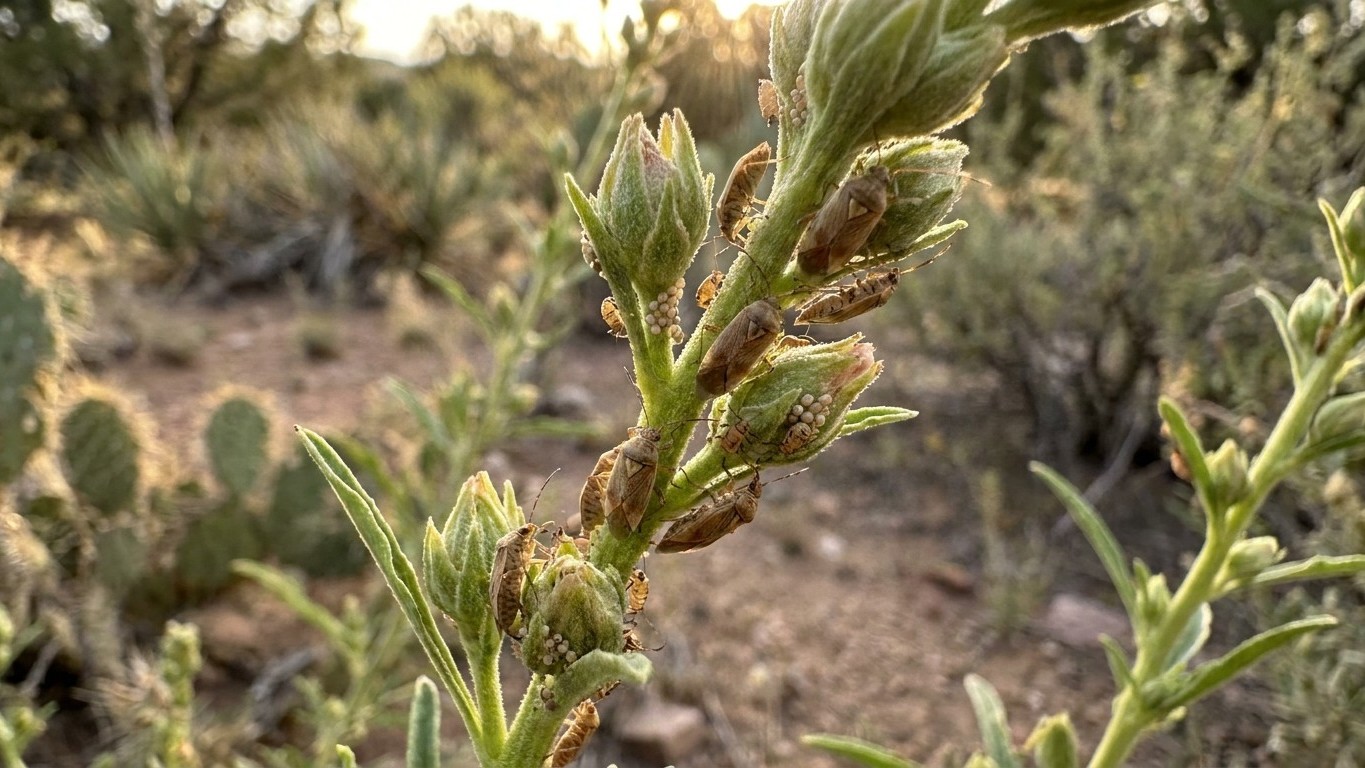

Lygus bugs show up in New Mexico gardens from spring through fall, with three to four overlapping generations that keep populations active almost continuously once the weather warms. There’s no single spray or trap that stops them cold. Control depends on timing your planting, clearing the weedy hosts where they breed, and catching nymphs before they move into flower buds.
The weeks to watch

Lygus bugs don’t follow one clean window in New Mexico. New Mexico State University Extension lists three to four overlapping generations for the species, which means unlike a pest with one clear flight, there’s no single month to circle on the calendar. The generations stack on top of each other, so by midsummer you can have eggs, nymphs, and adults on the same plant at the same time.
What the extension guide does and doesn’t say
New Mexico State University Extension’s guide names calendar months for some garden pests, squash bugs from June through summer, peachtree borer moths in July and August, but it doesn’t publish a specific calendar window for Lygus bugs. For this species, the guide gives only the generation count. That absence is itself useful information: it tells you Lygus activity is driven more by plant growth stage than by a fixed date on the calendar.
The practical pattern
Because the generations overlap, treat Lygus as a season-long presence rather than a single flight to watch for. Activity typically ramps up as host plants put out new growth in spring, stays elevated through the flowering and fruiting stages of summer crops, and tapers only when temperatures drop and plants stop producing tender new tissue in the fall.
Reading the calendar from your last frost

New Mexico gardeners plan around one date more than any other: the last spring frost. At the Albuquerque airport weather station, NOAA’s 1991-2020 Climate Normals put that window between March 31 and April 12. Suburban and rural gardens, and anywhere with more elevation, typically see frost linger one to two weeks longer, so check your own county’s extension office before setting a date in stone.
Lygus bugs respond to soil and plant warmth, not to a printed date, so an early spring pulls their activity forward and a cold, wet spring delays it. New Mexico State University Extension doesn’t publish a fixed number of weeks between transplanting and the first visible Lygus damage, so the safer approach is to track your plants’ growth stage instead of counting days.
- Start from your local last-frost window (March 31 to April 12 at the Albuquerque station, later if you’re at elevation or in a rural pocket).
- Watch your transplants rather than the calendar: damage tends to appear once plants begin forming flower buds, since that’s the tissue Lygus adults and nymphs target first.
That timing matters for row covers. Put them on at transplanting, while the covers can still exclude the pest entirely, and take them off once flowering starts, since covers also keep out the pollinators your fruiting crops need.
What it attacks, and what the damage looks like

Most gardeners spot Lygus damage before they ever see the insect. Look for a shoot tip that suddenly wilts and blackens, buds that drop before opening, or fruit that comes in pitted, dimpled, and lopsided instead of smooth, a symptom often called cat-facing. On seed crops, the damage shows up as shriveled or aborted seeds rather than anything visible on the leaf itself. Once you see that pattern, check whether the plant is one of the species Lygus commonly targets.
- Alfalfa
- Cotton
- Beans
- Potatoes
- Strawberries
- Vegetable and flower seedlings
Both nymphs and adults cause the damage, piercing buds, flowers, and developing seeds with needle-like mouthparts and injecting saliva that kills the surrounding tissue. That matters for treatment: nymphs are wingless and stay put on the plant they hatched on, which makes them the stage you can actually intervene against. Once adults have mated and dispersed to lay eggs elsewhere, you’re managing next generation’s problem, not this one.
How New Mexico sits in this pest’s range

This site currently documents Lygus bug guidance for one territory: New Mexico. That’s a narrow footprint, and it means New Mexico sits at the edge of what’s been written up here rather than in the middle of a broad, state-by-state comparison. It doesn’t say anything about how severe Lygus pressure is in New Mexico relative to anywhere else, only that the guidance drawn on for this page comes from New Mexico State University Extension’s own pest bulletin rather than being pieced together from a neighboring state’s data.
Biologically, Lygus bugs are anything but rare or localized, they’re common across a wide range of climates and cropping systems in North America. But that broader distribution isn’t the claim being made here. What can be said with the facts on hand is narrower and more useful: New Mexico’s overlapping three-to-four generation pattern comes from the state’s own extension service, not borrowed from elsewhere, and as more territories get added to this site, that picture of timing across regions will fill in.
What actually works against it

Start cheap, and layer on more effort only as needed.
- Clear weedy hosts near the garden. Lygus bugs breed in weeds and grassy borders before moving into cultivated crops. Mowing or removing that vegetation before bloom cuts down the population that migrates in, but it only helps before egg-laying starts, not after nymphs are already established on your plants.
- Time your planting around bud and bloom stage. Since damage concentrates on buds, flowers, and developing fruit, transplanting so that the most vulnerable stage doesn’t line up with peak adult activity reduces exposure. This is a timing shift, not a guarantee, since overlapping generations mean some activity is present most of the season.
- Use row covers from transplant to first bloom. Physical exclusion works as long as the cover stays sealed at the edges and comes off before flowering, when pollinators need access. Once the cover is removed, it offers no further protection.
- Hand-pick or vacuum nymphs off plants. Nymphs can’t fly, so they’re the stage where physical removal actually reduces numbers on that plant. Adults can simply fly back in, which is why this step matters most early, before winged adults arrive from elsewhere.
- Rotate susceptible crops and clear plant debris after harvest. Removing the plant material where eggs and late-season nymphs overwinter or shelter reduces the source population for next year, though it does nothing for the generation already active this season.
None of these measures reach Lygus bugs once they’re feeding deep inside a bud or a developing seed pod, that’s the point at which prevention has already failed for that particular fruit or flower, and the next opportunity is the following generation or the following season.
Common questions
Do Lygus bugs bite people or pets?
No. They feed exclusively on plant tissue with piercing-sucking mouthparts built for buds, stems, and developing seeds, not on animals or humans.
Can I tell Lygus damage apart from other sucking insects?
The cat-facing pattern on fruit, pitted and lopsided rather than smooth, combined with sudden shoot-tip wilting and dropped buds, is a fairly distinctive combination, though a close look at nymphs (small, pale green to yellow, wingless) on the plant confirms it.
Is one bad Lygus year a sign next year will be worse?
Not necessarily. Because New Mexico State University Extension ties activity to overlapping generations driven by seasonal warmth rather than a fixed multi-year cycle, a cooler or wetter spring the following year can shift timing and reduce pressure even after a heavy season.