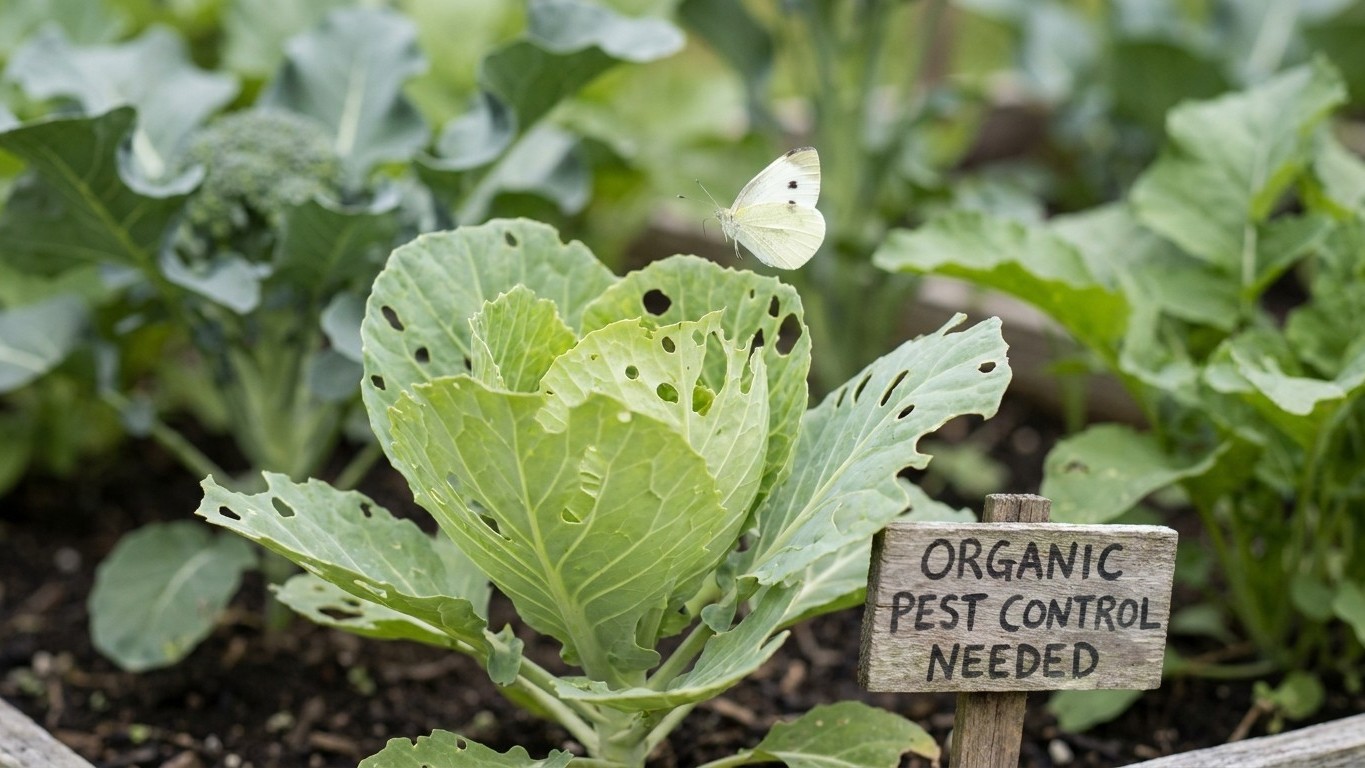

Cabbage worms show up in Pennsylvania gardens as soon as cole crops go in the ground, and they don’t leave until frost shuts things down for the year. Two species do the chewing here, the imported cabbageworm and the cabbage looper, and both run through several overlapping generations from spring through fall rather than showing up for one tidy window. Penn State Extension doesn’t publish a specific date range for this pest the way it does for tomato hornworm, so the timing below leans on the general biology of the insect.
The weeks to watch

There’s no single published window for cabbage worms in Pennsylvania. Penn State Extension’s home garden pest notes cover tomato hornworm (damage running July through early September) and fall webworm (late summer into early fall), but the same source doesn’t name a specific start and end date for imported cabbageworm or cabbage looper activity. That gap isn’t an oversight; these two pests build up gradually across the whole growing season rather than peaking in one identifiable stretch, so extension guidance tends to describe the pattern instead of a calendar date.
First generation, spring emergence
Adults overwinter as pupae attached to old plant debris or nearby structures. Once air temperatures warm consistently in spring, the white butterflies (imported cabbageworm) and mottled gray moths (cabbage looper) emerge and start laying eggs on young brassica transplants. This is usually the smallest generation of the year, but it’s the one that sets up everything that follows.
Overlapping summer generations
By midsummer, the life cycle has sped up. Eggs laid in early summer become adults in a matter of weeks, and those adults lay the next round before the first generation has even finished feeding. The result is a garden bed with eggs, small larvae, and near-mature caterpillars present all at once, which is why summer damage often looks worse than spring damage even though no single generation is unusually large.
Late-season activity into fall
Cabbage worms keep feeding into fall crops, particularly on late-planted broccoli, kale, and cabbage grown for a fall harvest. Activity tapers off as temperatures drop, and the last generation of caterpillars pupates to overwinter and start the cycle again the following spring.
Reading the calendar from your last frost

Cabbage worms answer to soil and air warmth, not to a printed date, so the one anchor a Pennsylvania gardener actually has is the local last spring frost. Across the Philadelphia area, that date falls between March 29 and April 6, based on NOAA’s 1991-2020 climate normals. Philadelphia is the mildest corner of the state; the northern tier and the Alleghenies typically run two to four weeks later, which pushes the whole cycle back accordingly.
Cole crops go in the ground around or even before that last frost date, since cabbage, broccoli, and kale tolerate cool soil. Cabbage worm adults don’t become active on that same schedule, though. They wait for warmer, more settled air, so the first visible chewing tends to lag well behind the transplant date itself.
- Start from your local last frost date (March 29 to April 6 around Philadelphia; two to four weeks later in the northern tier and Alleghenies).
- Add roughly three to five weeks after transplanting before the first ragged holes typically appear, since it takes that long for eggs to hatch and larvae to grow large enough to leave visible damage.
That arithmetic is a normal, not a guarantee. An unusually warm spring pulls the whole timeline forward; a cold, wet stretch pushes it back just as easily.
What it attacks, and what the damage looks like

The symptom shows up before the insect does. Leaves develop irregular, ragged holes, often chewed from the underside first, leaving the top surface intact until the damage is severe. Small greenish-brown pellets of frass collect between leaf ribs, and in bad infestations only the tough veins remain, giving the plant a skeletonized, lacy look. The caterpillar stage does essentially all of the damage. Imported cabbageworm larvae are velvety green with a faint yellow stripe down the back; cabbage looper larvae are pale green and arch their middle like an inchworm when they move, which is the easiest way to tell the two apart without a photo.
Both species stick to the same family of host plants, so a quick check of what’s growing tells you whether the damage lines up.
- Cabbage
- Broccoli
- Cauliflower
- Kale and collards
- Brussels sprouts
- Kohlrabi
How Pennsylvania sits in this pest’s range

Both imported cabbageworm and cabbage looper are established across essentially every state in the country, so Pennsylvania’s presence in that range isn’t unusual or notable on its own. Widespread here means the difference between one part of the state and another is timing, not whether the insect shows up at all.
| Region | Last frost timing | Practical effect |
|---|---|---|
| Philadelphia area | March 29 to April 6 | Earliest transplant window, earliest first-generation activity |
| Northern tier and Alleghenies | 2 to 4 weeks later | Compressed season, later transplant, later first damage |
A gardener in the Philadelphia suburbs and a gardener in the Alleghenies are dealing with the same two species, running the same rough three-generation cycle. The Allegheny gardener just starts three or four weeks behind, and that gap tends to hold through the whole season rather than closing as summer goes on.
What actually works against it

- Time the planting. Getting cole crops in as early as soil conditions allow lets plants mature past the seedling stage before the first generation of adults is flying heavily, so early damage affects tougher, more established leaves rather than fragile transplants.
- Use row covers from transplant. Lightweight fabric laid over the bed and sealed at the edges physically blocks butterflies and moths from reaching leaves to lay eggs. It stops working the moment the cover is removed for weeding or harvest, or once plants grow tall enough to press against the fabric, since eggs can be laid right through contact points.
- Hand-pick eggs and larvae. Checking leaf undersides for pale yellow eggs or caterpillars and removing them by hand works well when numbers are still low, since it simply removes individuals before they do more feeding. It stops being practical once populations climb or larvae have moved deep into the plant’s center leaves.
- Rotate where brassicas grow. Moving cole crops to a different bed each year reduces the local buildup of overwintering pupae right where next year’s crop would otherwise be. It doesn’t stop flying adults from finding the new location, but it lowers the carryover from one season to the next.
- Clear old plant debris after harvest. Removing spent brassica stalks and leaves eliminates a common overwintering site for pupae, which reduces how many adults emerge from that exact spot the following spring. It does nothing for a current infestation already feeding on live plants.
- Support natural predators. Parasitic wasps lay eggs inside caterpillars and kill them over time, and avoiding broad-spectrum treatments in the garden lets those wasp populations build up. That protection disappears if a treatment that also kills beneficial insects gets applied nearby.
Common questions
Do cabbage worms only attack cabbage?
No. Both species feed across the whole brassica family, including broccoli, cauliflower, kale, collards, brussels sprouts, and kohlrabi, not cabbage exclusively.
What’s the real difference between imported cabbageworm and cabbage looper?
The adults look different (a white butterfly versus a mottled gray moth), and the larvae move differently: the cabbageworm caterpillar crawls normally, while the looper arches its back into a loop with each step, similar to an inchworm.
Can row covers stay on the whole season?
Not on crops that need pollination, but most cole crops are harvested for their leaves or heads rather than fruit, so covers can often stay in place from transplant through harvest as long as the fabric is loose enough to allow for growth and sealed tightly at the soil line.