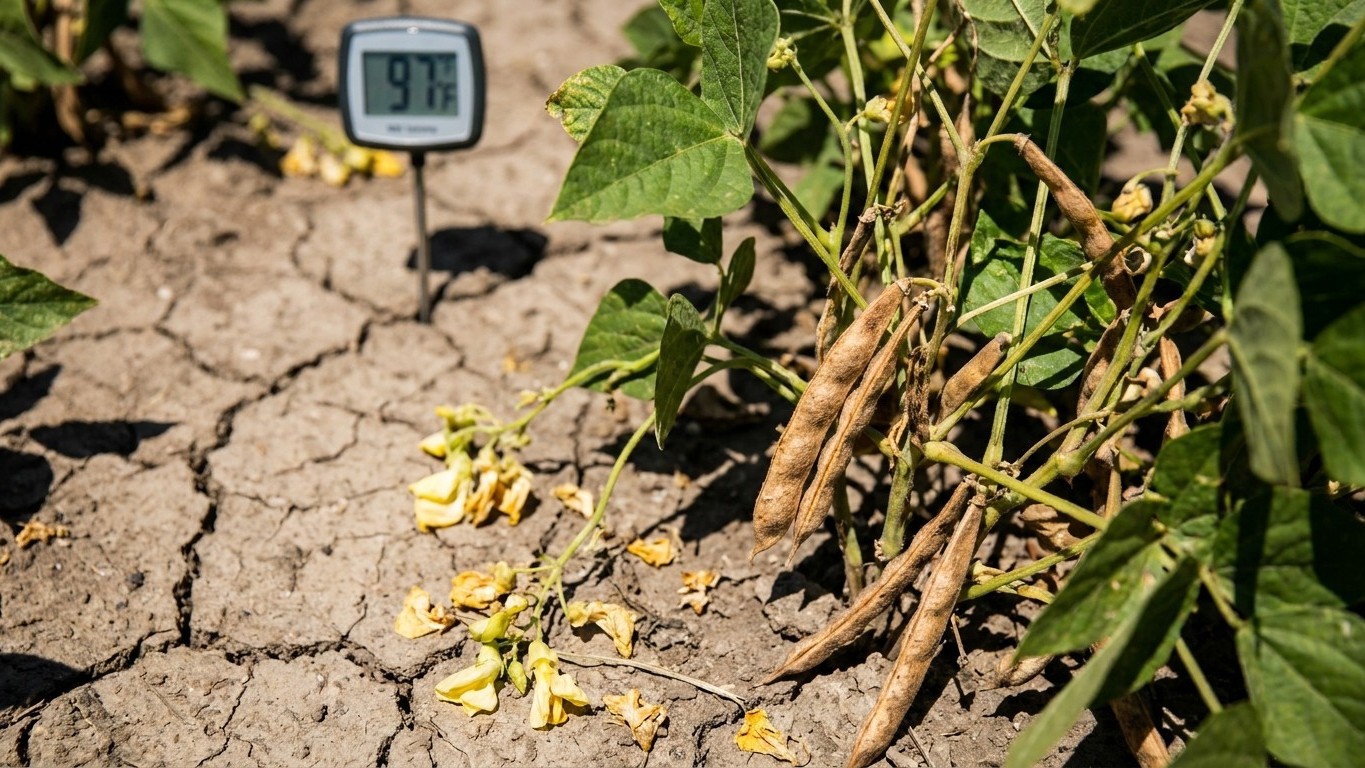

The short version: it’s not two problems, it’s one. Utah State University Extension identifies heat above 95°F and dry soil during flowering as the trigger for dropped blossoms, and the same stress later shows up as tough, fibrous strings in the pods. Fix the water and shade situation during flowering, and both symptoms usually clear up together.
The short answer
According to Utah State University Extension’s guide Beans in the Garden, plants that drop their flowers “may have been water or heat stressed just prior to or after the flowers open.” The threshold the Extension names is specific: hot weather above 95°F combined with dry conditions causes the plant to abort flowers rather than set pods. It’s a survival response. A stressed bean plant treats its own blossoms as expendable, cutting losses so the plant itself can keep going.
The same source ties stringy pods to that identical stress window. “Stringy beans are further evidence of heat or water stress,” the Extension writes, explaining that fibers form inside the pod walls during periods of stress. So if you’ve noticed both problems on the same plants in the same week, that’s not a coincidence or two separate diseases to diagnose. It’s one growing condition showing up twice, first as a dropped flower, later as a tough string running the length of the pod.
Because beans are direct-sown, warm-season crop, timing questions around this stress aren’t about a calendar date, they’re about a countdown. Bush-type beans need 50 to 60 days to mature from seed. If you’re deciding whether there’s still time for another sowing, or wondering whether an early planting will hit its flowering window during a stretch of extreme heat, count backward from your own first fall frost date rather than aiming at a specific month. That single number, 50 to 60 days, is the anchor point the Extension gives, and it applies wherever you garden, not just in Utah.
Worth noting: the Extension’s guidance treats water stress and heat stress as functionally the same event for this purpose. You don’t need to determine which one caused a given flower to drop. The fix addresses both at once, which simplifies things considerably for anyone standing in the garden trying to figure out what went wrong.
What actually decides it

Why a heat-loving crop can be hurt by heat
Beans are a Warm-Season Crop. They need warm soil to germinate and warm air to grow, which is exactly why they’re direct-sown after the soil has warmed rather than started early indoors. But warmth and extreme heat aren’t the same thing, and the Extension draws a hard line at 95°F. Below that threshold, warmth pushes the plant toward vigorous flowering and pod set. Above it, paired with dry soil, the plant redirects its energy toward survival, and open or opening flowers become the first casualty. The apparent contradiction, a heat-loving plant hurt by heat, resolves once you separate “warm” from “too hot and too dry at the same time.” Either factor alone is manageable. Together, during the flowering window specifically, they trigger abortion.
Why the stress shows up twice, at two different times
The Extension is direct on this point: “Water needs are most critical during flowering and pod sizing.” That’s a fairly narrow window in the plant’s life cycle, but it’s also the window where the two symptoms originate, even though you notice them at different moments. A flower that aborts drops off the plant within days, so you see that failure almost immediately. But a pod that forms under stress doesn’t reveal its fiber problem until you bite into it or try to snap it weeks later. Same stress event, same critical window, but one symptom reports back fast and the other reports back slow.
The overwatering trap
Because dry stress causes so much visible damage, it’s tempting to overcorrect and flood the soil. The Extension warns against that too: “Do not over water as wet soils promote root rot diseases and slow plant growth.” Consistent moisture, not maximum moisture, is the goal. A soil that swings between soggy and bone-dry stresses the plant just as much as one that’s simply kept too dry throughout.
How to do it
- Wait until soil has warmed before direct sowing. Beans are a direct-sown, warm-season crop with no transplant stage, so seed goes straight into garden soil once conditions are right rather than being started indoors.
- If you’re planning a succession planting, count backward from your first expected fall frost. Keep sowing bush-type beans while 50 to 60 days still remain before that date, since that’s the maturity window the Extension gives for the type.
- Skip the nitrogen fertilizer. This runs opposite to most other garden crops, but beans fix Their Own Nitrogen from the air through root-nodule bacteria, and extra nitrogen delays flowering and reduces pod set rather than helping it.
- Water evenly from germination onward, avoiding the wet-dry swings that stress roots and invite rot.
- Apply an organic mulch as plants approach flowering. A mulch layer buffers both soil moisture and soil Temperature, which directly addresses the two stress factors the Extension names.
- Treat the flowering and pod-sizing stage as the highest-priority watering window in the plant’s entire life cycle. This is the stretch where drought stress causes flower abortion, smaller pods, and increased stringiness all at once.
- If you’re growing dry beans rather than snap beans, reduce watering once the seeds inside the pods begin to mature. Continued heavy watering at that late stage works against the crop rather than for it.
What Goes Wrong
- Flowers drop, and later pods turn stringy on the same plants. Both trace back to one cause: heat above 95°F or dry soil during and after flowering. The remedy is the same for both: keep soil consistently moist and mulch through the flowering stage to buffer the plant against exactly this combination.
- Yield drops and pods come in smaller than expected. Drought stress during or after flowering doesn’t just cause flower abortion, it also reduces pod size directly. Even flowers that survive and set pods can end up producing less if the water shortfall continues into pod sizing. Keep the water steady through that entire stretch, not just at the flowering moment.
- Plants grow slowly and roots look unhealthy. This is the overcorrection failure: wet, saturated soil promotes root rot and slows growth just as surely as drought does, according to the Extension. The fix isn’t more water, it’s more even water, with attention to drainage so the root zone isn’t sitting saturated between waterings.
- Pods are stringy but the plant otherwise looks fine and hasn’t shown obvious stress. Before assuming a watering mistake, check the variety. The Extension notes that some heirloom varieties are naturally stringy, sometimes labeled “string beans” outright. That’s a trait of the plant, not evidence of a growing problem, and no watering adjustment will change it.
- Dry beans come out lower quality at harvest. Continuing to water heavily right up until harvest works against dry beans specifically. The Extension calls for reducing water once seeds begin to mature, which lets pods dry down properly instead of staying soft and vulnerable.
Common questions
Is it possible to tell heat stress from water stress just by looking at the pods?
Not really, and the Extension treats them as functionally interchangeable causes of the same symptoms. Both push the plant toward the same response, flower abortion and fiber formation in the pods, so the fix (consistent moisture, mulch, and managing exposure during extreme heat) addresses both at once without needing to diagnose which one is dominant.
Should I fertilize beans that are dropping flowers, thinking they need a boost?
No. Beans fix their own nitrogen and don’t need the nitrogen fertilizer that helps most other vegetable crops. Adding it actually delays flowering and reduces pod set, which is the opposite of what a stressed plant needs. This is a real exception to how most of the garden is fertilized, and it’s worth remembering specifically because the instinct to feed a struggling plant runs the other way for beans.
How do I know when it’s too late to sow another round of bush beans?
Count backward from your first expected fall frost date. Bush beans need 50 to 60 days to mature, so as long as that many days remain before frost, another sowing has time to produce a harvest. Once you’re inside that window, a new planting is unlikely to mature before cold weather stops it.
My heirloom beans are always a little stringy even in a good year with steady water. Is something wrong?
Probably not. Some heirloom varieties are naturally stringy by type, sometimes marketed as “string beans” for that exact reason. If your watering has been consistent through flowering and pod sizing and the stringiness shows up every season regardless, it’s more likely a varietal trait than a sign of stress.