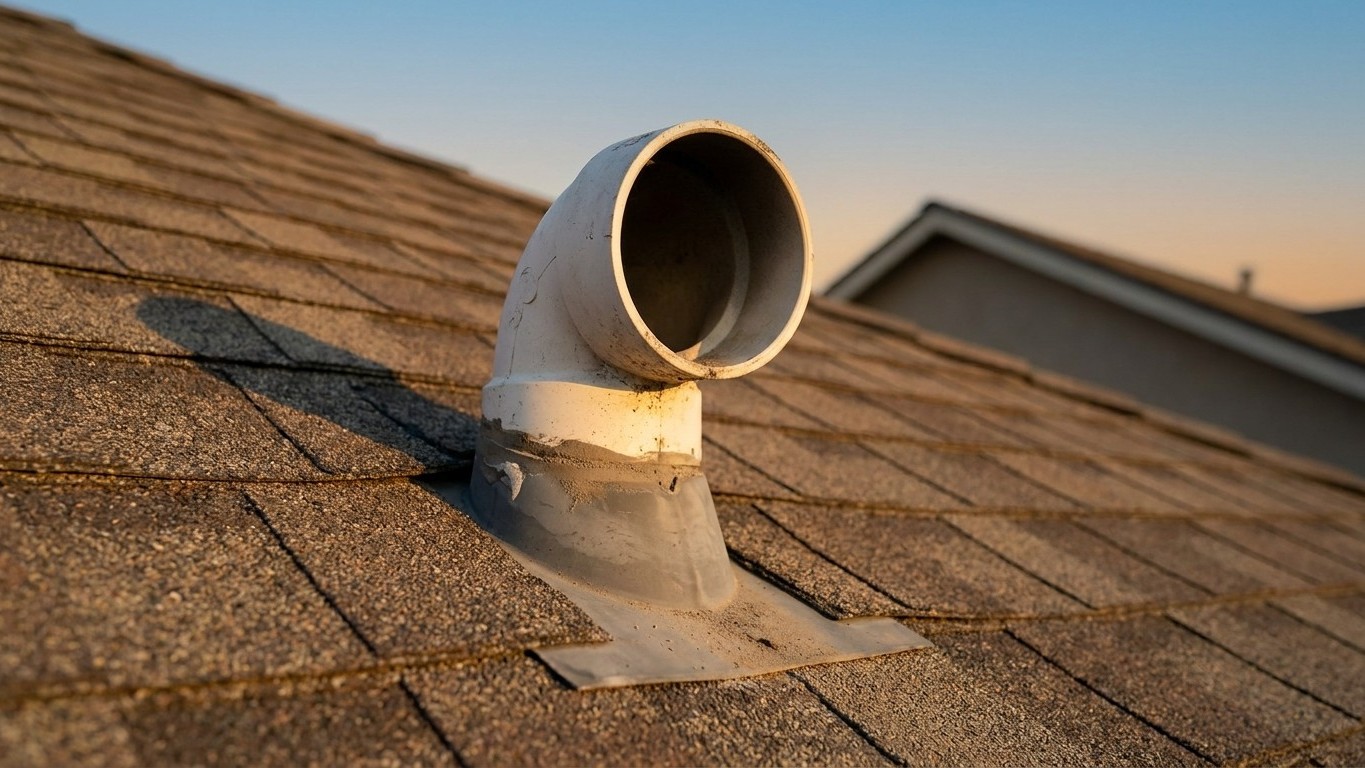

A gurgling drain, a slow-emptying tub, or a faint sewage smell near a bathroom usually means one thing: the plumbing vent for that fixture isn’t doing its job. The vent’s only task is to let outside air into the drain system so wastewater can leave without creating suction. Block it with leaves, ice, a bird’s nest, or a design flaw, and the water in your trap gets pulled out, leaving a dry path straight to your house for sewer gas.
What is actually happening

The thing to understand here is that drains need air to flow. Every time water leaves a sink, tub, or toilet, it has to be replaced by an equal volume of air somewhere in the system, or the whole thing stalls the way a drinking straw does when you cap the top with your thumb. Plumbing vents, usually the pipes that poke through your roof, are how that air gets in. Without them, gravity alone can’t do the job efficiently, and the system starts pulling air from the only other place it can find it: through the water seals in your traps.
Every fixture with a drain, sinks, tubs, washing machines, toilets, has a P-trap or similar bend holding a couple inches of standing water. That water is a physical barrier between the sewer line and your living room. It’s not decorative. When a vent is blocked or undersized for the fixtures it serves, a draining tub or a flushing toilet can create enough negative pressure to siphon that trap water out, sometimes in one dramatic gulp. Once the trap runs dry, there’s nothing stopping sewer gas from drifting up through the drain and into the room. That’s the smell homeowners usually notice first, often in a bathroom that’s barely used, where the trap has had time to evaporate on its own.
Gurgling is the sound of the system fighting for air mid-drain. You’ll often hear it in one fixture right after you use a different one, like a toilet burping when the washing machine drains nearby. That’s a sign the two are sharing a vent path that’s partially blocked or was never sized to handle both at once. Slow drainage, especially in an upper-floor bathroom, points the same direction: air can’t get in fast enough, so water can’t get out fast enough.
Vent problems are almost always mechanical, not chemical. A clog inside a drainpipe blocks water. A clog inside a vent pipe blocks air. They produce similar symptoms, slow drains, odd smells, but they’re solved differently, and confusing the two is why so many people pour drain cleaner down a fixture that was never actually clogged with waste.
What to check, in order
Start with the checks that cost nothing and take the least time. Each one either rules out the vent or points you toward it.
- Look at the roof vent from the ground. Using binoculars or a phone camera zoomed in, check whether the pipe opening is capped with leaves, a bird nest, ice, or a fallen branch. If you can see a clear obstruction, that’s often the entire problem, and it tells you the vent itself is fine, just blocked at the opening.
- Run water in every fixture one at a time and listen. Fill and drain a sink, then a tub, then flush a toilet, noting which ones gurgle and which stay quiet. If only fixtures sharing a wall or a floor gurgle together, that tells you the shared vent branch serving those fixtures is the affected one, not the whole house.
- Check whether the trap water is present or gone. Look into a rarely used drain (a guest bathroom, a basement floor drain) and see if water is visible near the surface. An empty trap confirms siphoning has already happened, which tells you the vent restriction is severe enough to actively pull water, not just slow the airflow.
- Note the weather pattern. If the gurgling started right after a hard freeze or a windstorm that dropped debris, that’s a strong clue the blockage is at the roof opening rather than somewhere deeper in the vent stack.
- Test after clearing visible debris. If you were able to safely clear leaves or a nest from the roof opening, run the same fixtures again. If the gurgling stops immediately, you’ve confirmed and solved it. If it continues, the obstruction is likely lower in the vent pipe, inside the wall or attic, which is where this becomes a job for a plumber with a drain camera.
What you’re really doing with these checks is narrowing the problem from “the whole house” to “one branch, one pipe, one likely spot.” That narrowing is what makes the difference between a five-minute roof cleanup and a repair that requires opening a wall.
What it costs to leave it
A vent problem rarely destroys anything on its own, but ignoring the drain issues it causes has a real cost, and national figures help put that in perspective even though they can’t tell you your own number. The U.S. EPA’s WaterSense program notes that “household leaks can waste nearly 1 trillion gallons of water annually nationwide,” and that “the average household’s leaks can account for more than 9,300 gallons of water wasted every year.” Those are aggregate figures across millions of homes, not a prediction for yours, but they establish that small, ignored plumbing issues add up at scale.
The same program found that “nine percent of homes have leaks that waste 50 gallons or more per day,” which is the range where a household starts to notice it on the water bill even without checking the meter. A related but separate figure: “a leaky faucet that drips at the rate of one drip per second can waste more than 3,000 gallons per year,” and “a showerhead leaking at 10 drips per minute wastes more than 500 gallons per year.” Vent problems themselves don’t waste water the way a dripping faucet does, but the drain slowdowns and trap siphoning they cause often prompt people to run extra water trying to “flush through” a sluggish drain, or to leave a toilet flapper working overtime, and “an old or worn flapper can cause your toilet to flush on its own or silently leak thousands of gallons a year.”
The EPA also states that “fixing easily corrected household water leaks can save homeowners about 10 percent on their water bills,” which is a useful benchmark for what’s at stake once any drain or fixture issue in the house goes unaddressed for months. None of these national numbers tell you what your household is actually losing, though. Your water meter is the only instrument that measures your specific situation, and this site’s guide to spotting a hidden leak walks through how to read it for exactly that purpose.
When to stop and call a plumber
Clearing debris off a visible roof vent opening is reasonable for most homeowners comfortable on a ladder. Past that point, the risk profile changes fast, and it’s worth being honest about where the line sits.
If the gurgling or slow drainage continues after the roof opening is clearly clear, the blockage is likely inside the vent stack itself, behind a wall or running through an attic. That’s not a visual inspection anymore, it’s a job requiring a drain camera and often some demolition to access the pipe, and it belongs to a licensed plumber. The same is true anytime the problem seems to involve the main supply line rather than just a vent or a drain branch; supply-side issues carry pressure and volume that a misdiagnosis can turn into a real flood.
A gas water heater anywhere near the affected fixtures is its own hard stop. Combustion appliances interact with venting and airflow in ways that go beyond drain mechanics, and any suspicion that a gas appliance is involved, even tangentially, means calling a professional rather than guessing.
Any sign that water has already reached structure, a stained ceiling, a soft spot in drywall, warped flooring near a bathroom, changes the job entirely. At that point you’re no longer troubleshooting airflow, you’re dealing with active water damage that can spread mold and rot faster than it’s visible from the surface. Document it with photos, shut off water to the affected fixture if you can do so safely, and call a plumber promptly rather than waiting to see if it dries out on its own.
The short version: rooftop debris is a homeowner task. Anything inside a wall, anything touching the main line, anything near a gas appliance, and any leak that’s already wetted structure, all belong to a licensed plumber who can assess it properly before it gets worse.
Common questions
Can a plumbing vent freeze shut in winter?
Yes. Moist air rising through the vent can condense and freeze at the pipe opening in cold climates, especially on vents with a smaller diameter or those on the shaded side of a roof. This is one of the more common seasonal causes of sudden gurgling that wasn’t there in warmer months.
Do all fixtures need their own vent?
Not necessarily their own dedicated pipe, but every fixture needs to be within a certain distance of a vent connection and often shares a vent branch with nearby fixtures. Local plumbing code governs the exact distances and configurations, which is why this varies by jurisdiction and isn’t something to guess at from general information.
Is the smell from a dry trap dangerous?
Sewer gas is unpleasant and can contain trace amounts of methane and hydrogen sulfide, so it’s worth addressing rather than ignoring, but a brief exposure from one dry trap in a rarely used bathroom isn’t typically an emergency. Persistent strong odors throughout the house warrant faster attention.
Will running water down the dry trap fix the smell?
Often yes, temporarily. Pouring a cup or two of water down a rarely used drain refills the trap and blocks the odor path immediately. It doesn’t fix the underlying vent restriction, though, so the trap will likely run dry again unless the actual airflow problem gets addressed.