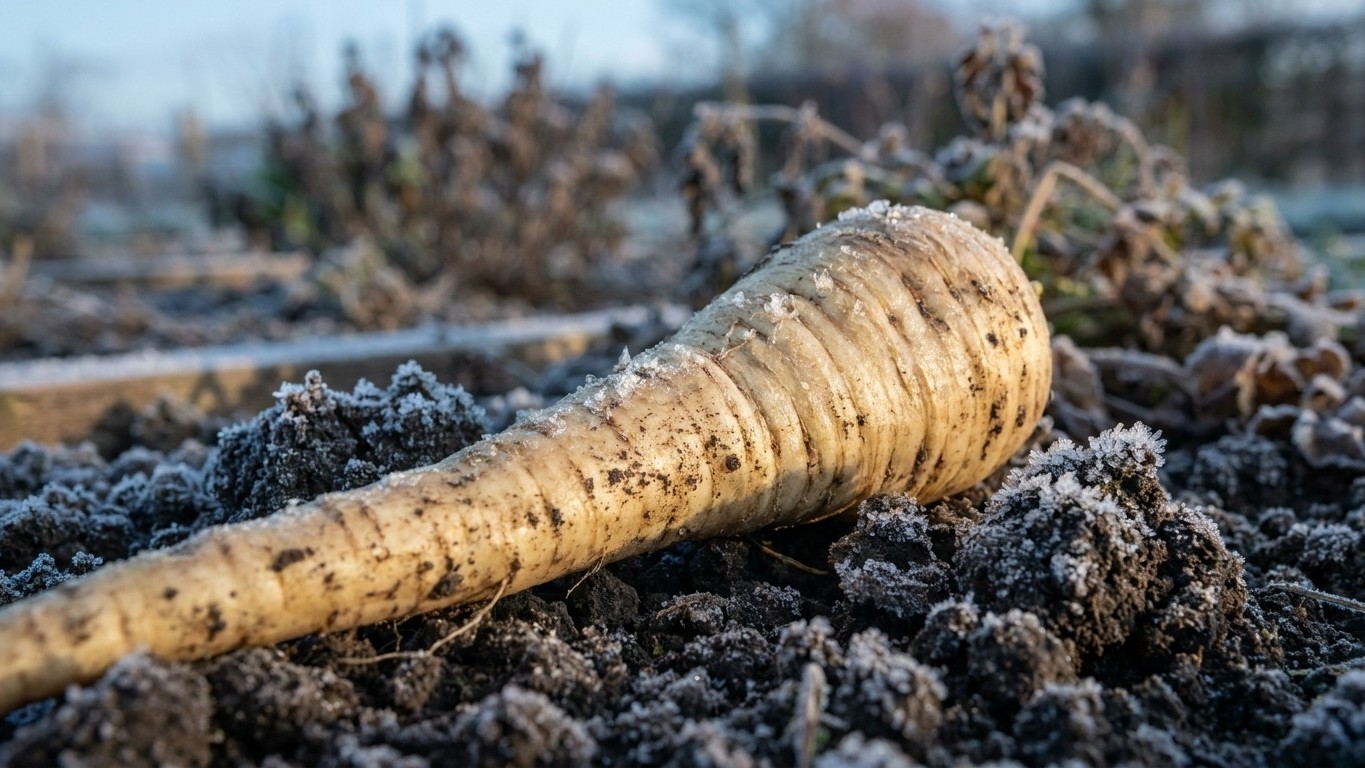

In Arizona’s low desert, parsnips face a short list of documented feeders: aphids, beet leafhoppers, false chinch bugs, grasshoppers, spider mites, and thrips, plus whiteflies moving in from nearby crops. Most target foliage, not the root itself, and damage timing tracks weeks-from-seeding rather than a calendar month, since this region barely freezes at all.
Which pests attack parsnip in Arizona

The University of Arizona Cooperative Extension documents ten pests for this territory: aphids, beet leafhopper (a vector of curly top virus), false chinch bug (Nysius raphanus), grasshoppers, green fruit beetle (Cotinis mutabilis), spider mites, squash bug (Anasa tristis), thrips, tomato hornworm (Manduca quinquemaculata), and whiteflies. That’s the full list for this state, and it isn’t padded here.
Not all ten belong on a parsnip bed. Three can be crossed off immediately, and the reason matters more than the exclusion itself. The squash bug feeds on cucurbits, squash, pumpkin, melon vines, and has no documented interest in a root crop from the carrot family. The tomato hornworm is a solanaceous specialist, built to strip leaves off tomato, pepper, and potato plants; it doesn’t recognize parsnip foliage as food. The green fruit beetle targets ripening, softening fruit, think overripe figs or split melons, and a parsnip never produces fruit for it to land on. Naming any of these three on a parsnip page would be borrowing a pest from the wrong crop.
That leaves seven that actually line up with what’s growing in the ground: aphids, beet leafhopper, false chinch bug, grasshoppers, spider mites, thrips, and whiteflies. All seven are general or semi-general feeders that work on foliage, sap, or young tissue across a wide range of garden vegetables, parsnip’s ferny top growth included. The beet leafhopper deserves particular attention here, not for the direct feeding damage, which is minor, but because it transmits curly top virus while it feeds, and that virus can take down a stand of otherwise healthy plants with no warning beyond a leafhopper you may never have noticed.
None of this is a full accounting of everything that could theoretically nibble a parsnip leaf in a Phoenix-area garden. It’s what one extension service has bothered to document at the state level, which is a narrower and more useful thing than a general internet list of carrot-family pests.
When each one shows up, and what it does first
Arizona’s low desert doesn’t give you a frost-based calendar to work from. NOAA’s 30-year record shows Phoenix reaching 32°F in only 6 of 30 recent springs, and the frost-free season there runs essentially the full year. So pest timing here has to be measured from the planting event itself, not from “early spring” or “late fall,” which don’t mean much when the ground rarely freezes at all.
Parsnip seed is sown directly in place, never transplanted, and germination alone takes 14 to 21 days, a slow start that matters because bare, still-uncovered soil is exactly when false chinch bugs and grasshoppers do their first damage, before there’s much plant to spare. In the first three to four weeks after seeding, while cotyledons and the first true leaves are still soft, aphids and thrips are usually the earliest visible feeders, showing up as curled new growth or a silvery stippling on young leaves rather than any obvious hole.
By five to seven weeks in, with a fuller rosette of ferny foliage established, spider mites tend to appear, first as a fine bronze stippling on the undersides of leaves, worse in hot, dry stretches since mites thrive when humidity drops. Whiteflies move in around the same stage, often first noticed as a small cloud lifting off the plant when it’s brushed, rather than any specific bite mark. Beet leafhoppers can arrive at almost any point in that window, and because the visible sign isn’t the leafhopper itself but the virus it carries, a plant can look fine for weeks after the actual feeding event, then show yellowing, curling, and stunted new growth that traces back to an insect that’s already moved on.
Grasshoppers are the outlier, capable of showing up any time foliage is green and available, and unlike the sap feeders, their damage is immediate and obvious: ragged, chewed leaf margins rather than discoloration. Given that parsnip needs 100 to 120 days from seeding to size up a root, that’s roughly three to four months over which any of these seven can turn up, with no single “peak month” to circle on a calendar in a territory where the seasons don’t pinch the way they do further north or at elevation.
Telling the damage apart from everything else
Insects get blamed for a lot that isn’t insects. Before treating anything, it’s worth ruling out the other usual suspects, because the fix for a pest problem does nothing for a soil or water problem, and vice versa.
A forked or misshapen root is the classic false alarm. On this crop it has two separate possible causes here, and they shouldn’t be merged into one explanation: heavy, compacted, or stony ground that physically deflects the taproot as it grows, and overwatering, which encourages branching in a different way entirely. Neither has anything to do with an insect, and Utah State University Extension notes that heavy soil needs to be double dug and that deep sandy soil is what this crop actually wants.
| Symptom | Likely cause | What distinguishes it |
|---|---|---|
| Yellowing, curled leaves, stunted growth | Curly top virus (via leafhopper) or nutrient deficiency | Virus symptoms appear suddenly on an otherwise healthy-looking plant; deficiency tends to progress slowly across the whole bed |
| Ragged, chewed leaf edges | Grasshoppers | Chewing is visible and localized to leaf margins, not a uniform fading of color |
| Fine bronze stippling, undersides of leaves | Spider mites | Worse during hot, dry spells; often paired with fine webbing |
| Forked, misshapen root | Heavy/stony soil or overwatering | Not an insect issue at all; check soil texture and watering schedule first |
| Wilting despite moist soil | Mechanical root damage or disease | Insects rarely cause wilting alone without visible foliage damage first |
A plant that’s simply thirsty, or a bed that’s short on a specific nutrient, can mimic early pest damage closely enough to fool a quick glance. The safest move when the cause isn’t obvious isn’t to guess and treat, it’s to get a second look from someone trained to tell these apart in this specific soil and climate.
What actually works here, and what is a waste of time
Given how long parsnip sits in the ground, timing matters more than any single tactic. A physical barrier put in place at seeding, before false chinch bugs or grasshoppers find the bare bed, does more good than any reactive step taken three weeks later. Floating row cover over the seed line through germination and early growth keeps early feeders off the most vulnerable stage, and it costs nothing in terms of ongoing labor once it’s laid down.
Watching for the beet leafhopper specifically is worth the effort, since preventing the bite matters more than treating the virus, which has no cure once a plant shows curly top symptoms. Row cover does double duty here too, keeping the vector off the plant during the weeks when young foliage is most attractive to it.
What doesn’t work well on a 100-to-120-day root crop is a one-time treatment applied after damage is already visible. Spider mite populations and aphid colonies build fast in hot, dry weather, and by the time stippling or curling is obvious, a single intervention is playing catch-up against several generations already established. Consistent monitoring, checking leaf undersides every week or so through the growing period, catches problems while a physical or cultural response still has time to matter.
This site doesn’t recommend specific products, active ingredients, or dosages, because what’s labeled and legal for use on parsnip changes by state and by year, and only the University of Arizona Cooperative Extension and its county offices have the current, accurate answer on what’s registered for use in Arizona gardens.
Where to check this for your own county
A statewide pest list is a starting point, not a guarantee of what’s in any one backyard. Documentation from the University of Arizona Cooperative Extension reflects what’s been observed and reported across the state, but pest pressure shifts significantly between a low-desert lot in the Phoenix area and a higher-elevation garden elsewhere in the state, where the growing season and even the pest mix can look different.
The coldest month in Phoenix averages a daily minimum of just 45.3°F, which is mild enough that this territory rarely delivers the “several weeks of frosty weather” that Utah State University Extension says a parsnip needs to convert its starch to sugar. A gardener here can grow a perfectly healthy parsnip that never develops the sweetness the crop is known for elsewhere, and that’s a function of frost exposure, not of the hardiness zone rating on a seed packet.
The next step for anyone seeing damage that doesn’t clearly match what’s described here is a call or visit to the local county Cooperative Extension office. They can confirm what’s actually present in a given county, check a sample if needed, and speak to what’s legally usable in that specific location, something no general list can do reliably.
Common questions
Do parsnips need protection from frost in Arizona?
In the low desert, frost is rare enough that protection isn’t the concern, only 6 of 30 recent springs saw a freeze at the Phoenix reference station. The bigger issue is the opposite one: without real cold, the root may never sweeten the way the crop is known for.
How long before pests show up after seeding?
Germination itself takes 14 to 21 days, and the earliest feeders, aphids, thrips, false chinch bugs, and grasshoppers, tend to appear on the young seedling within the first three to four weeks after that.
Is a forked parsnip root always a pest problem?
No. A forked root is more often a soil or watering issue, heavy or stony ground deflecting the taproot, or overwatering encouraging branching, than anything caused by an insect.
Which documented pests should be ignored on parsnip?
Squash bug, tomato hornworm, and green fruit beetle appear on Arizona’s general pest list but target cucurbits, solanaceous crops, and ripening fruit respectively, none of which describes a parsnip.