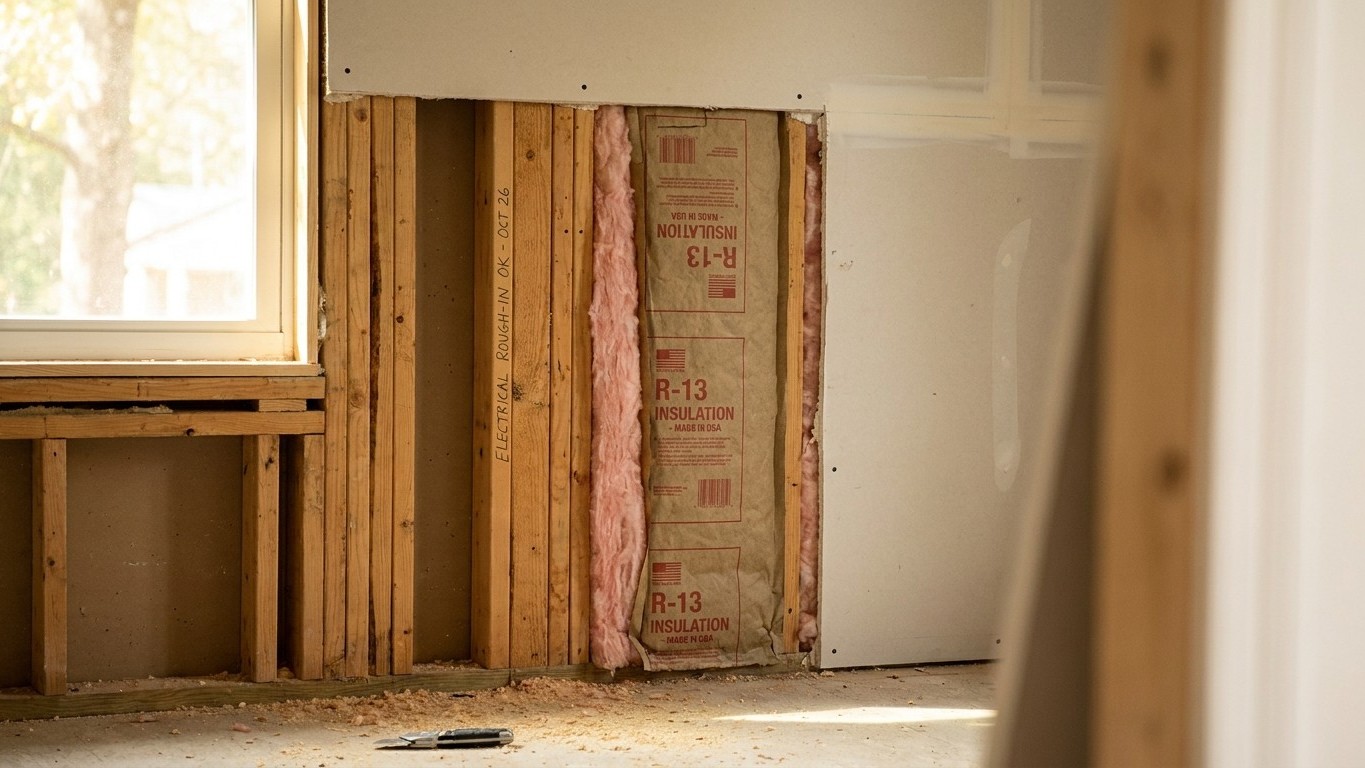

Yes. Every county in Colorado sits in Climate Zone 4B, 5B, 6B, or 7, and none of those fall inside the exception the 2021 International Residential Code carves out for Zones 1, 2, and 3. That means the vapor retarder requirement in Section R702.7 applies across the state, from the eastern plains to the mountain counties, even though Colorado technically spans four separate climate zones.
What the code asks for in Colorado

The 2021 International Residential Code is specific on this point. Section R702.7 states that “a vapor retarder of the class given by Table R702.7(2) shall be provided on the interior side of frame walls,” and it lists four situations where that requirement doesn’t apply. One of those exceptions removes the requirement entirely for Climate Zones 1, 2, and 3, the hot and warm-humid parts of the country. Colorado has no counties in those zones.
Instead, the state’s 64 counties break out this way: 34 counties in Zone 5B, 13 in Zone 7, 12 in Zone 6B, and 5 in Zone 4B. That’s a real spread. Zone 7 counties, likely the high mountain areas, carry a much longer and colder heating season than the 5 counties sitting in milder Zone 4B. But for this one question, the spread doesn’t produce a split answer the way it would in a state that straddles the Zone 3/Zone 4 line. Every zone present in Colorado requires the interior vapor retarder called for in R702.7, because the exception only lifts the requirement in Zones 1 through 3.
What the code doesn’t tell you
The requirement is for “a vapor retarder”, not a specific one. Table R702.7(2) assigns a class based on zone, wall assembly, and sometimes the type of insulation and cladding, and that’s a level of detail this page can’t hand you without knowing your specific wall assembly and jurisdiction. A county in Zone 7 and a county in Zone 4B may both need a retarder, and still land on different classes for different reasons tied to their local moisture and temperature conditions.
None of this replaces a call to the local building department. Colorado’s counties and municipalities adopt code editions on their own schedules, sometimes with amendments that change how R702.7 gets applied locally. A wall that gets the class wrong doesn’t announce the mistake at drywall stage, it shows up years later as rot inside a wall cavity nobody’s looked at since the day it was closed up.
Why the answer is the opposite in a warm climate
Colorado doesn’t have this problem, but understanding why the exception exists elsewhere explains why the code treats zones so differently in the first place, and why “vapor retarder required” isn’t a universal rule stamped on every wall in the country.
In a cold climate, the moisture threat comes from inside the house. Heated indoor air holds water vapor, that vapor pushes outward through the wall assembly during winter, and if it reaches cold sheathing before it’s stopped, it condenses there. An interior vapor retarder blocks that migration before it happens. That’s the logic behind Colorado’s requirement across all four of its zones, long, genuinely cold winters where the vapor drive is reliably inward-to-outward.
Flip the climate and the physics reverses. In a warm-humid zone, the moisture is arriving from outside, carried by humid exterior air pushing inward through the wall. If that wall has an impermeable vapor retarder on the interior side, the vapor hits it and has nowhere to go. The U.S. Department of Energy’s Building America program describes exactly what happens next: “If the wall contains a vapor retarder on the interior side of the insulation, the water vapor will condense on this cool, impermeable surface,” and the result is “ruined insulation, mold, and structural rot of framing members.”
That’s not a minor inconvenience. It’s the same category of damage the retarder is supposed to prevent in a cold climate, just triggered by the same material working in the wrong direction. This is why the code writes different rules zone by zone, it isn’t bureaucratic caution, it’s a direct response to which way the water is moving through the assembly. Colorado’s cold-dominant climate zones put it firmly on the side of the rule that requires the retarder, not the side that forbids the impermeable kind.
The three classes, and why the word matters
“Vapor retarder” isn’t one product. The code sorts them into three classes by how much moisture they let pass, measured in perms, and the class matters more than the fact of having one at all.
| Class | Example materials | Perm rating |
|---|---|---|
| Class I | Sheet polyethylene, nonperforated aluminum foil | 0.1 perm or less |
| Class II | Kraft-faced fiberglass batts, vapor retarder paint | Above 0.1 up to 1.0 perm |
| Class III | Latex or enamel paint | Above 1.0 up to 10.0 perm |
Polyethylene sheeting is often called “the vapor barrier” in casual conversation, but it’s specifically a Class I retarder, the tightest and least permeable of the three. That distinction is the whole disagreement between a builder working in a cold northern zone and one working in a warm-humid zone. Neither is arguing about whether a retarder should exist. They’re arguing about which class belongs on that particular wall, in that particular climate.
Here’s a detail most homeowners miss: ordinary latex paint qualifies as a Class III vapor retarder. If a wall has been painted with standard latex, it already has some vapor retarding function built in, whether anyone planned it that way or not. That’s worth knowing before assuming a wall has “nothing” protecting it.
One more distinction worth keeping straight: a vapor retarder and an air barrier are not the same thing, even though the same sheet of material sometimes does both jobs. A vapor retarder slows the diffusion of water vapor through a material. An air barrier stops bulk air movement, which carries far more moisture than diffusion ever does. They solve different problems, and code sections that cover one don’t automatically cover the other.
Where the rule stops
R702.7 lists exceptions where the interior vapor retarder isn’t required, and they matter as much as the requirement itself.
- Basement walls
- The below-grade portion of any wall
- Construction where accumulation, condensation, or freezing of moisture will not damage the materials
The basement exception is the one most Colorado homeowners actually run into. A poured concrete foundation wall behaves differently than a framed above-grade wall. Concrete holds moisture and releases it slowly, sometimes for years after the pour, and it also stays in ongoing contact with damp soil. That assembly needs to be able to dry toward the interior, because it can’t dry outward through the soil. Seal the interior side with an impermeable sheet and there’s no direction left for that moisture to go, so it accumulates in the wall cavity instead. This is exactly the reversal described above, just triggered by soil moisture instead of exterior humidity.
Anyone finishing a basement in Colorado, converting it into livable square footage with insulation and drywall, is dealing with a different set of rules than the framed walls one floor up. The details of that assembly deserve their own look; our guide to basement walls covers how that exception plays out in practice.
Who actually decides, in Colorado
The 2021 International Residential Code is a model code. States and municipalities adopt it, sometimes with local amendments, sometimes years after it’s published, and sometimes not at all in favor of an older edition still on the books. Colorado’s counties and cities each make that call, which means the code edition actually enforced on a given building permit is the one that jurisdiction has adopted, not necessarily the one referenced on this page.
This matters more in a state like Colorado than in a climate that’s uniform end to end. At Denver International Airport, the 1991-2020 NOAA climate normal puts annual heating degree days at about 5,862, against roughly 850 cooling degree days. That’s a heating season with real demand behind it, and it’s one reference point among counties that range from Zone 4B up through Zone 7, some carrying noticeably more winter than Denver sees, especially at higher elevation. Degree days measure how much heating demand adds up over a year, not a single temperature, and they’re the reason this question carries weight in Colorado rather than being an afterthought.
None of that changes the core answer: the vapor retarder requirement applies across Colorado’s zones because none of them fall under the Zone 1-2-3 exception. What it doesn’t do is tell an individual homeowner which class belongs in their specific wall assembly, in their specific county, under their specific adopted code edition. That answer sits with the local building department. A wall built with the wrong vapor control doesn’t fail at inspection, it fails quietly, inside the cavity, and the damage surfaces years later as rot nobody saw coming.