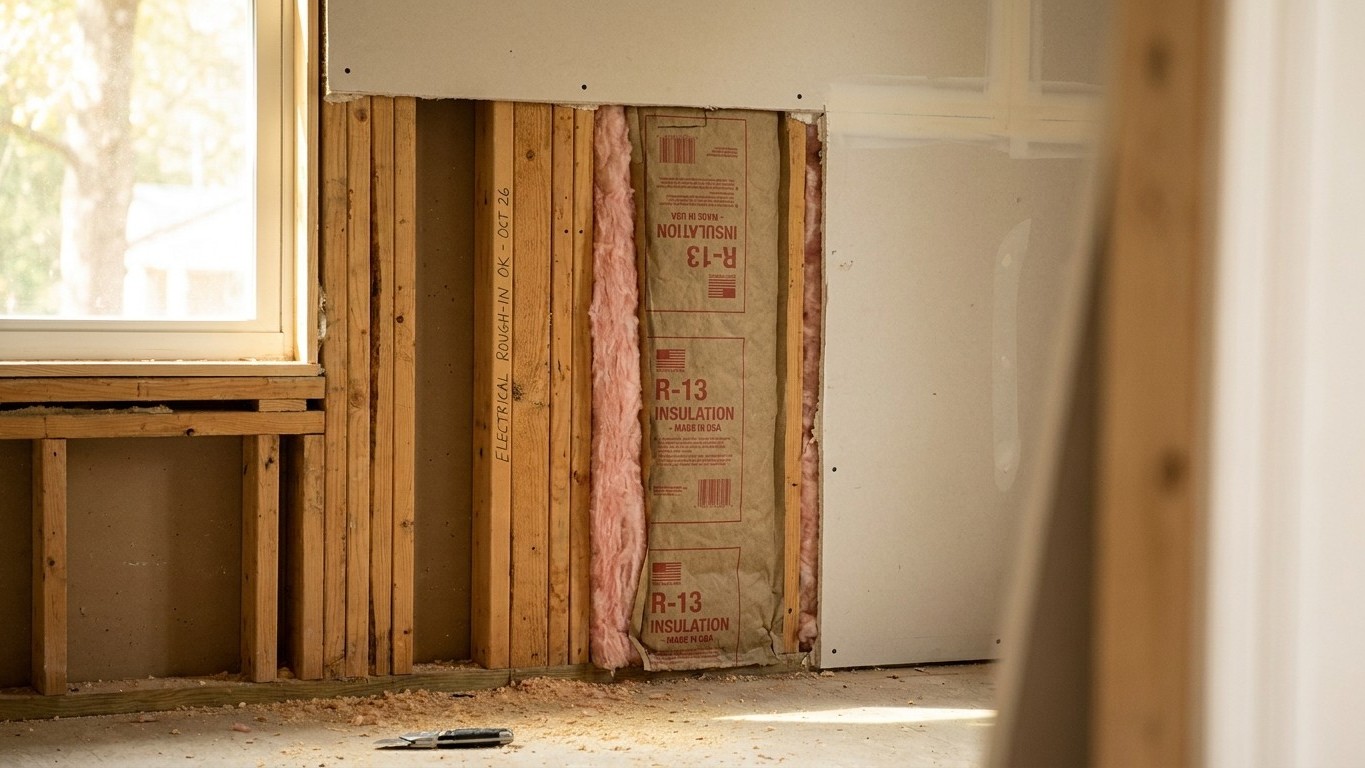

Yes. Montana sits entirely in IECC climate zone 6B, and under the 2021 International Residential Code, that zone falls outside the exception that waives the requirement. Frame walls in a Montana home need an interior-side vapor retarder of the class set by the code’s table, the only real question left is which class, and that’s where most confusion starts.
What the code asks for in Montana

Section R702.7 of the 2021 International Residential Code states it plainly: a vapor retarder of the class listed in Table R702.7(2) “shall be provided on the interior side of frame walls.” That’s the baseline rule for the whole country, and it applies unless a specific climate zone is excused from it.
The code excuses exactly three zones from that obligation: “A vapor retarder shall not be required in Climate Zones 1, 2 and 3.” Montana isn’t one of them. The state’s entire land area is classified as zone 6B, with no county-by-county variation and no marine designation to complicate things. That’s a genuine convenience for anyone trying to figure out the rule here, because plenty of states straddle two or three zones and a homeowner has to look up their own county before they know which rule applies. In Montana, the zone is the same whether you’re in Missoula, Great Falls, or a ranch outside Miles City.
So the rule reads straightforward: Montana is required to have an interior vapor retarder on above-grade frame walls, because 6B doesn’t appear anywhere on the short list of zones that get a pass. That’s a firm answer for the state as a whole, which is rarer than it sounds in this kind of code research.
What “required” does not mean
Being required is not the same as being restricted to one product. The code names three classes of retarder by how much moisture vapor they let through, and Montana’s obligation is to install one of them, not necessarily the tightest one available. A wall built with the wrong class of retarder, or with an assembly that traps moisture instead of letting it dry, doesn’t announce the mistake right away. It rots quietly inside the cavity, and the damage often surfaces only years later, when framing or sheathing has already been compromised. That’s the real stake behind a rule that can look, on paper, like a small formality.
This is also why the answer given here is a starting point, not a final instruction for any one house. The class of retarder, the placement, and how it interacts with insulation and sheathing are decisions that depend on the specific wall assembly, and the authority that signs off on that is the local building department, not a national code summary.
Why the answer is the opposite in a warm climate
The reason Montana’s rule exists at all comes down to which direction moisture is traveling through the wall, and that direction flips depending on climate. In a cold state like Montana, warm, moist air lives mostly on the inside of the house, from cooking, showers, breathing, laundry. That air pushes toward the walls, and if it reaches a cold sheathing surface in winter, it condenses there. An interior vapor retarder stops that moist air before it gets that far, keeping the condensation point out of the wall cavity.
Flip the climate, and the physics flips with it. In a warm, humid state, the moisture is arriving from outside, not inside. Air conditioning keeps interior surfaces cool, and if there’s an impermeable layer on the interior side of the insulation, that cool surface becomes exactly where outdoor humidity condenses once it works its way into the wall. The U.S. Department of Energy’s Building America program describes this outcome directly: “If the wall contains a vapor retarder on the interior side of the insulation, the water vapor will condense on this cool, impermeable surface,” and the result is “ruined insulation, mold, and structural rot of framing members.”
That single sentence is the whole reason the code splits by climate zone instead of applying one rule nationwide. It isn’t bureaucratic caution or a regional quirk, it’s a direct response to which way the water vapor is moving. Montana’s cold, dry winters push moisture from inside out, so an interior retarder helps. A humid Gulf Coast summer pushes moisture from outside in, so the same retarder, installed in the same spot, causes the exact damage it was meant to prevent. Two states, two opposite instructions, one country, and the difference comes down entirely to which side of the wall the water is trying to get to.
The three classes, and why the word matters
Where this gets misunderstood is the word “barrier.” A lot of homeowners hear “vapor barrier” and picture a single sheet of plastic, but the code doesn’t set up a single standard. It defines three classes by permeance, measured in perms, and the class matters as much as the presence of a retarder at all.
| Class | Example materials | Perm rating |
|---|---|---|
| Class I | Sheet polyethylene, nonperforated aluminum foil | 0.1 perm or less |
| Class II | Kraft-faced fiberglass batts, vapor retarder paint | Above 0.1, up to 1.0 perm |
| Class III | Latex or enamel paint | Above 1.0, up to 10.0 perm |
Polyethylene sheeting only qualifies as a vapor retarder because it falls into Class I, calling it “a vapor barrier” without naming the class skips over the part that actually decides whether it belongs in a given wall assembly. The disagreement between a builder working in one climate zone and a builder working in another almost never comes down to whether to use a retarder at all. It comes down to which class fits the direction moisture is moving in that particular climate.
Here’s the detail most homeowners miss entirely: ordinary latex paint is a Class III vapor retarder. Anyone who has painted an interior wall with a standard latex product already has a retarder on that wall, whether they intended one or not.
One more distinction worth keeping straight: a vapor retarder is not an air barrier. They do different jobs, one slows moisture diffusion through a material, the other stops bulk air movement through gaps and seams. Sometimes a single product does both, but the code treats them as separate requirements, and conflating them is a common source of confusion in wall design.
Where the rule stops
The vapor retarder requirement doesn’t apply everywhere in a house, even in a state where it clearly applies to above-grade frame walls. The code lists specific exceptions:
- Basement walls
- The below-grade portion of any wall
- Construction where accumulation, condensation, or freezing of moisture will not damage the materials
The basement exception is the one most Montana homeowners run into directly. A concrete foundation wall holds and releases moisture for years after it’s poured, and that moisture needs somewhere to go. If an impermeable sheet is added to the interior face of that wall, it blocks the wall’s ability to dry inward, trapping moisture against the concrete instead of letting it escape. That’s the opposite of what a vapor retarder is supposed to accomplish, which is exactly why the code exempts basement and below-grade walls from the same rule that applies upstairs. For the specifics of how that assembly should be built instead, the basement wall guide on this site walks through the detail.
Who actually decides, in Montana
Everything above describes the 2021 International Residential Code as written and how it applies to a state sitting fully in climate zone 6B. What it can’t do is tell an individual homeowner what to install in their specific wall, because the code in force on any given project is the one the local jurisdiction has adopted, sometimes with amendments, sometimes a different edition entirely, and sometimes years behind the current model code. That adoption process happens at the state and local level, not automatically the moment a new edition is published.
This matters more in Montana than in a lot of places, because the winter here carries real weight. The reference station at Billings Logan International Airport averages about 6,754 heating degree days a year against roughly 663 cooling degree days, a measure of how much heating demand the climate generates over a full year, not a temperature reading. That lopsided ratio is the clearest evidence of why the state’s building code leans hard toward managing moisture pushed from the inside out, and why the interior vapor retarder requirement isn’t a formality here.
None of that changes the fact that the final word belongs to the local building department. They can confirm which code edition applies, whether local amendments changed anything, and how the retarder requirement interacts with the specific wall assembly a homeowner is planning. A wall built with the wrong vapor control doesn’t fail in a way anyone notices right away, it rots quietly from the inside, and the discovery usually comes years later, when the fix costs far more than getting the assembly right the first time would have.