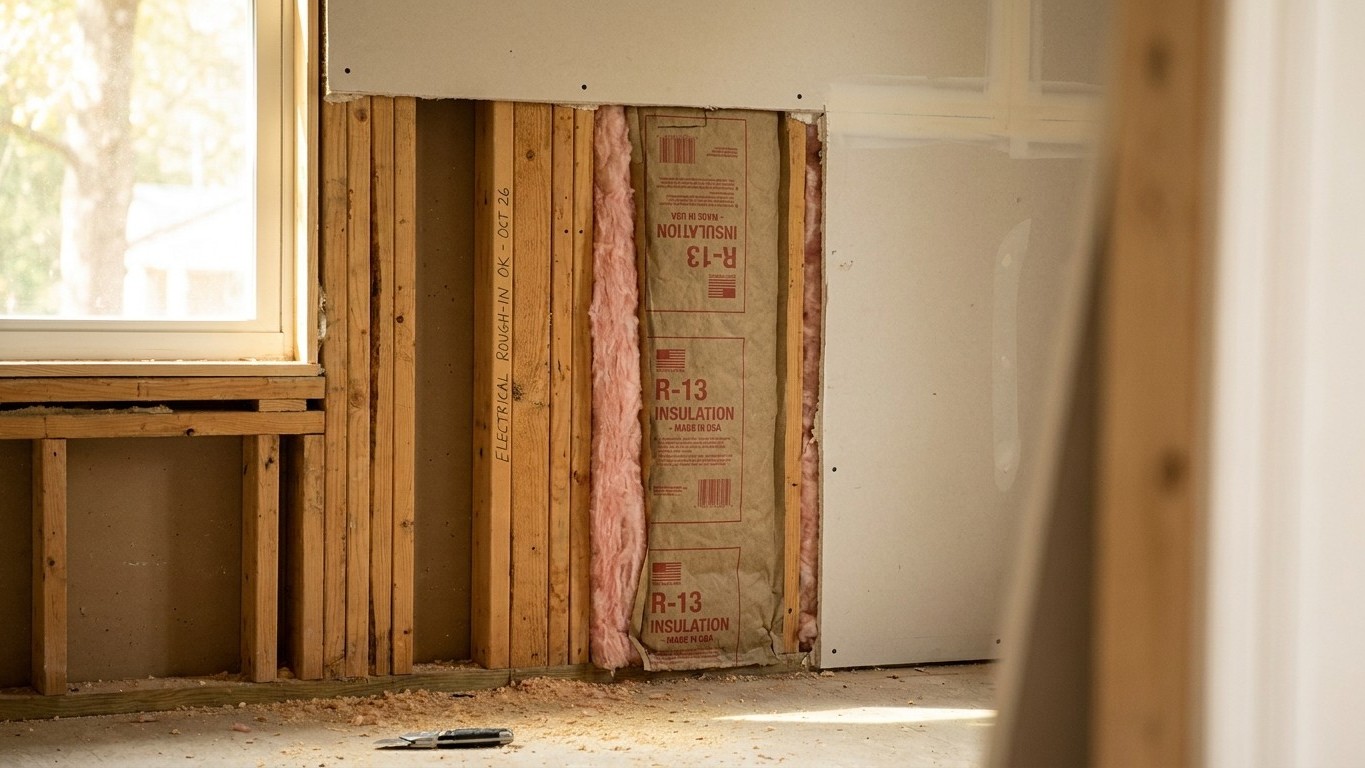

Yes. Virginia sits mostly in Climate Zone 4A, with 19 counties in Zone 3A and 5 in Zone 5A carved out as exceptions, and none of those three zones qualifies for the federal waiver that removes the vapor retarder requirement elsewhere in the country. Under the 2021 International Residential Code, a Class-rated vapor retarder belongs on the interior side of frame walls across the state, not because of local habit but because of where Virginia’s counties land on the national climate map.
What the code asks for in Virginia

The 2021 IRC, Section R702.7, states it plainly: a vapor retarder of the class given by Table R702.7(2) shall be provided on the interior side of frame walls. That’s the baseline rule, and it applies unless one of four listed exceptions kicks in. One of those exceptions removes the requirement entirely in Climate Zones 1, 2 and 3, but that carve-out doesn’t touch Virginia.
Here’s why the zone math matters. The IECC’s climate zone table lists Virginia as Zone 4A by default, with 19 counties reassigned to Zone 3A and 5 counties reassigned to Zone 5A. That’s a real spread, a home in one of those 3A counties sits in a different climate designation than a home two counties over in 4A territory. But for this specific question, the spread doesn’t change the answer. The exception that waives the vapor retarder requirement only fires in Zones 1, 2 and 3. Virginia’s counties sit in 3A, 4A or 5A — one number higher across the board than the zones the exception names. So whether a house sits in the 3A pocket, the 4A majority, or the 5A exception, the interior vapor retarder requirement of R702.7 applies.
That doesn’t mean every wall in Virginia needs the same material. The code doesn’t ban anything here : “required” simply means an obligation exists that a builder in Zone 1, 2 or 3 wouldn’t carry. Which class of retarder satisfies that obligation depends on the wall assembly, the insulation, and the table the local jurisdiction is actually enforcing.
And that last point is the one that matters most for anyone standing in front of their own wall. The IRC is a model code. Virginia’s localities adopt a version of it, sometimes with amendments, and the building department enforcing that adopted code is the only authority that can answer for a specific address. A wall built with the wrong vapor control doesn’t announce the mistake with a stain or a smell the week it happens, it fails slowly, inside the cavity, and the owner usually finds out years later when the drywall is already off.
Why the answer is the opposite in a warm climate
The reason Virginia’s answer differs from a Gulf Coast state’s answer comes down to which direction the moisture is moving, not which state writes better rules. In a cold climate, the humid air sits inside the heated house. An interior vapor retarder stops that indoor moisture from migrating outward and condensing against a cold sheathing board in January. That’s the mechanism the requirement in Zones 3A, 4A and 5A is built around.
Flip the climate and the physics flips too. In a warm-humid state, the moisture load arrives from outside, driven by heat and humidity pressing against an air-conditioned interior. Add an impermeable Class I layer on the interior side of that wall, and you’ve created exactly the wrong surface in exactly the wrong place. The U.S. Department of Energy’s Building America program describes the result directly: “If the wall contains a vapor retarder on the interior side of the insulation, the water vapor will condense on this cool, impermeable surface,” producing “ruined insulation, mold, and structural rot of framing members.”
That’s not a hypothetical footnote, it’s the DOE explaining why the IRC doesn’t just permit skipping the interior retarder in Zones 1, 2 and 3, but treats installing an impermeable one there as a genuine risk to the wall. The moisture has nowhere to go once it hits that cold, sealed surface from the wrong side.
This is the plain reason the code writes different rules for different zones. It isn’t bureaucratic inconsistency or a state playing it safe. The requirement follows the direction the water vapor is actually traveling, and that direction depends on climate, which is exactly what the zone map is measuring. Virginia’s zones (3A, 4A, 5A) all sit on the cold side of that divide, which is why the interior retarder requirement holds statewide even with the county-level zone variation.
The three classes, and why the word matters
The code doesn’t just say “install a vapor retarder.” It sorts retarders into three classes by how much moisture they let through, measured in perms. Confusing the classes is where most of the disagreement between builders in different climates actually starts.
| Class | Example materials | Perm rating |
|---|---|---|
| Class I | Sheet polyethylene, nonperforated aluminum foil | 0.1 perm or less |
| Class II | Kraft-faced fiberglass batts, vapor retarder paint | Above 0.1 up to 1.0 perm |
| Class III | Latex or enamel paint | Above 1.0 up to 10.0 perm |
Polyethylene sheeting is a vapor retarder, specifically a Class I retarder, and that distinction matters because Table R702.7(2) assigns different classes to different wall assemblies and climate zones. Calling any Class I material simply “a vapor barrier” skips the detail the code actually cares about.
The overlooked fact in that table: ordinary latex paint qualifies as a Class III vapor retarder. Most homeowners already have one on their walls and have never thought of it that way. That’s often enough to satisfy a Class III requirement without adding any separate material to the assembly.
One distinction worth keeping straight: a vapor retarder and an air barrier do different jobs. A vapor retarder slows moisture diffusion through a material; an air barrier stops bulk air movement through gaps and seams. Some products do both. The code treats them as separate requirements, and this section is only about the vapor retarder side.
Where the rule stops
Section R702.7 lists exceptions where the interior vapor retarder requirement doesn’t apply, separate from the climate-zone waiver already covered above. For Virginia, three of them are the ones that actually come up:
- Basement walls
- The below-grade portion of any wall
- Construction where the accumulation, condensation or freezing of moisture will not damage the materials
The basement exception is the one most Virginia homeowners eventually run into, because it works against intuition. A poured concrete or block basement wall sits in contact with soil that holds moisture year-round, and the concrete itself absorbs and releases water for years after the pour. That wall assembly needs to dry inward, toward the conditioned space, on whatever schedule the soil and concrete dictate. Seal an impermeable vapor retarder to the interior face of that wall and the moisture already in the concrete has no way out, it’s trapped between two surfaces it can’t pass through, which is the same condensation-and-rot mechanism described above, just applied to a below-grade wall instead of an above-grade one.
That’s a different assembly with different rules than the above-grade frame walls covered by the rest of R702.7, and it deserves its own explanation rather than a shortened version here. This site’s basement wall guide covers what actually applies to that assembly.
Who actually decides, in Virginia
Nothing in this article substitutes for the local building department’s answer, and that’s not a disclaimer, it’s how the system is built. The IRC is a model code. Virginia’s counties and cities adopt a version of it, sometimes amended, sometimes lagging the current edition by a code cycle or two. The department enforcing permits for a specific address is the only source that can confirm which edition, and which amendments, apply to that specific wall.
That matters more in a state like Virginia than it might elsewhere, because the state’s climate isn’t uniform enough to guess from one end to the other. At Oceana NAS, on the coast, the reference station logs about 3,424 heating degree days a year against roughly 1,546 cooling degree days, a heating season that adds up, day after day, even in a state people don’t usually picture as cold. Degree days measure demand, not a single temperature reading, and that demand is exactly what pushes the moisture inside a heated Virginia house toward the wall cavity all winter. It’s the same demand that puts Virginia’s counties in Zones 3A, 4A and 5A instead of the warmer zones where the interior retarder gets waived.
None of that tells a homeowner which class of retarder belongs in their specific wall, or which side of a specific assembly needs it. The building department that issued the permit, or the one reviewing the next one, is the only party positioned to answer that. A retarder installed on the wrong side of a wall doesn’t fail the day it goes in. It fails quietly, inside the framing, and the bill for that mistake usually arrives long after the crew has moved on.