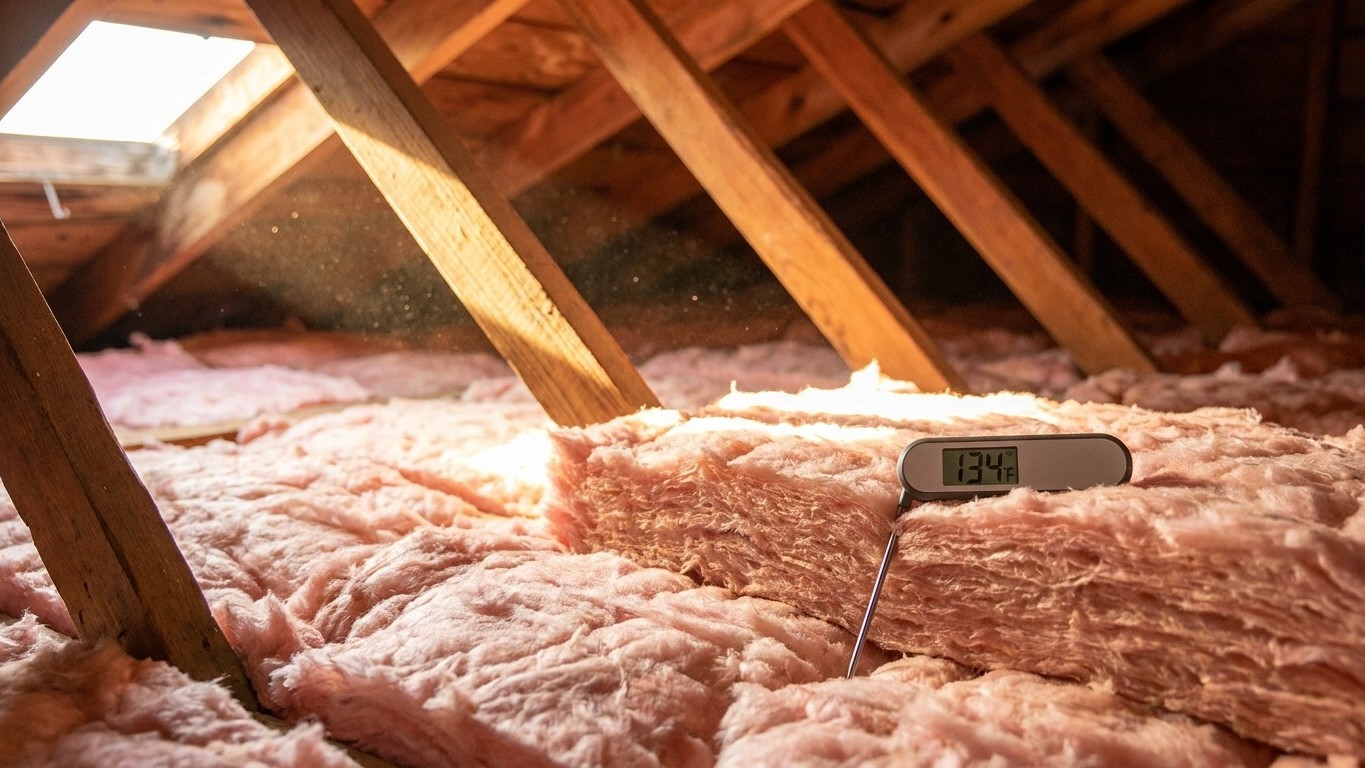

Yes, Insulation keeps a Missouri home cooler, and it earns its keep for a real slice of the calendar. The reference station in Kansas City logs an average of 32.7 days a year at 90°F or hotter. That’s not a brutal desert summer, but it’s enough heat load to matter, and Missouri’s mixed climate means the same Insulation working against winter cold is also working against summer heat right now.
The short answer for Missouri

Thirty-two and a half days above 90°F is a middle-of-the-road number, not a headline. It puts Kansas City’s summer heat load well below the Deep South’s and well above the northern tier’s, which is exactly what you’d expect from a state that straddles three different building-code climate zones rather than sitting neatly in one.
The 2021 IECC assigns 87 of Missouri’s 115 counties to zone 4A, 26 counties to zone 5A, and just 2 counties to zone 3A. That split, not a single statewide label, is the honest picture. Zone 4A and 5A are both mixed-humid climates with real winters and real summers, which is why Missouri’s answer is neither “Insulation is a summer product” nor “Insulation is a winter product.” It’s both, in roughly balanced measure, with the small pocket of zone 3A counties leaning slightly more toward the cooling side of that balance.
That balance is the point. In a state with eight or ten days above 90°F, the honest advice would be to focus the insulation conversation on heating season and treat any summer benefit as a bonus. Missouri isn’t that state. With 32.7 days a year pushing attics and roof decks into serious heat, the cooling side of the ledger carries real weight, even if winter heating still likely accounts for more of a typical Missouri home’s total energy use than air conditioning does. Insulation isn’t chosen for summer here, but summer is not an afterthought either.
What follows in this page walks through why that’s true mechanically, what Missouri homes actually cool with, and where the published savings figures come from, so the “yes” above rests on something more than a general rule of thumb.
What happens above the ceiling
A roof deck under direct sun in July doesn’t just get warm. It can run well past the outdoor air temperature, and that superheated air sits directly above the ceiling of every room below it, above the ductwork if the ducts run through the attic, and above anything stored up there. The attic becomes the hottest space in the entire building envelope, hotter than the yard, hotter than the driveway, hotter than the air the thermostat is trying to manage downstairs.
The insulation that resists that heat flow is the same material, doing the same job, whether the season is January or July. It isn’t a winter product that happens to have a summer side effect. Resistance to heat flow works in both directions: in winter it slows heat leaving a warm house for cold outdoor air, and in summer it slows heat entering a cool house from a scorching attic. There’s no separate “summer insulation” to buy. The attic insulation already recommended for Missouri’s climate zones is the tool for July as much as it is for January.
What ENERGY STAR recommends, by zone
ENERGY STAR’s retrofit guidance for existing wood-framed homes gives three figures per climate zone: the attic level for a space with no insulation at all, the attic level if the attic already has 3 to 4 inches in place, and a separate figure for floors over unheated spaces like crawl spaces. Missouri’s three IECC zones fall into these rows:
| Climate zone | Attic if uninsulated | Attic if already 3-4 inches | Floor |
|---|---|---|---|
| Zone 3 | R49 | R38 | R19 |
| Zones 4A and 4B | R60 | R49 | R19 |
| Zones 6, 5, and 4C | R60 | R49 | R30 |
These are retrofit levels for existing homes, not new-construction minimums, and they apply to whichever zone a given county sits in. ENERGY STAR publishes the zone map as an image rather than a county list, so the right move for any reader is checking the ENERGY STAR map or a county-level table before buying material, not guessing from a state average.
What homes in Missouri cool with
Nationally, air-conditioning equipment of some kind is used in 95% of homes surveyed by the U.S. Energy Information Administration’s Residential Energy Consumption Survey, and a central air-conditioning unit specifically in 83% of homes surveyed. Roughly 19% of homes surveyed rely on individual equipment instead or in addition, meaning window units, wall units, portables, or ductless mini-splits, and 81% of homes surveyed also run ceiling fans. Those figures describe the share of households surveyed with each setup, not a share of all houses standing.
The gap between “has air conditioning” and “has central air” is where the insulation conversation gets specific. In a home cooled by a central system with ductwork running through the attic, that ductwork sits in the single hottest space in the house, baking in attic air that can run well above outdoor temperature on a 90-plus-degree day. Ceiling insulation slows heat from moving from that attic into the rooms below, but it does nothing to stop a duct sitting in that same attic from picking up heat directly and losing cooled air before it ever reaches a vent. Sealing and insulating the ducts themselves is a separate job from insulating the ceiling, and it matters in exactly the homes where central air and an attic duct run coexist.
In a home cooled by a window unit, a wall unit, or a ductless mini-split instead, there’s no attic ductwork in the equation at all. What matters there is the envelope of the specific room or zone being cooled: its own ceiling, walls, and air sealing. Readers running central air with attic ducts should look at this site’s duct insulation guides; readers relying on individual room units should look at the room air conditioner guides instead. The equipment in place changes which fix pays off first.
What the heat asks for that the cold does not
Two products belong specifically to hot-climate work, and neither one is a substitute for the insulation levels above.
A radiant barrier is a reflective surface, usually foil-faced, installed under the roof deck or across the attic rafters. It carries no R-value because it isn’t resisting conducted heat; it’s reflecting radiant heat before it ever gets a chance to conduct. That makes it a tool for a sun-loaded roof deck specifically, not a general insulation upgrade. With 32.7 days a year above 90°F and a stretch of the state sitting in the warmer zone 3A counties, a radiant barrier is a reasonable add-on for a Missouri attic taking direct summer sun, but it’s an addition to the R-value work in the table above, never a replacement for it.
Vapor movement is the other summer-specific issue, and it runs opposite to what a winter mental model expects. In a warm, humid climate, moisture-laden air is more often outside pushing in, which is exactly why the model energy code doesn’t require an interior vapor retarder in the country’s warmest, most humid zones. Missouri’s mix of zone 3A, 4A, and 5A counties puts vapor direction and retarder requirements in genuinely different territory than a Gulf Coast state, and it’s not a question this page can settle in a paragraph. That decision belongs on this site’s dedicated vapor barrier page for this territory, where the zone-specific answer is worked out properly.
What the work is worth
ENERGY STAR’s own methodology page puts a number on this, and it’s worth quoting exactly rather than rounding: “EPA estimates that homeowners can save an average of 15% on heating and cooling costs (or an average of 11% on total energy costs) by air sealing their homes and adding insulation in attics, floors over crawl spaces, and accessible basement rim joists.”
Both percentages matter, and so does what each one is measured against. Fifteen percent is a share of heating and cooling costs specifically. Eleven percent is a share of total energy costs, a broader number that includes water heating, lighting, and appliances alongside heating and cooling. Neither figure applies to walls, windows, or doors; the modeling behind it covers attics, floors over crawl spaces, and accessible basement rim joists only.
That heating-and-cooling combination is exactly why this figure belongs on a page about summer heat rather than a page about winter cold alone. It isn’t a heating saving that happens to carry over into summer as an afterthought; it’s a single modeled estimate built from both seasons together, which lines up with what the days-above-90 count and the zone table both point to for Missouri: a state where the summer share of that saving is real, not incidental. The estimate comes from energy modeling of a “typical” existing U.S. home, an average across many houses, not a guarantee for any one specific building, and it doesn’t include a price tag, a payback period, or a federal tax credit, since the relevant 25C credit closed at the end of 2025.