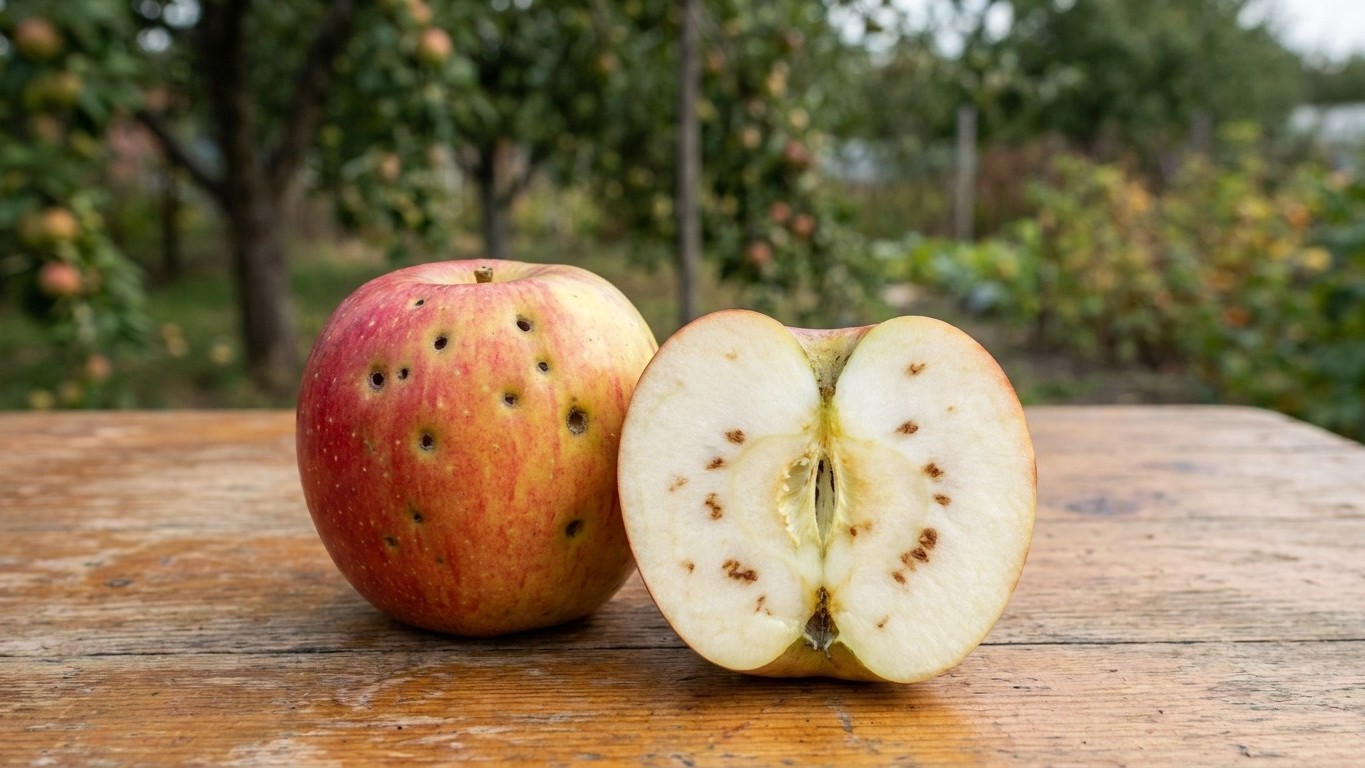

Apples in Delaware are ready to pick anywhere from late August to late October, and the calendar page tells you almost nothing on its own. The tree’s stage does the talking: skin color shifting from green to gold or red, seeds turning brown, fruit twisting free with a gentle lift. Storage life splits the same way, from a few days on the counter for the earliest fruit to two or three months in a cold spot for the latest.
When apples are ready to pick in Delaware
Delaware’s apple season doesn’t move as one block. Early-season varieties finish ripening in late August, mid-season types come through September, and the latest apples hang on into October, sometimes right up against the first hard frost. That spread is normal for the fruit, not a sign anything went wrong in your yard.
The useful marker isn’t a date on a wall calendar, it’s the region’s own fall frost window. At the Wilmington reference station (USW00013781), the first fall freeze arrives on average sometime between October 26 and November 7, based on NOAA’s 1991-2020 Climate Normals. That’s an airport reading. Suburban yards and rural properties away from that station typically see their first freeze one to two weeks earlier, and low-lying or elevated ground shifts it further still. If you’re picking late-season fruit, don’t wait on a date, check your own county’s typical frost behavior and get the fruit off the tree before a hard freeze hits it while still attached.
Reading the fruit instead of the calendar
Three signs matter more than the month: the base color under any red blush turning from green to cream or yellow, the seeds inside turning from white to brown, and the apple separating from the spur with an easy upward twist rather than a stubborn pull. Windfalls, fruit dropping on its own before you’ve touched the tree, usually mean you’re already a few days late for peak eating quality, though not necessarily too late for cooking or pressing.
Hardiness and chill are two different filters
Two separate questions decide whether an apple tree does well here, and they’re not the same question. Hardiness asks whether the tree survives winter at all. Wilmington’s coldest month has a mean daily minimum of 25.6°F (NOAA NCEI 1991-2020 Climate Normals), which is a mild reading as far as apple trees go, since the crop generally tolerates far colder minimums without dying back. Winter chill is a different filter entirely: it asks whether the tree accumulates enough cumulative cold to break dormancy evenly and flower properly in spring. Delaware’s winters, while not brutal, are cold enough that chill accumulation isn’t the limiting factor for standard apple varieties the way it can be farther south. There’s no published local chill-hour figure for Delaware in the sources checked here, so treat that number as unavailable rather than guessing at one.
Because hardiness isn’t the constraint in this state, there’s no need to reach for low-chill selections bred for milder climates. That matters because low-chill varieties break dormancy on less accumulated cold and flower earlier, which sounds convenient until you remember the last spring frost at the Wilmington station runs April 3 to April 14. An early bloomer opens flowers right into that frost window and risks losing the crop to a single cold night. In Delaware, the safer trade is a standard-chill variety that flowers a little later and clears the frost window with more margin, not a low-chill type chasing an early start it doesn’t need.
Which ones keep, and which must be eaten
Not every apple off the tree is built for the pantry. Ripening speed and storage life run in opposite directions: the apples that ripen earliest in the season tend to have thinner skin, softer flesh, and a faster metabolism once picked, which means they taste best within days and decline quickly after that. Apples that ripen latest in the season generally carry thicker skin, denser flesh, and a slower respiration rate, which is exactly what lets them sit in cold storage for weeks or months without turning to mush.
A rough sorting by harvest timing
| Harvest timing | Typical texture | Realistic keeping window |
|---|---|---|
| Late August to early September | Soft, thin-skinned | Days to about two weeks refrigerated |
| Mid to late September | Firmer, moderate skin thickness | Several weeks to about six weeks refrigerated |
| October, latest to ripen | Dense, thick-skinned | Two to three months in cold, humid storage |
That table is a general horticultural pattern across apple types, not a Delaware-specific dataset, since no local source breaks down keeping quality by variety for this state. Use it to sort your own picking by feel: if the fruit came off the tree in late August, plan to eat it, bake with it, or process it into sauce within a couple weeks rather than banking on long storage.
Bruising shortens every window
Whatever the variety, a bruised apple stores like the shortest-keeping type on the list, regardless of when it ripened. Any apple dropped, stacked carelessly, or squeezed while checking for ripeness starts breaking down internally within days, even if the skin looks fine. Pick by lifting and twisting rather than pulling or shaking the branch, and handle fruit destined for storage the way you’d handle eggs, not potatoes.
Storing them through a Delaware winter
Cold, humid, and dark is the target for any apple you want to keep past picking week. A refrigerator set in the 32°F to 40°F range with high humidity, an apple stored loose in a perforated plastic bag inside the crisper drawer works, comes closest to that for most households. Root cellars do the same job on a larger scale, but Delaware’s humid climate makes a true dug cellar harder to keep dry enough to avoid mold while still cold enough to slow ripening, so many households lean on refrigeration instead.
Why an unheated garage is riskier here than it sounds
An unheated garage or shed feels like free cold storage, but Delaware’s own winter numbers argue against relying on it without a thermometer check. With the coldest month’s mean daily minimum sitting at 25.6°F at the Wilmington reference station (NOAA NCEI 1991-2020 Climate Normals), a garage with no supplemental heat can swing well below freezing on the coldest nights, cold enough to freeze stored apples solid and turn the flesh mealy and waterlogged once thawed. A spot that stays reliably between 30°F and 40°F works; a spot that tracks the outdoor low on hard nights doesn’t, and in this state those hard nights do happen even though the state overall isn’t a brutally cold one.
Keeping the batch from spoiling together
One softening apple releases ethylene gas that speeds up ripening in everything stored near it, which is the mechanism behind the old warning that one bad apple spoils the barrel. Check stored fruit every couple of weeks and pull anything showing soft spots, wrinkling skin, or brown patches before it takes the rest of the batch down with it. Apples stored separately from potatoes and onions also hold up better, since those vegetables release their own gases that accelerate spoilage in nearby fruit.
What goes wrong here
Delaware’s humid falls create a different set of headaches than a drier apple-growing region would face. Wet weather around harvest time raises the odds of fungal issues like brown rot developing on fruit that’s been sitting on the tree past its ideal pick date, and it also favors the bacterial disease fireblight earlier in the season, which can damage blossoms and young shoots on susceptible trees. Splitting is another wet-season problem: a heavy rain after a dry stretch right before harvest can crack the skin on nearly ripe fruit, and split apples don’t store at all, they need to be used immediately.
The spring-frost math discussed earlier isn’t a one-time planning exercise, it’s a recurring risk. Because standard apple varieties here clear their chill requirement without trouble, they’re ready to flower as soon as temperatures allow, and a late cold snap landing inside that April 3 to April 14 window at the Wilmington reference station can knock back a whole season’s blossoms even on an otherwise healthy, well-hardy tree. Anyone growing in a low spot where cold air pools, a frost pocket, should expect that risk to run later than the reference date, not earlier.
Storage losses trace back to handling more often than to variety choice. Bruised fruit going into the crisper drawer, apples stored next to ethylene-sensitive produce, or a garage shelf that freezes on the coldest nights account for more spoiled apples than any disease does. For pest and disease identification specific to Delaware conditions, the state’s Cooperative Extension service publishes seasonal guidance through the University of Delaware Cooperative Extension, a useful check before assuming a spotted or discolored apple is a lost cause.
Common questions
What month should I pick apples in Delaware?
There’s no single month. Early varieties finish in late August, mid-season types come through September, and late varieties can hang until October. Judge by skin color, seed color, and how easily the fruit twists free rather than by the date on the wall.
Can apple trees survive Delaware winters?
Yes, for standard apple varieties. Wilmington’s coldest month has a mean daily minimum of 25.6°F, well within the range apple trees generally tolerate. Winter chill accumulation, which governs flowering rather than survival, also tends to be adequate for standard-chill varieties in this state.
How long do Delaware apples keep once picked?
It depends heavily on when they ripened. Fruit picked in late August generally lasts days to about two weeks refrigerated; fruit picked in October, denser and thicker-skinned, can hold two to three months in cold, humid storage. Bruised fruit of any type keeps far less time.
Where can I get Delaware-specific growing help?
The University of Delaware Cooperative Extension is the state’s land-grant extension service and publishes regional pest, disease, and growing guidance; it’s a better first stop than general national advice for anything specific to local conditions.