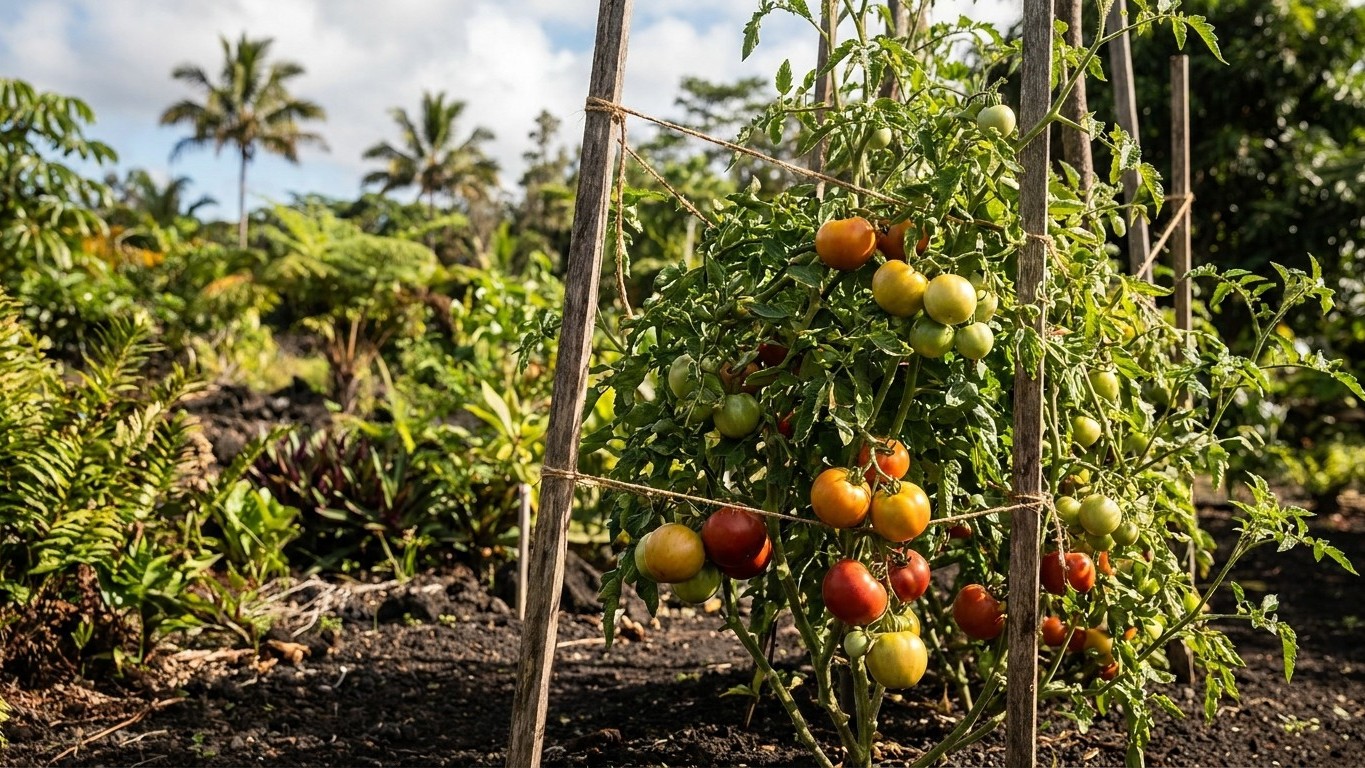

The short answer: pick before the first freeze, not before some fixed date. In low desert cities like Las Vegas, that can mean harvesting into late fall. In Reno, Carson City, or anywhere at elevation, the vines can be done weeks or even months earlier. Whatever comes off green still ripens fine indoors if you know what to look for.
When to pick tomatoes in Nevada
Nevada is not one climate. It’s a state where the growing season length can differ by three or four months depending on whether you’re gardening at 2,000 feet or 6,000 feet, and that difference is exactly why “when to pick” has no single statewide answer. The USDA Plant Hardiness Zone Map, built from average annual extreme minimum temperatures, puts the state anywhere from zone 4a to zone 10a. That’s a wider spread than most entire regions of the country cover, packed into one state’s borders.
Take the Las Vegas airport as a reference point, since it’s the one location with published NOAA data behind it. According to NOAA NCEI’s 1991-2020 Climate Normals, the last spring freeze at that station falls somewhere between January 7 and February 1, and the first fall freeze lands between December 8 and December 23. Those numbers describe an extreme, low-desert, urban heat island location. They are not a planting or harvest calendar for the rest of Nevada, and using them that way would be a mistake. Reno and Carson City, sitting at higher elevation with none of that urban heat retention, see frost arrive months earlier in fall and linger months later in spring. A gardener in the Truckee Meadows pulling vines by early autumn and one gardening in the Las Vegas valley still picking into the following winter can both be gardening in Nevada, just on completely different calendars.
Frost is the trigger, not the month
What actually decides your last picking day is the first freeze in your specific location, not a date on a wall calendar. That’s why checking your county’s extension office matters more than memorizing a number from a different city. Nevada’s Cooperative Extension, run through the University of Nevada, Reno, tracks local conditions county by county and is the resource to lean on for a frost estimate specific to your yard: extension.unr.edu.
Beyond frost, the fruit itself tells you when it’s ready. A tomato at the “breaker” stage shows the first blush of color, usually a tan or pink tint at the blossom end, while the rest of the fruit is still pale green. Once you see that color break, the tomato has stopped needing the vine. It will finish ripening off the plant just as well, sometimes better, since it’s no longer competing with the rest of the plant for sugars. Full-size, glossy, slightly softening fruit with no more green shine is picked at peak. Firmness with a slight give under thumb pressure is the sign to bring it in, whether it’s still green, breaking, or fully colored.
What to do with the green ones
Not every green tomato is the same tomato, and that distinction decides whether it ripens on the counter or ends up in a skillet. Growers sort green fruit into two rough categories: mature green and immature green. The difference shows in the skin and the seeds, not just the color.
Mature green tomatoes are full size for their variety, with a glossy, slightly waxy skin, and the blossom end has turned from bright green to a pale whitish-green. If you slice one open, the seeds have developed a gel coating and slide away from the knife instead of getting cut through. These are the ones that will ripen off the vine into normal, full-flavor tomatoes, just on a delay.
Immature green tomatoes are smaller, harder, with a dull matte skin and seeds that are still white and cut cleanly when sliced. These never really left “growing” mode. They won’t turn red on the counter, or if they do, the texture and flavor stay flat and mealy. This is where fried green tomatoes come from, not because someone got impatient, but because the fruit was never going to ripen properly anyway. Immature green tomatoes are better used in that kind of cooked application, in relishes, chutneys, or pickled, rather than left waiting for a color change that isn’t coming.
When a frost is closing in and there’s no time to sort carefully in the garden, bring in the whole crop and sort on a table indoors. Separate by size and firmness first. The full-size, waxy-skinned fruit goes into ripening storage. The small, hard, dull ones go into the kitchen for immediate use. Trim any fruit with cracks, soft spots, or insect damage before storing the rest, since one bad tomato in a bag or box will speed up rot in everything around it.
Ripening indoors, and how long they keep
Mature green tomatoes ripen indoors through the same process they’d go through on the vine, just without direct sunlight, which they don’t actually need for this step. Sunlight affects the plant’s overall production, not the ripening chemistry happening inside an individual fruit. What they do need is room temperature and time.
Spread mature green tomatoes in a single layer, not stacked, in a spot out of direct sun. A cardboard box, a paper bag, or a shallow tray all work, as long as air can move around the fruit. Wrapping each tomato individually in newspaper slows the process down and protects against bruising if you’re storing a large batch from one big frost-driven harvest. Check the batch every day or two. As fruit ripens, pull it out for eating and leave the rest to keep going, since a mixed batch won’t all turn at the same time even if picked on the same day.
A ripening apple or banana tucked into the same bag speeds things along, because it gives off ethylene gas, the same compound the tomato produces on its own as it ripens. This isn’t a trick specific to tomatoes; it’s the same gas florists use to hold back or push forward cut flowers. Adding one piece of ripening fruit to a bag of green tomatoes concentrates the ethylene and shortens the wait for the whole batch.
Once ripe, a fresh tomato holds its best flavor and texture for about a week at room temperature. If you need to slow that down, storage in a cooler spot buys extra time, but skip the refrigerator until the tomato is fully ripe and you’re not planning to eat it within a day or two. Cold temperatures halt the enzymes responsible for flavor development and break down the cell structure, which is why a refrigerated tomato so often comes out mealy and bland compared to one left on the counter. If a frost forces a large harvest all at once, staggering the ripening by storing tomatoes at different distances from a heat source, or in different rooms, spreads out the eating window instead of leaving you with a countertop full of ripe fruit on the same day.
What goes wrong here
The most common mistake is treating a date from somewhere else as if it applies at home. A gardener in Carson City who reads that Las Vegas doesn’t see frost until deep into December can end up leaving fruit on the vine well past the point their own yard has already frozen. The Las Vegas airport numbers are a genuine outlier, shaped by pavement, buildings, and low elevation, and they simply don’t transfer to higher, cooler parts of the state.
Another frequent misstep is picking immature green fruit and expecting it to behave like mature green fruit. Small, dull-skinned tomatoes go soft and shrivel in storage instead of coloring up, and growers sometimes blame the storage method when the problem was actually picking fruit that was never far enough along to ripen off the vine in the first place.
Overcrowding ripening trays is another one. Tomatoes stacked two or three deep bruise each other and trap moisture against the skin, which speeds up rot far faster than it speeds up ripening. A single layer, checked regularly, avoids the loss.
Refrigerating the whole harvest right after picking is a habit that costs flavor without saving much time. It makes sense as a reflex, since refrigeration extends shelf life for most produce, but it works against tomatoes specifically by stopping the ripening enzymes and damaging the cell walls that give a ripe tomato its texture. Holding fruit at room temperature, out of direct sun, and only refrigerating what’s already ripe and won’t be eaten in the next day or two, keeps both flavor and texture intact.
Common questions
Can I pick tomatoes before a frost warning instead of waiting?
Yes, and it’s often the safer choice. A tomato picked a few days early and ripened indoors keeps its flavor. A tomato caught by frost on the vine turns to mush and is a total loss. When a freeze is forecast for your area, harvest everything mature green or further along rather than gambling on a few extra days of vine ripening.
Do all green tomatoes ripen indoors?
No. Mature green tomatoes, full size with glossy skin and a pale blossom end, will ripen off the vine. Immature green tomatoes, small and hard with a dull skin, generally won’t turn red properly no matter how long they sit. Those are better cooked while still green.
Should I refrigerate tomatoes to make them last longer?
Only once they’re fully ripe and you won’t eat them within a day or two. Refrigerating unripe or freshly ripened tomatoes stops the ripening process and damages the texture, leaving them mealy. Room temperature, out of direct sun, is the better default.
Why does harvest timing differ so much between Las Vegas and Reno?
Elevation and urban heat. The Las Vegas airport sits at low elevation with a lot of surrounding pavement and development, both of which delay freezing compared to higher, more open ground. Reno and Carson City sit at meaningfully higher elevation without that heat buffering, so frost arrives earlier in fall and lingers later in spring. Checking with your county extension office, rather than relying on one city’s published frost data, gives a far more accurate picture for your own yard.