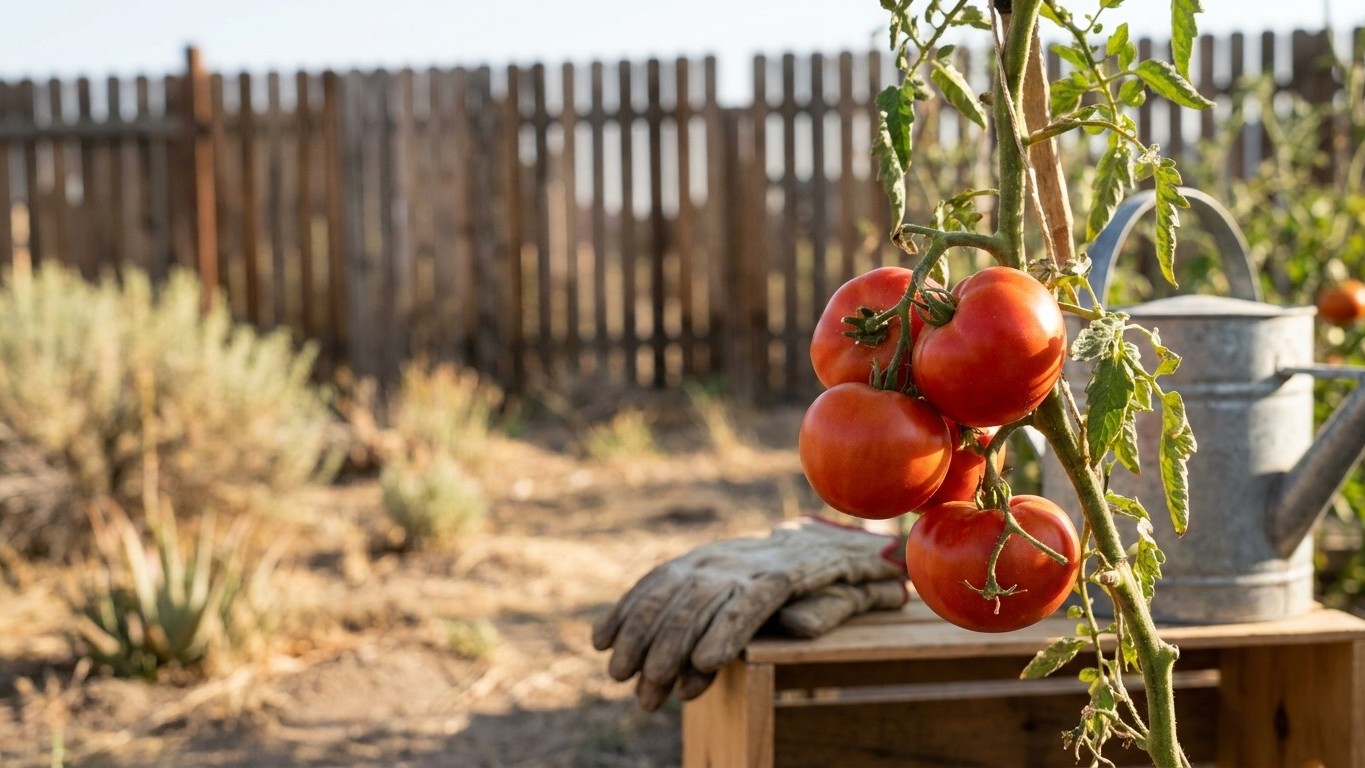

Elevation is the whole story here. A Las Vegas backyard under 2,000 feet can shrug off frost by early February, while a Carson City or Elko garden barely six hours north by car is still gambling with freezes deep into April. That gap of a thousand feet or more between valley floor and mountain valley means the calendar on your kitchen wall means almost nothing — your own soil, your own last frost, decides when those tomato starts actually go in the ground.
When to plant Tomatoes in Nevada

Nevada runs from low desert basins under 2,000 feet to mountain valleys above 6,000 feet, and that elevation spread decides your planting calendar, not the month on a wall calendar. NOAA’s National Centers for Environmental Information, using the 1991-2020 climate normals, puts the 30 to 70 percent freeze-probability band for the last 32°F freeze near Las Vegas at January 7 to February 1. That is an unusually early window, and it reflects a desert valley floor with a strong urban heat island effect from the city itself. It is not a figure you can apply to Reno, Carson City, Elko or any of the higher valleys, where frost risk routinely runs into April or later. Treat the Las Vegas number as an illustration of how mild one corner of the state can be, not as a planting date for your own yard.
Find your own frost date first
Because Nevada’s terrain swings so widely in elevation, the most useful thing you can do before buying seed is contact your county office through UNR Extension and ask for the last spring frost date and the first fall frost date for your specific area. Growers in Growing Tomatoes in Utah face the same problem, a state where a low desert valley and a high mountain town can be weeks apart in frost timing, and the fix described in Growing Tomatoes in Utah: Planting Dates, Varieties and Local Pests is identical: work from a local figure, never a state average.
Working backward from your transplant date
Once you have a local last-frost date, the arithmetic is the same everywhere tomatoes are grown. Start seeds indoors six to eight weeks before your expected transplant date, under grow lights or a bright south-facing window, keeping the germinating soil around 75 to 80°F. Seven to ten days before you plan to set plants outside, begin hardening them off with a few hours of dappled light and gradual exposure, building up to a full day outdoors including some wind and direct sun. Only transplant once nighttime temperatures hold consistently above the point where tomato growth stalls, since cold soil will sit a transplant in place for weeks even after frost risk has passed.
In the Las Vegas valley itself, where NOAA’s freeze data effectively clears by early February, growers still wait well beyond that date before setting plants outside, because soil warmth rather than frost risk becomes the limiting factor once winter freezes end that early. Elsewhere in the state, count back six to eight weeks from whatever last-frost date your county extension publishes to land on a seed-starting date, then add the seven to ten days of hardening off before transplanting outside. A late-frost mountain valley pushes that whole calendar weeks later than a low, mild valley, but the six-to-eight-week and seven-to-ten-day counts stay the same wherever you garden in Nevada.
Soil and site preparation
Tomatoes need at least six to eight hours of direct sun a day, and in Nevada’s high-desert light that is rarely the limiting factor. The bigger issue is soil. Much of the state’s native ground is sandy, alkaline and short on organic matter, with a hardpan or caliche layer not far down in older desert lots. None of that stops tomatoes, but it means the bed needs building up rather than just digging in.
Work several inches of finished compost into the top 8 to 10 inches of soil three to four weeks before you plan to transplant, giving it time to settle and start feeding the soil biology instead of sitting as raw organic matter. If your yard has heavy clay pockets or a shallow caliche layer, a raised bed solves both problems at once: it lifts the root zone above the hardpan and lets you control the mix from the start. Raised beds also warm up faster in spring, which matters in the shoulder-season windows most of Nevada is working with.
Space indeterminate varieties 24 to 36 inches apart in the row, and give more compact determinate types slightly less, around 18 to 24 inches. Leave rows 3 to 4 feet of walking and airflow room. Crowded plants dry out unevenly and hold humidity around the leaves, exactly the condition that invites the fungal problems covered later in this guide. If you are working with native alkaline soil and haven’t had it tested, do that before adding anything beyond compost, since guessing at amendments can push pH further in the wrong direction.
Lay out the bed two to three weeks ahead of transplanting so the soil has time to settle around any amendments and the surface dries out enough to work easily. If you are converting lawn or hard-packed ground, this is also the point to strip sod, break up compaction to a full spade’s depth, and rake out rocks and caliche chunks that would otherwise deflect roots sideways instead of down.
Varieties that suit Nevada
The trait that matters most for Nevada is season length, because a short growing window at elevation and extreme summer heat in the low desert both cut into the days a tomato plant has to ripen fruit. Days-to-maturity figures on a seed packet are counted from the transplant date, not from seed, and they shift by a week or two depending on how warm and sunny the season runs, so treat them as a planning range rather than a countdown.
In a short-season mountain valley, a variety needing 75 to 85 days from transplant is racing the first fall frost, so cherry and early slicing types under 60 days give the more reliable harvest. In the long, hot Las Vegas valley season, the constraint flips: heat itself can shut down fruit set for weeks in summer, so a plant with a long harvest window and strong disease resistance keeps producing before and after that lull. Nematode resistance is worth checking for in either case, since sandy, warm desert soils across the state are hospitable to root-knot nematodes.
| Variety | Days to maturity | Type | Notable resistance | Best for |
|---|---|---|---|---|
| Sakura | 55 | Indeterminate | Nematodes (Interm.), Tomato Mosaic Virus, Fusarium races 1, 2 (High) | Fastest cherry harvest, short seasons |
| Sun Gold | 57 | Indeterminate | Tobacco Mosaic Virus, Fusarium race 1 (High) | Early, sweet cherry tomatoes |
| Jasper | 60 | Indeterminate | Late Blight (High), Early Blight (Interm.) | Cherry type where blight pressure is a concern |
| Juliet | 60 | Indeterminate | Late Blight, Early Blight (Interm.) | Grape type, crack-resistant skin |
| Amalfi | 68 | Determinate | Nematodes (Interm.), Late and Early Blight (Interm.) | Compact paste tomato, smaller gardens |
| Big Beef Plus | 72 | Indeterminate | Nematodes (Interm.), Gray Leaf Spot, Tomato Mosaic Virus (High) | All-purpose slicer with broad resistance |
| Cherokee Purple | 72 | Indeterminate | None listed | Heirloom flavor where the season allows |
| Celebrity Plus | 78 | Determinate | Nematodes (Interm.), Gray Leaf Spot, Tomato Mosaic Virus (High) | Compact slicer, container or staked bed |
| Amish Paste | 85 | Indeterminate | None listed | Long, mild-winter valleys only |
Determinate types like Amalfi and Celebrity Plus stop growing at a set height and ripen most of their fruit in a shorter window, which suits a compact bed or a shorter season. Indeterminate types like Cherokee Purple, Big Beef Plus and the cherry varieties keep growing and setting fruit until frost or heat stops them, rewarding the long Las Vegas valley season but needing sturdier, taller support. None of these are agency recommendations, just catalogue traits matched to the season-length and soil challenges described above. Confirm current local disease pressure with UNR Extension for your county.
What to plant alongside
Basil is the classic tomato companion, and there is a real reason it works. Both plants want similar water and sun, so interplanting them does not create competition, and basil’s dense low growth shades the soil around the tomato’s root zone. The old claim that basil improves tomato flavor has no real evidence behind it, but the space efficiency and shared care needs are reason enough to plant them together.
French marigolds have research behind their nematode-suppressing reputation, though the effect comes mainly from growing them as a dense preceding planting or border over a full season, not from tucking a few seedlings between tomato plants the same year. In sandy Nevada soils where root-knot nematodes are a real risk, a marigold border is worth the bed space even if the effect is modest.
Keep tomatoes away from corn. The tomato fruitworm and the corn earworm are the same insect, Helicoverpa zea, and planting the two crops side by side gives it an easy bridge between hosts. Skip potatoes too. Both are nightshades that share susceptibility to early blight and late blight, and planting them together doubles the soil-borne disease load in one bed. Brassicas like broccoli and cabbage are not directly harmful to tomatoes, but they are heavy feeders on the same nutrients, so give both crops their own amended ground rather than crowding them into one bed.
Onions and other alliums are a safe, low-competition neighbor since their shallow, narrow root systems do not compete much for space, and they are commonly interplanted along tomato bed edges without issue. Borage draws in pollinators and predatory insects, a genuine benefit for fruit set and aphid control, even though the folklore claim that it repels tomato hornworm is not well supported. Grow it at the edge of the bed rather than against the stems, since it gets rangy by midsummer. If you have a black walnut tree anywhere near the garden, keep tomatoes well clear of its root zone. The juglone the tree releases is toxic to tomato plants and shows up as wilting and yellowing with no other clear cause.
Watering, feeding and support
Watering rhythm
Nevada’s dry air and often sandy soil both drain water away fast, so deep, infrequent watering matters more here than in a humid climate. Water deeply enough to wet the full root zone, then let the top couple of inches of soil dry before watering again, rather than sprinkling a little every day. A drip line or soaker hose at the base of the plant keeps water off the foliage, which matters because wet leaves in the evening are what let fungal diseases get started. A 2 to 3 inch layer of straw or wood-chip mulch over the root zone slows evaporation and keeps soil temperature from swinging as hard between the day’s heat and the night’s cool.
Feeding schedule
Work compost or a balanced fertilizer into the bed at transplanting, then hold off on more nitrogen until the first fruit sets, since too much nitrogen early pushes leafy growth at the expense of flowers. Once fruit is forming, switch to a fertilizer lower in nitrogen and higher in phosphorus and potassium, feeding every three to four weeks through the growing season. Blossom end rot, covered in the next section, is often a watering problem rather than a calcium-deficiency problem, so a steady watering rhythm does more for it than extra fertilizer.
Staking and pruning
Indeterminate varieties like Cherokee Purple, Sun Gold and Big Beef Plus keep growing all season and need a stake, cage or trellis strong enough to hold a heavy, sprawling plant, set in place at transplanting before the roots fill the bed. Determinate types such as Amalfi and Celebrity Plus stay more compact and need only a basic cage. Prune suckers, the shoots that form in the crotch between the main stem and a branch, on indeterminate varieties to keep the plant to one or two main leaders, improving airflow and directing energy into fruit rather than foliage. Leave determinate varieties largely unpruned, since removing growth on them cuts down on the total fruit they produce.
Common problems

Blossom end rot shows up as a flat, sunken, leathery brown-to-black patch on the bottom of the fruit, usually on the first flush of tomatoes. It comes from a calcium shortage at the fruit itself, but the underlying cause in most home gardens is inconsistent watering rather than an actual lack of calcium in the soil. Dry stretches followed by heavy watering interrupt the plant’s calcium uptake, so the fix is the same steady watering rhythm described above, not a calcium spray.
Fruit cracking, concentric or radial splits around the top of the tomato, comes from the same root cause: a dry spell followed by a heavy watering that swells the fruit faster than the skin can stretch. Mulch and consistent drip watering reduce it. There is no cure once a fruit has already split, other than harvesting it early and using it right away.
Leaves that curl upward and feel leathery, without yellowing or spots, are usually a heat and moisture response rather than disease, common in Nevada’s hot, dry, intense-sun summers. It looks alarming but rarely costs yield on its own. Curling paired with yellowing, mottling or stunted growth points toward a virus or nutrient issue instead.
Wilt that does not recover overnight, especially if it starts on one side of the plant or one branch at a time, points to Fusarium or Verticillium wilt, soil-borne fungi that clog the plant’s water-conducting tissue. There is no cure once a plant is infected, which is the main reason to pick resistant varieties before symptoms ever start. Sakura and Sun Gold both carry high resistance to Fusarium wilt race 1, a meaningful hedge in soil that has grown tomatoes for several seasons already.
Poor fruit set with plenty of flowers but no fruit forming is usually a heat problem in the low desert, since tomato blossoms stop setting fruit reliably once temperatures run too high for pollen to stay viable. It shows up as a lull in an otherwise productive plant during the hottest stretch of summer, then picks back up once nights cool again in late summer or fall.
- Aphids: clusters of small, soft-bodied insects on new growth and the undersides of leaves, sticky honeydew residue, often signals ants tending them nearby.
- Spider mites: fine stippling and pale speckling on leaves with faint webbing on the undersides, especially likely in hot, dry, dusty conditions since mites thrive in exactly that weather.
- Tomato hornworm: large green caterpillar with white diagonal stripes and a horn-like tail spike, stripping leaves and chewing into green fruit almost overnight.
- Whiteflies: tiny white flying insects that scatter when a plant is disturbed, feeding on leaf undersides and weakening the plant over time.
Nevada’s dry air keeps a lot of the fungal disease pressure down that growers in wetter regions fight all season. Compare that to Growing Tomatoes in Washington: Planting Dates, Varieties and Local Pests, where humidity and rainfall make blight management a much bigger part of the season. Here, the bigger risks are heat stress, irregular watering and the pests listed above, more than fungal blight.
Pests that actually show up in Nevada
University of Nevada, Reno Extension’s Pest Solutions: Insects and Bugs list names nine insects as garden problems statewide, but only a handful of those actually target tomatoes. Squash bugs, Mormon crickets, cabbage moths, elm leaf beetles and Japanese beetles are all on the same state list, and if you grow squash, cole crops or landscape trees alongside your tomatoes, it is worth knowing they exist. None of them go after a tomato plant.
Aphids show up first as a cluster of small, soft-bodied insects on the underside of new leaves and the growing tip, usually early in the season when plants are still tender. The leaves around them curl and look sticky from the honeydew the aphids leave behind. A strong jet of water knocks most of a colony off, and insecticidal soap handles what’s left. Reserve anything stronger for a genuinely heavy infestation.
Hornworms are the pest most Nevada tomato growers actually lose sleep over. You will usually spot the damage before the insect itself: whole stems stripped of leaves overnight, and a scatter of dark, pellet-shaped droppings on the leaves below. They feed mid to late summer and their green bodies blend in so well that hand-picking at dusk with a flashlight works better than daylight scouting. Bacillus thuringiensis (Bt) sprayed on affected foliage takes care of the ones you miss.
Shield bugs, commonly called stink bugs, leave a different signature: small, hard, discolored spots on the fruit itself, sometimes with a faint cloudy area just under the skin. They tend to build up as fruit ripens in mid to late summer. Floating row cover over young plants keeps the first wave off, and hand removal is the only reliable follow-up once fruit is already forming, since sprays rarely reach them once they’re tucked between leaves and fruit clusters.
Earwigs mostly damage seedlings, chewing ragged holes in young leaves at night and hiding in mulch or soil cracks by day. A rolled, damp newspaper or shallow tuna can of oil left near the base overnight traps them without any spray at all, and established plants generally outgrow the damage once stems toughen up.
Harvest and end of season
Pick tomatoes at the breaker stage or later, once the fruit has started to shift from green to its full ripe color, rather than waiting for it to soften fully on the vine in the hottest part of summer, since fruit left on the plant during intense heat can develop uneven color and soft spots. A tomato that has reached at least a blush of color will finish ripening indoors at room temperature with no real loss in flavor or texture.
Store ripening tomatoes on the counter, stem side down, out of direct sun, and never in the refrigerator. Cold temperatures below about 55°F break down the compounds responsible for tomato flavor and turn the flesh mealy, a change that does not reverse once the fruit warms back up.
As nights start to cool in fall, watch for your area’s own first frost warning rather than a fixed calendar date, since Nevada’s fall frost timing varies by elevation just as much as the spring date does. When frost is imminent, pick everything showing any color at all, plus the greenest full-size fruit if a hard freeze is expected, since green tomatoes picked just before frost will still ripen slowly indoors over the following weeks. Fruit still small and hard at first frost is not worth trying to save. It won’t ripen well and is better used green, in salsa verde or a fried green tomato batch, than left on a windowsill waiting.
If a hard freeze is forecast with a large crop still on the vine, pull the whole plant and hang it upside down in a garage or shed. The fruit will keep ripening slowly off the root system for another week or two, buying time you would otherwise lose overnight.
Local help
Every date and threshold in this guide shifts somewhat depending on where you garden in Nevada, so the single best move before you plant is a call to your county’s office through UNR Extension, which can confirm your local frost dates and run a soil test rather than leaving you to guess at amendments. Beyond tomatoes, our other Nevada guides cover timing for other crops across the state’s very different growing zones.
Where to Go Next
Everything above depends on where in Nevada you’re actually gardening, and the details are worth working through separately rather than cramming into one page. If you’re still figuring out when to put plants in the ground, counting back from your frost window walks through why that January 7th last-freeze date for Las Vegas doesn’t transfer cleanly to gardeners up in the Truckee Meadows or Carson Valley, and how to find your own number instead of borrowing someone else’s.
Once your dates are set, the question becomes which plants can actually finish a crop before the season closes. Tomato varieties that ripen in time covers why the low desert near Las Vegas can grow almost anything given its long season, while that answer changes fast as elevation climbs.
And whatever you plant, something will probably try to eat it. Which pests actually show up here looks at how Nevada’s insect pressure tracks the climate itself, freeze dates and all, more than it tracks a fixed calendar.
Common questions
Can I start tomato seeds in January like the Las Vegas frost data suggests?
Only if you garden in the Las Vegas valley itself. That January to February window comes from NOAA’s climate normals for a low desert station with an urban heat island effect, and it does not apply to Reno, Carson City or any higher-elevation part of the state, where frost risk runs weeks to months later. Check your own county’s frost date through UNR Extension before setting a seed-starting calendar.
What’s the biggest mistake first-time tomato growers make in Nevada?
Watering on a fixed daily schedule instead of checking the soil. Nevada’s dry air and often sandy soil dry out fast, which tempts people into short daily waterings that never reach the full root zone and set the plant up for blossom end rot and cracking. A deep soak that lets the top couple of inches dry out between waterings works better almost everywhere in the state.
Should I use shade cloth on tomatoes in the desert heat?
It helps once daytime temperatures climb into the range that stops fruit from setting, since a light shade cloth over the hottest weeks reduces leaf stress without cutting light so much that the plant stops flowering. Put it up only for the worst stretch of summer and take it back down once temperatures ease, since tomatoes still need strong direct light most of the season.
Can I grow tomatoes in containers instead of my native soil?
Yes, and it is often the easier route on tough desert soil. Use a container at least 15 to 20 gallons for an indeterminate variety, fill it with a quality potting mix rather than native soil, and expect to water more often than an in-ground bed since containers dry out faster, especially in wind and heat.
How many tomato plants should I actually plant?
Two to four plants per person eating fresh tomatoes covers most households, with more if you plan to can sauce or paste. A single indeterminate plant like Big Beef Plus or Cherokee Purple, given a full season and good support, can produce a steady supply of slicing tomatoes on its own.