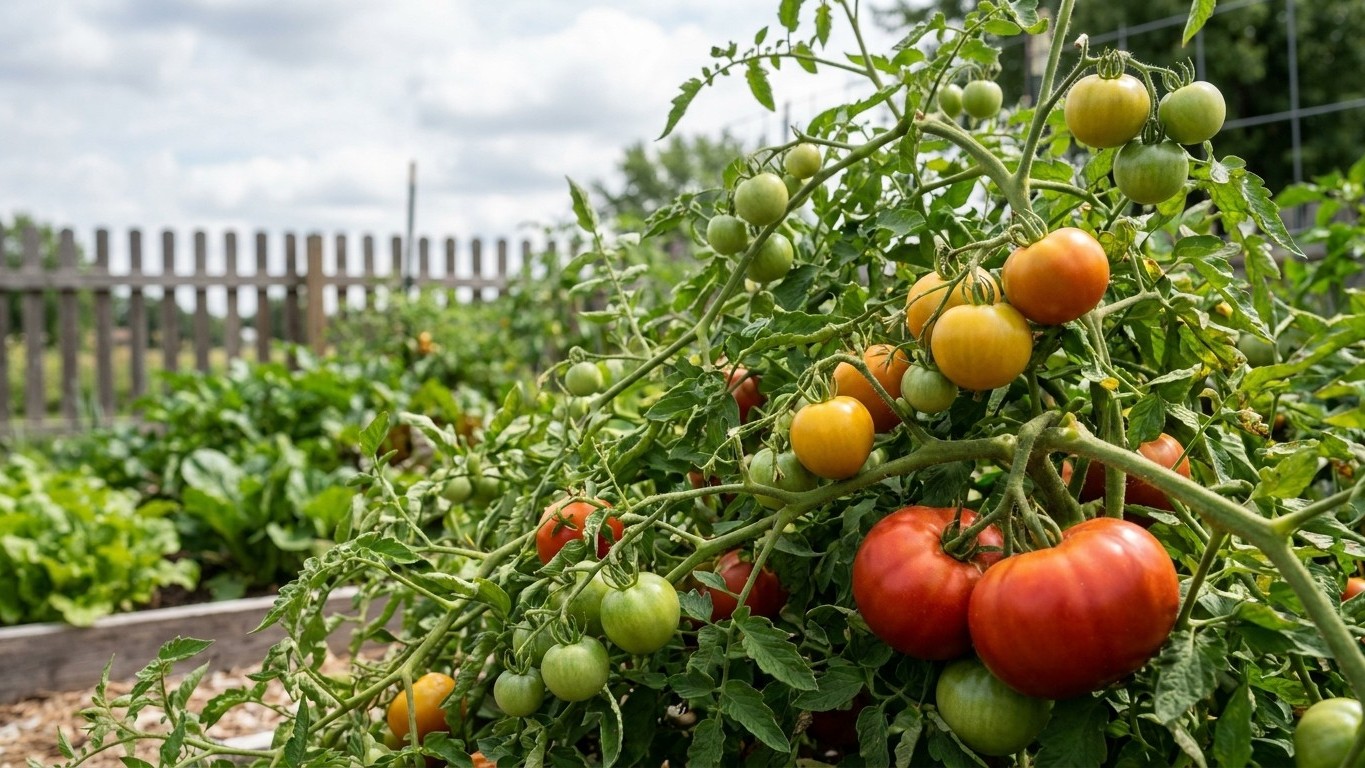

The short answer: pick by the fruit’s color, not by a date on the calendar, and finish your outdoor harvest before the first fall frost window hits your area. In the Salt Lake Valley, that window runs October 18 to October 29. Higher ground across Utah gets there sooner. Anything still green when that window arrives comes inside, either to ripen on a counter or to get used as a green tomato in the kitchen.
When to pick tomatoes in Utah
A tomato doesn’t need to hang on the vine until it’s fully red to finish ripening well. Once a fruit reaches what growers call the “breaker” stage, a faint blush of pink or yellow showing at the blossom end, the seeds inside are mature and the fruit has already started producing the ethylene gas that drives ripening. From that point on, sunlight and vine attachment matter a lot less than most people assume. The fruit will keep coloring up whether it’s on the plant or sitting in a bowl.
Reading the fruit, not the calendar
That’s why the real skill in picking tomatoes in Utah isn’t memorizing a date. It’s learning to recognize breaker stage on sight and by feel: a slight give under gentle pressure, a color shift starting at the bottom, a fruit that separates from the vine with a light tug instead of a fight. Fruit picked at breaker and finished indoors tastes close to vine-ripened, especially compared to fruit picked hard green and forced.
Why the frost window moves across Utah
The frost dates that matter for closing out the season come from NOAA’s 1991-2020 climate normals, specifically the 32°F freeze probability data for station USW00024127, which sits in the Salt Lake Valley (NOAA NCEI). The October 18 to October 29 range covers the period when the odds of hitting 32°F climb from 30 percent to 70 percent, meaning frost could still arrive earlier or later than that window in any given year. It’s a planning tool, not a guarantee.
Salt Lake City sits in a comparatively mild valley. Most of Utah sits higher and colder, and those areas will see their first 32°F reading well ahead of the valley floor, though a specific date for those elevations isn’t published here. Southern Utah runs warmer and typically holds off frost longer than the valley figures above. The state’s USDA hardiness zones span 4a to 9a, a range wide enough that a single statewide date would mislead more than it would help. Use the Salt Lake figures as your baseline, then shift earlier or later based on your own local growing conditions and past frost history.
What to do with the green ones
Every fall, gardeners across Utah end up with a plant full of green tomatoes and a frost date closing in. The move is a full strip: once the forecast turns toward that first frost window, pick everything on the vine rather than gambling on a few more days of ripening outside. A single hard freeze turns fruit to mush overnight, and there’s no salvaging it after that.
Sorting the harvest before frost
Not all green tomatoes are equal once they’re off the vine. Size and firmness tell you what’s worth saving for ripening and what’s better used right away in the kitchen:
- Mature green: full-size, pale green to whitish at the blossom end, seeds developed inside. These will ripen indoors with decent flavor.
- Breaker or better: any blush of color already showing. These ripen fastest and taste closest to vine-ripened.
- Immature green: small, hard, dark green all over, seeds still soft. These rarely ripen well and are better cooked green.
Using the ones that won’t ripen
Small, immature fruit doesn’t have to go to waste. Green tomatoes hold up well in cooking precisely because they’re firm and tart: sliced and fried, chopped into relish, simmered into chutney, or pickled whole in brine. None of that requires the fruit to ever turn red. It’s a different use case than ripening, and treating immature green fruit that way, instead of waiting for a color change that isn’t coming, saves a lot of counter space and disappointment.
Ripening indoors, and how long they keep
Bringing tomatoes inside to finish ripening is straightforward, but a few details make the difference between fruit that ripens evenly and fruit that rots before it colors up.
The paper bag method, and why it works
Tomatoes ripen faster when the ethylene gas they naturally produce stays concentrated around the fruit instead of dispersing into open air. A paper bag or a cardboard box with the lid loosely closed traps enough of that gas to speed things along, while still allowing airflow so moisture doesn’t build up and cause rot. Adding a ripe banana or apple to the bag adds even more ethylene and can shave time off the process, since both fruits are heavy ethylene producers.
Room temperature, somewhere in the 65 to 70°F range, ripens tomatoes at a steady, even pace. Warmer spots speed things up but can soften the fruit unevenly, and a sunny windowsill does more harm than good: direct sun heats the fruit’s surface faster than its interior, which leads to soft, mealy patches rather than the even color and texture you get from ripening in the dark or in indirect light.
Storage after ripening
Check the bag every few days and pull out any tomato that’s colored up, since one overripe fruit releases enough ethylene to push its neighbors past their prime. Mature green fruit ripened this way typically takes anywhere from about a week to a few weeks to finish, depending on how far along it was when picked. Once ripe, tomatoes keep their flavor and texture best at room temperature for a few more days; refrigeration slows spoilage but also breaks down the texture and dulls the flavor, so it’s worth holding off on the fridge until you’re not going to eat them within a day or two.
What goes wrong here
Utah’s dry air and elevation create a couple of problems that gardeners in wetter, lower states don’t deal with as often. Sunscald shows up as a pale, papery patch on the shoulder of the fruit facing the sun, a result of intense, high-elevation UV exposure hitting fruit that’s lost some of its leaf cover late in the season. It’s not rot, but it does make that section unusable.
Cracking is another common complaint, usually tied to the boom-and-bust watering pattern that arid climates encourage: a dry stretch followed by a heavy soak or a sudden rain causes the fruit to swell faster than its skin can stretch. Consistent watering through the growing season reduces it, though it won’t eliminate it entirely once fruit is already close to ripe.
Extreme heat causes its own ripening problem. Above roughly 85°F, tomatoes slow or stop producing the pigments that turn them red, which is why fruit can sit at an orange or blotchy stage for what feels like too long during a hot Utah August. It usually catches up once temperatures ease.
The other mistake is trusting the frost window too literally. Because the October dates reflect a probability range rather than a fixed cutoff, a frost can still arrive before the early end of that window in a colder year. Keeping an eye on the actual forecast, rather than counting down to a calendar date, is the more reliable approach. Utah State University Extension (extension.usu.edu) is a useful resource for local conditions specific to your county.
Common questions
Can you tell when a tomato is ready to pick by touch?
Yes. A tomato at or past breaker stage gives slightly under gentle pressure and separates from the vine with a light tug. A fruit that resists and feels rock hard is still immature and won’t ripen as well off the vine.
Do all green tomatoes ripen indoors?
No. Mature green fruit, full-sized with pale coloring and developed seeds, ripens reliably indoors. Small, dark green, immature fruit usually stays hard or rots before it colors, and is better used in cooked green tomato dishes instead.
Should I pick tomatoes before a frost warning even if it’s early in the range?
Yes. Since the October 18 to October 29 window reflects rising frost probability rather than a fixed date, a cold snap can arrive before the early end of that range in a colder year. Picking ahead of any frost forecast protects fruit that a single freeze would otherwise ruin.
What temperature ripens tomatoes fastest indoors?
Room temperature, roughly 65 to 70°F, ripens fruit evenly without the soft, mealy patches that direct sun or overly warm spots can cause. Avoid windowsills in direct sun and refrigeration until the fruit is fully ripe.