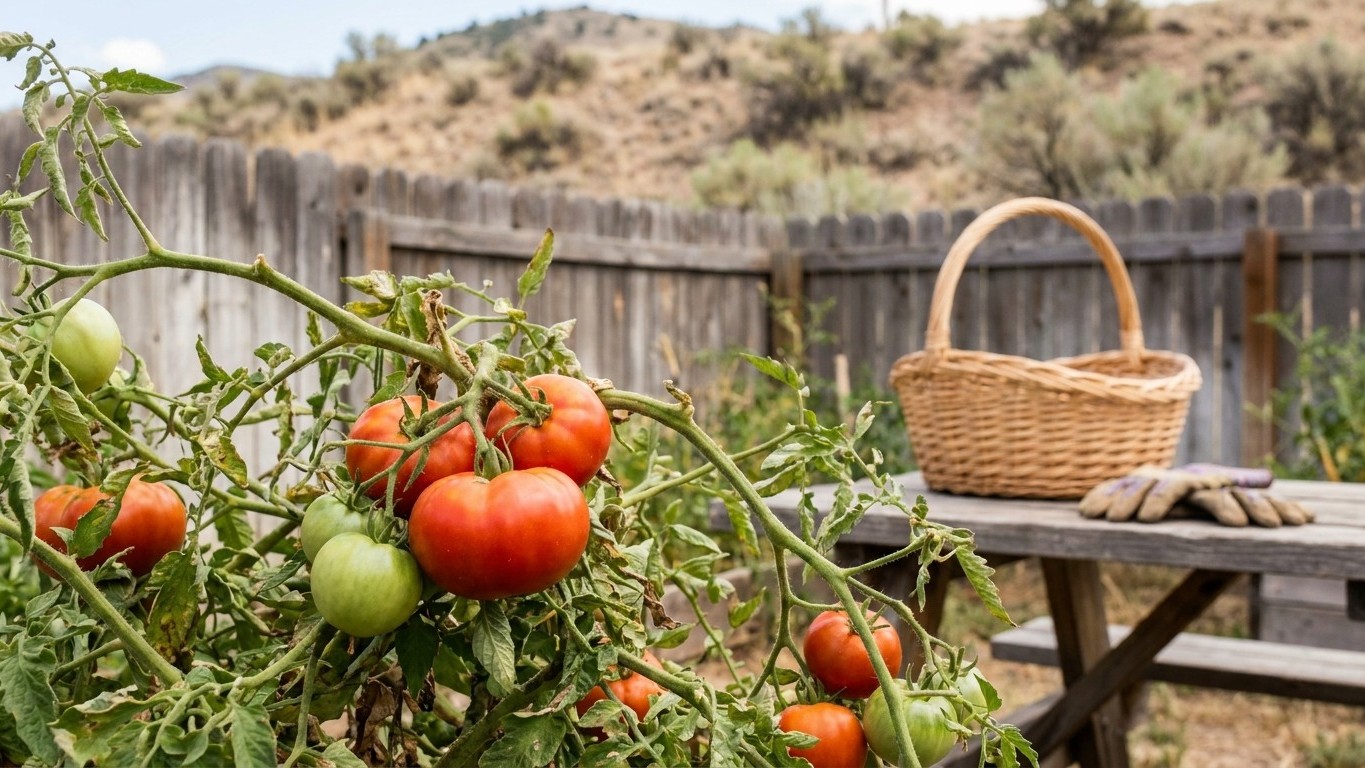

Tomatoes go into the ground in Utah once the danger of frost has passed, and for the Salt Lake City area that means a window of April 12 to April 29, according to NOAA’s National Centers for Environmental Information 1991-2020 climate normals for station USW00024127. Higher-elevation valleys and northern counties run later than that, sometimes by several weeks. If you’re starting from seed, count back six to eight weeks from your local last-frost window and get seed trays going indoors now.
When to plant Tomatoes in Utah

Cache Valley gardeners who plant by Salt Lake’s April 12-29 window often watch their tomato transplants blacken overnight, weeks before that valley’s own frost actually clears. The date that works on the Salt Lake benchmark can kill a start higher up or further north, where cold air pools longer and the frost-free stretch lands closer to Wyoming’s calendar than the state capital’s. That mismatch costs a full six-to-eight-week head start, and sometimes the whole crop, before the real growing season even opens.
That figure is measured in the Salt Lake valley, one of the mildest pockets in the state. Cache Valley, the Uinta Basin, and the higher benches around Park City sit at greater elevation and colder air pools, and their last frost typically arrives weeks later than the Salt Lake normals. Gardeners in Utah’s coldest mountain valleys face a season length closer to what growers manage in Wyoming, where the frost-free window closes even later, so the same backward count just shifts further down the calendar. Washington County and the rest of southern Utah run the other direction, with frost clearing earlier in spring. Treat the April 12-29 figure as a Salt Lake benchmark, not a statewide date, and check county-level normals through USU Extension before committing transplants to the ground.
Starting seeds indoors
Tomato seed needs six to eight weeks of indoor growing before it’s ready to go outside as a transplant. Counting back six to eight weeks from the Salt Lake window of April 12-29 lands seed-starting somewhere in mid-February to mid-March for that area. Gardeners farther north or higher up should shift their own count back from whatever later frost window applies locally, using the same six-to-eight-week math. Seed started earlier than that usually gets leggy and root-bound sitting on a windowsill waiting for the ground to warm.
Sow seed a quarter inch deep in a seed-starting mix, keep it around 70 to 80°F until it germinates, then move seedlings under strong light right away. A cool windowsill is rarely bright enough on its own. This is where a lot of home-started tomato seedlings fail before they ever reach the garden.
Hardening off and transplanting
Seedlings raised indoors need a hardening-off period before they go into open ground, typically a week to ten days of increasing outdoor exposure, starting with a couple of hours in filtered shade and working up to a full day in direct sun and wind. Skip this step and the plants can scald or stall within days of transplanting even after the frost danger has passed.
Transplant once nighttime lows are reliably running warmer, which for Salt Lake tends to follow soon after the April 12-29 window closes. Soil temperature matters as much as air temperature. Tomato roots stall in cold soil even if the air feels warm enough, so wait until the top few inches of bed have had a stretch of sun rather than transplanting the day frost risk ends. If your area sits at meaningfully higher elevation or in a known cold-air pocket, add another one to two weeks past whatever local frost date you’re working from before setting plants out.
Soil and site preparation
Tomatoes want the sunniest spot in the yard, a minimum of six to eight hours of direct sun, more if you can give it. Utah’s intense summer sun and low humidity mean full sun rarely burns fruit outright, but a spot with some afternoon shade in the hottest weeks can reduce blossom drop in valleys where midsummer highs run steep.
Sun and soil texture
Much of Utah’s valley and bench soil runs alkaline and heavy in clay, with poor drainage where irrigation water has nowhere to go. Tomatoes tolerate a fairly wide pH range but sulk in waterlogged clay, so work two to three inches of finished compost across the whole bed before planting rather than digging a single amended hole per plant. Compost improves both extremes: it opens up clay so water and roots move through it, and it helps sandy soil on drier benches hold moisture longer between waterings.
A raised bed or mounded row solves a lot of drainage problems in one move, since it lifts roots above the compacted subsoil that’s common on newer residential lots where topsoil was scraped during construction.
Bed prep timeline
Start amending beds several weeks before your transplant date, not the day before. Compost worked in early has time to integrate with existing soil biology, and any manure-based compost gets time to finish breaking down so it won’t scorch tender roots. If you’re testing soil pH or nutrient levels, do it early enough in late winter to get results back and adjust before the transplant window opens.
Space indeterminate varieties at least 24 to 36 inches apart in rows 3 to 4 feet apart, and determinate varieties a little tighter since they stay more compact. Crowded plants shade each other’s lower leaves, which slows drying after irrigation and invites the fungal problems covered later in this guide.
Varieties that suit Utah
Two things drive variety choice in Utah: how much season you actually have before frost, and whether your soil carries the wilt diseases that build up in Western clay after repeated tomato crops. Days-to-maturity figures on seed packets are counted from transplant, not from seed, and they shift by a week or two depending on how warm and sunny the season runs, so treat the number as a guide rather than a countdown.
For a compressed or high-elevation season
Gardeners above the Salt Lake valley, or anywhere the last frost runs later than the April 12-29 Salt Lake window, do better starting with quicker cultivars. Sakura reaches maturity in about 55 days from transplant and carries high resistance to tomato mosaic virus and fusarium wilt races 1 and 2, with intermediate resistance to nematodes. Sun Gold, at 57 days, and Supersweet 100, at 60 days, are both indeterminate cherry types that keep producing once they start, useful where the harvest window itself is short. Among larger-fruited types, Juliet and Jasper both mature around 60 days from transplant, with Jasper carrying high resistance to late blight, a useful trait in a wet spring.
For longer valley seasons and disease-prone soil
Where the season runs longer, as it typically does in the Salt Lake valley itself, slower-maturing varieties have time to finish. Celebrity Plus, at 78 days, and Big Beef Plus, at 72 days, both carry resistance to nematodes, gray leaf spot, and tomato mosaic virus, useful in beds that have grown tomatoes for several years running. Tiren and Granadero, both around 75 days, add verticillium wilt resistance on top of similar mosaic virus protection. In a bed with a known history of wilt or bottom-up yellowing collapse, resistance codes on the seed packet matter more than flavor reputation. Heirlooms like Cherokee Purple and Brandywine carry no listed disease resistance and take longer to ripen, so they suit a proven long season and clean soil history rather than a first-year bed.
For sauce and paste, San Marzano II, Amish Paste, and Amalfi cover a range from 68 to 85 days from transplant, with Amalfi’s intermediate resistance to late and early blight worth the shorter finish if beds tend to stay damp. Match the days-to-maturity number against your own count-back arithmetic from the planting section before ordering seed, since an 85-day paste tomato needs a real Salt Lake-length season, or longer, to reliably ripen a full crop.
| Variety | Days to maturity | Type | Notable resistance |
|---|---|---|---|
| Sakura | 55 | Indeterminate | Nematodes, tomato mosaic virus, fusarium 1 & 2 |
| Sun Gold | 57 | Indeterminate | Tobacco mosaic virus, fusarium 1 |
| Jasper | 60 | Indeterminate | Late blight, early blight |
| Celebrity Plus | 78 | Determinate | Nematodes, gray leaf spot, tomato mosaic virus |
| Granadero | 75 | Indeterminate | Nematodes, verticillium wilt, tomato mosaic virus |
| Amish Paste | 85 | Indeterminate | None listed |
What to plant alongside
Basil is the classic tomato companion, and while the folklore claim that it improves tomato flavor has never held up under controlled testing, it does share water and sun needs and stays low enough to avoid shading the fruit, so pairing them wastes no bed space even if the flavor benefit is unproven.
Borage and alyssum draw in pollinators and predatory insects like hoverflies, which help control aphids without any spray input. Marigolds are widely planted alongside tomatoes for nematode suppression, and there’s real research behind French marigold roots reducing root-knot nematode populations in soil, though the effect is local to the marigold’s own root zone rather than protecting a whole bed.
- Good neighbors: basil, borage, alyssum, marigolds, onions, carrots
- Avoid nearby: corn, potatoes and other nightshades
- Skip entirely: cabbage, broccoli and other brassicas
Keep tomatoes and potatoes in separate parts of the garden for a practical reason beyond folklore: both are nightshades susceptible to the same early and late blight fungi, and planting them close together lets one infected plant seed spores onto the other within a single season. Corn draws the same earworm moth that lays eggs on tomato fruit as corn earworm, so distance between the two crops reduces the moth’s opportunity rather than eliminating it.
Skip fennel entirely near tomatoes, since it’s allelopathic and stunts the growth of many garden neighbors including tomato, whatever benefit it offers pollinators elsewhere in the yard.
Watering, feeding and support
Watering and mulching
Tomatoes want deep, infrequent watering rather than a daily sprinkle. A deep soak that wets the root zone six inches down, given once or twice a week depending on heat and soil type, encourages roots to grow down rather than staying shallow and vulnerable to drying out. Utah’s low humidity and intense summer sun pull moisture out of soil fast, so a three-inch layer of mulch, straw or wood chips both work, cuts evaporation significantly and keeps soil temperature more even through the swing between hot days and cool desert nights.
Water at the base rather than overhead. Wet foliage sitting overnight is one of the more reliable ways to invite the fungal leaf diseases covered in the next section, and Utah’s low humidity doesn’t fully cancel that risk if watering happens late in the day.
Feeding
Work a balanced fertilizer into the soil at transplanting, then switch to a lower-nitrogen, higher-phosphorus and potassium feed once flowering starts. Too much nitrogen through the season pushes lush foliage at the expense of fruit set, a common mistake when gardeners keep applying an all-purpose feed right through summer. A side dressing of compost or a diluted liquid feed every three to four weeks through fruiting keeps plants producing without overdoing the leaf growth.
Staking, caging and pruning
Indeterminate varieties, which keep growing and setting fruit until frost, need real support: a sturdy cage, stake, or trellis set in place at transplanting rather than added later once the plant has sprawled. Determinate varieties stay more compact and can often get by with a lighter cage.
Suckering, removing the small shoots that form in the joint between the main stem and each leaf branch, is worth doing on indeterminate varieties to keep the plant from turning into a tangled mass that traps humidity and hides fruit from the sun. It’s not strictly necessary on determinate types, which set most of their fruit in one flush and benefit less from the practice. Stop heavy pruning once plants are in full fruit production, since removing too much foliage late in the season exposes ripening fruit to sunscald.
Common problems

Most tomato failures trace back to water inconsistency, temperature swings, or one of a handful of soil-borne fungi that build up wherever tomatoes have grown before. Reading the symptom correctly saves a season of guessing.
Blossom end rot

A sunken, leathery black or brown patch forms at the bottom of the fruit while the rest of the tomato looks normal. This is a calcium delivery problem caused by inconsistent watering rather than a soil calcium deficiency in most cases. Even, deep watering on a consistent schedule solves it far more often than adding calcium products does.
Fruit cracking

Concentric rings or radial splits open across the shoulders of ripening fruit, usually after a heavy rain or deep watering follows a dry stretch. The fruit swells faster than the skin can stretch. Mulching to even out soil moisture between waterings reduces the swings that cause it.
Curling leaves
Leaves that roll upward along their length but stay green and otherwise healthy are usually reacting to heat stress or a recent hard pruning, not disease, and the plant grows out of it. Leaves that curl alongside yellow mottling or stunted new growth point toward a virus instead, and there’s no cure once that shows up, only removal of the affected plant.
Wilt diseases

Verticillium and fusarium wilt both cause lower leaves to yellow between the veins and wilt starting from the bottom of the plant upward, eventually collapsing the whole plant even with adequate soil moisture. Slicing the stem near the base often shows brown discoloration inside. Both fungi persist in soil for years, which is why choosing resistant varieties matters more in a bed with a tomato-growing history than in new ground.
Poor fruit set
Flowers form and drop without setting fruit when nighttime or daytime temperatures spike during bloom, or when nitrogen has been overdone at the expense of flowering. Southern Utah’s summer heat can trigger the same poor fruit set that growers deal with through a long hot season in Alabama, though Utah’s dry air makes the humidity-driven fungal diseases common there far less of a problem here. This is a temporary condition tied to a hot stretch and usually resolves once temperatures moderate.
Aphids

Small, soft-bodied insects cluster on the undersides of leaves and new growth, leaving a sticky residue behind. A strong water spray knocks down light infestations, and letting borage or alyssum draw in predatory insects handles the rest without spraying anything broad-spectrum.
Tomato hornworms

A large green caterpillar with pale diagonal stripes and a single horn at the rear end can strip a plant of leaves within days, and its green coloring camouflages it well against the foliage it’s eating. Hand-picking works fine on a home scale. Check plants in the early morning or evening when the caterpillars are most active and easiest to spot.
Pests that actually show up in Utah
Utah State University Extension’s Vegetable Insects fact sheet series, maintained by the Utah Plant Pest Diagnostic Lab and IPM Program, tracks a long list of vegetable pests across the state, but most of them never touch a tomato plant. Squash bug, cucumber beetles, corn earworm, onion thrips and the cabbage-family moths all belong to squash, corn, onion and brassica crops. If you grow those alongside your tomatoes, watch for them there, not here.
What actually shows up on tomatoes from that list is a shorter set. The tomato and tobacco hornworm is the one every Utah gardener eventually meets: a fat green caterpillar the length of a finger, striped diagonally, chewing whole leaves and stems down to bare stubs almost overnight in mid to late summer. You’ll usually spot the black droppings on the leaves below before you spot the worm itself, since it hides well against the stem. Handpicking works fine on a few plants and is the only control most home gardeners need.
Aphids show up earlier, usually as new growth curls and gets sticky with honeydew, sometimes with ants working the same leaves. A strong jet of water knocks most colonies down, and insecticidal soap handles the rest without hurting the plant.
Spider mites arrive in the hottest, driest weeks of summer, first as a fine stippling or bronzing on the upper leaf surface, then as faint webbing on the underside once the population builds. Mites thrive on drought-stressed plants, so consistent watering does as much to prevent them as any spray, and a forceful hosing of the leaf undersides breaks up light infestations before they spread.
Flea beetles hit young transplants hardest, riddling the leaves with small round shot holes within days of setting plants out. Established plants shrug off the damage, so the real defense is getting seedlings past that vulnerable first couple of weeks, with row cover if beetles are heavy in a given year.
Grasshoppers and leafminers both appear on the state’s list and can mark up tomato foliage in a bad year, grasshoppers chewing ragged notches from the leaf edges inward and leafminers tunneling pale winding trails between the leaf surfaces. Neither usually justifies a spray on a home planting, since the fruit itself is rarely touched.
Harvest and end of season
Pick tomatoes once they show full color for the variety, whether that’s the deep red of Big Beef Plus, the dusky pink-brown of Cherokee Purple, or the golden-orange of Sun Gold. Fruit continues ripening after picking, so there’s no penalty for taking tomatoes slightly early if a bird or squirrel has been getting to the ripe ones first.
Ripening off the vine and storage
Tomatoes ripen fine indoors at room temperature out of direct sun. Cold storage below roughly 55°F stops the ripening process and flattens flavor, so keep unripe fruit at room temperature, not in the refrigerator, until it fully colors up.
Managing the first fall frost
Utah’s first fall frost date varies by elevation and location enough that a single figure would mislead more than it helps. Check USU Extension’s county-level frost data as the season turns rather than guessing from a statewide average, since a Cache Valley garden and a St. George garden can be weeks apart in when frost risk actually arrives.
Once nights start running cold and a frost warning is issued, pull any green fruit that has reached full size rather than leaving it to freeze on the vine. Green tomatoes at mature size but not yet coloring will often ripen indoors over several weeks if kept at room temperature, spread out rather than piled so they don’t rot each other. Smaller, still-growing fruit rarely ripens well once pulled, so it’s better used green, in salsa verde or fried green tomato recipes, than saved for a ripening attempt that will likely fail.
Local help
County-level frost dates, soil testing, and disease diagnosis are exactly what USU Extension exists for. Utah spans a huge range of elevation and climate inside one state, and a general figure like the Salt Lake normals only gets a gardener in Cache County or Washington County partway to an answer. Contact USU Extension’s local office through USU Extension for numbers specific to your county before locking in a planting date. For more on gardening elsewhere in the state, our Utah guides cover other crops and regional differences worth knowing before you plan a full garden.
Where to Go Next
Everything above assumes you already know when to plant, what to plant, and what’s coming for your plants once they’re in the ground — so here’s where to fill in those pieces. Start with the tomato planting calendar for Utah, which works backward from Salt Lake City’s shifting frost dates instead of pinning you to a fixed weekend on the calendar, since the last spring freeze and first fall freeze both move around from year to year. Once your dates are set, check the list of tomato varieties that actually ripen in time here, built around the roughly 172 to 200 days Salt Lake City gives you between those two freezes — cherry and grape types clear that window with room to spare, and the page sorts out which larger varieties can too. Last, before the bugs show up, read through the rundown of the pests that actually turn up on Utah tomato plants, which arrive in a fairly predictable order tied to how quickly the soil warms after that last spring freeze — knowing the sequence ahead of time means you’re not scrambling once it starts.
Common questions
Can I direct-sow tomato seed outside instead of starting indoors?
You can in the warmer, longer-season pockets of southern Utah, but it’s a gamble almost everywhere else in the state. Direct-sown seed needs weeks to reach transplant size before it can even begin fruiting, and by the time it catches up, an indoor-started transplant of the same variety is already flowering.
What do I do if a late frost hits after I’ve already transplanted?
Cover the plants overnight with a bedsheet, row cover, or an overturned bucket, anything that traps ground heat and keeps frost off the leaves directly. Remove the cover the next morning once temperatures climb back above freezing, since leaving it on through a sunny day can cook the plant instead.
Why are only the bottom leaves on my tomato plant turning yellow?
A few yellowing leaves low on an otherwise healthy, upright plant are usually just normal aging as the plant redirects energy upward, especially once the lower leaves are shaded out by growth above them. Yellowing that keeps climbing up the plant alongside wilting or stunted growth is a different story and points toward one of the wilt diseases covered above.
Can tomatoes be grown in containers in Utah’s dry climate?
Yes, but containers dry out faster than garden beds in Utah’s low humidity and intense sun, sometimes needing water daily in peak summer heat. Use the largest pot practical, at least 15 to 20 gallons for an indeterminate variety, since a bigger soil volume buffers those swings and reduces blossom end rot from uneven watering.
Is it too late to plant tomatoes if I missed my area’s frost window?
Not necessarily, if you switch to a quicker variety and plant transplants rather than seed. A 55 to 60 day cultivar like Sakura or Jasper started as a sturdy transplant can still finish a crop well after the ideal window has closed, though the harvest will run later and lighter than a plant set out on time.