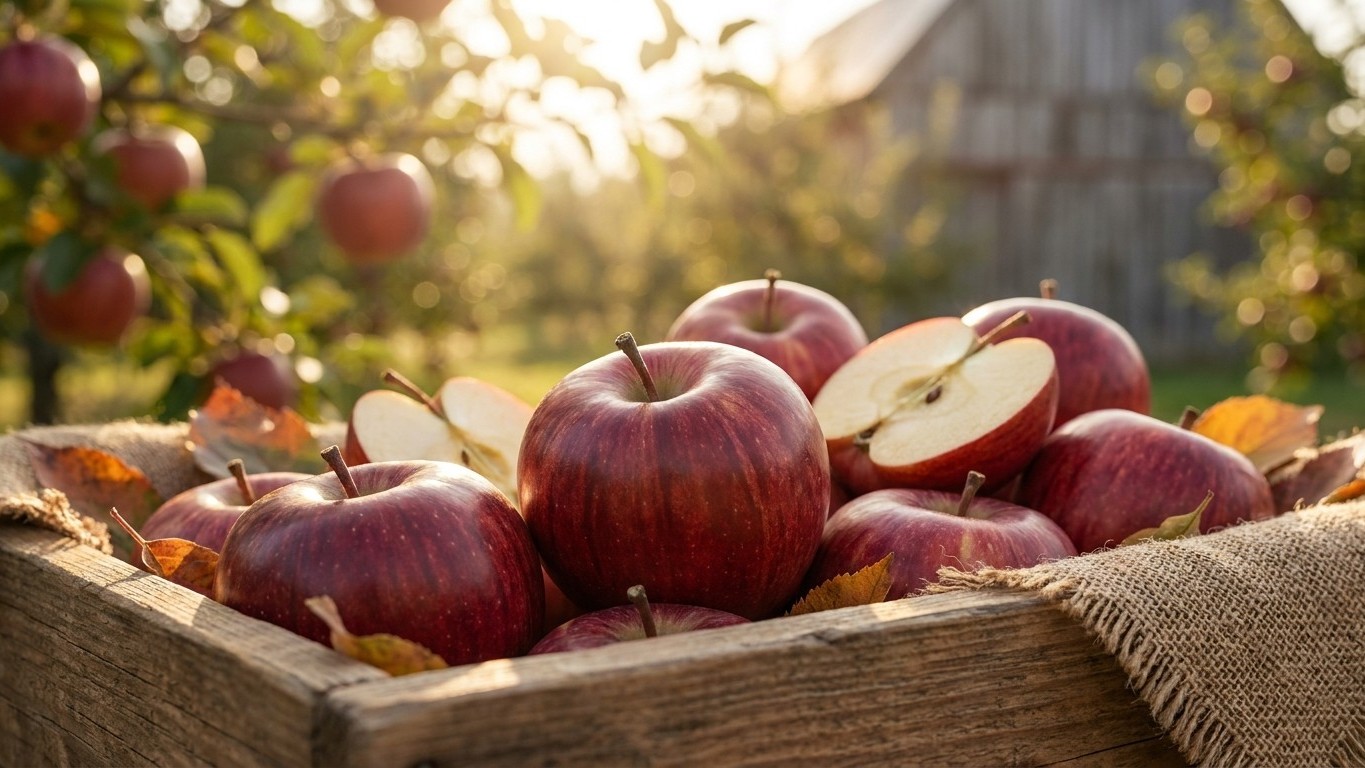

Pick time in Wisconsin isn’t a date on a calendar. It’s a set of signs on the tree: background skin color shifting from green to yellow, seeds turning brown, and fruit that twists free with a gentle lift. Those signs typically show up between late August and late October, with the outer edge of that window set by the first fall freeze. Storage life after picking runs anywhere from two weeks to six months, depending entirely on which variety you grew and how cold your storage space gets.
When apples are ready to pick in Wisconsin
The calendar tells you almost nothing useful here. What matters is the stage the tree and fruit are actually in, and that stage is anchored to two dates: the last spring frost and the first fall frost. At the reference station used for this territory (NOAA NCEI station USW00014839), the last spring frost falls between April 16 and April 29, and the first fall frost falls between October 17 and October 29. Everything that happens with an apple tree, bloom, fruit set, and the final ripening push, happens inside that window.
That window isn’t uniform across the state, and no honest source pretends it is. Lake Michigan holds heat into the fall and pushes the first freeze later along the shoreline. Move inland toward southern Wisconsin and the ground typically freezes in early October. Head north and it can arrive weeks earlier still. If you’re picking fruit near the lakeshore, you likely have real room to let late varieties hang longer. If you’re farther north or inland, that October window can close faster than the tree’s ripening schedule expects, and fruit left too long risks frost damage right on the branch.
Reading the fruit instead of the month
Three checks tell you more than any date range. First, background color: the green undertone behind any red blush should be shifting to yellow or cream, not staying deep green. Second, seed color: cut one open and the seeds should be brown, not white or pale tan. Third, the separation test: cup the apple, lift and twist gently. Ripe fruit releases with the stem intact. If you have to yank it, it’s not ready.
Early-season varieties typically finish up in late August into early September. Midseason types run through most of September. Late-season apples, the ones built for storage, often hang until the first hints of the fall frost window approach, sometimes into mid-October along the lakeshore where that frost date runs later. The University of Wisconsin-Madison Division of Extension is the practical resource for county-level guidance on variety-specific timing, since a statewide range can’t replace what your local office knows about your particular microclimate.
Which ones keep, and which must be eaten
Not every apple off the tree is built for the same job. Some are bred and grown to be eaten within days. Others are built to sit in cold storage and still taste right in February. The difference comes down to skin thickness, sugar-acid balance, and how densely the flesh is structured, not to anything you do after picking.
Early-season varieties tend to have thinner skin and softer flesh. They ripen fast, bruise easily, and lose their texture within one to two weeks even under good conditions. These are the apples you eat the week you pick them, or turn into sauce and baked goods before they go mealy. Midseason varieties give you a bit more room, generally holding decent quality for a few weeks in a cool space. Late-season varieties are the ones bred for the cellar: thicker skin, firmer flesh, and a chemistry that slows down respiration once the fruit is off the tree. Those are the apples that can realistically carry a household from October into spring if the storage conditions are right.
A rough sorting by harvest timing
| Harvest window | Typical keeping quality | Best use |
|---|---|---|
| Late August to early September | Short, days to about two weeks | Fresh eating, sauce, immediate baking |
| Mid to late September | Moderate, a few weeks in cool storage | Fresh eating, short-term storage, pies |
| Late September into October | Long, potentially months in cold storage | Root cellar or refrigerated storage, long-term use |
That table is a general pattern, not a variety-by-variety guarantee. Two apples picked the same week can behave very differently depending on the cultivar’s own storage traits. If you’re not sure which category your tree falls into, the county Extension office can usually place a specific variety on that spectrum, since no statewide figure substitutes for a tested cultivar list.
Storing them through a Wisconsin winter
Long-keeping apples need three things: cold, humidity, and separation from ethylene-sensitive produce. The target range most home storage guides describe is just above freezing, with high humidity to keep the skin from shriveling. That’s straightforward to hit in a real root cellar. It’s much harder to hit reliably in a garage, shed, or unheated porch, which is exactly where a lot of Wisconsin households end up storing their harvest.
Here’s the problem with that instinct. The mean daily minimum temperature for the coldest month in this territory (measured at the Milwaukee reference station) is 17.2°F. That’s not a record low or a rare cold snap. That’s the average low for the coldest stretch of a normal winter. An unheated garage or shed offers essentially no buffer against outdoor air once the door’s been open a few times, which means storage temperatures out there will regularly sit well below freezing, not just dip near it occasionally. Apples don’t slow down gracefully at that point. They freeze solid, and once thawed, the flesh turns mealy and brown almost immediately.
What actually works
- An insulated basement corner, root cellar, or unheated but frost-protected space that stays consistently in the mid-30s to low-40s Fahrenheit
- Perforated plastic bags or open crates rather than sealed containers, to manage humidity without trapping condensation
- Physical separation from potatoes and other ethylene-producing vegetables, which speed up ripening and shorten storage life
- Regular checks, at least every couple of weeks, pulling any apple showing soft spots before it spreads rot to its neighbors
A basement that stays reliably cool but never actually freezes is the sweet spot most Wisconsin households can realistically achieve without mechanical refrigeration. A detached, uninsulated structure during a January cold snap is not.
What goes wrong here
The two most common failures in this territory happen at opposite ends of the season, and they trace back to two different things: winter hardiness and winter chill, which are not the same filter.
Hardiness is about whether the tree’s wood survives the cold at all. At 17.2°F average minimum for the coldest month, this territory is well within the range that standard hardy apple cultivars tolerate without dieback. Tree survival generally isn’t the limiting factor for apples grown here. Winter chill is a separate question entirely: it’s the accumulated cold hours that tell the tree when it’s safe to break dormancy and bloom. Because winters here reliably deliver plenty of chill, even in the milder pockets near the lakeshore, there’s rarely a reason to plant a low-chill variety expecting it to solve a dormancy problem that doesn’t exist in this territory.
That matters because low-chill varieties come with a real cost: they break dormancy on less accumulated cold, which means they flower early. Early flowering is exactly what walks a tree straight into the last spring frost, which at the reference station runs April 16 to April 29, and arrives earlier still farther north. A tree blooming ahead of that window risks losing its entire crop to a single overnight freeze on the flowers, even though the tree itself survives fine. Since winter chill isn’t in short supply here, the safer call in this territory is a standard-chill, later-blooming variety that flowers after the frost risk has mostly passed, not an early-flowering type chasing a chill deficit that doesn’t exist locally.
The second common failure is storage-related and already covered above: treating an unheated outbuilding as a root cellar during the coldest weeks of the year. Both mistakes come from applying a rule of thumb from somewhere else instead of reading this territory’s own numbers.
Common questions
Can I pick apples before the seeds turn brown?
You can, but the apple won’t be at peak flavor or storage quality. Early picking is sometimes done deliberately for tart cooking apples, but for fresh eating or long storage, waiting for brown seeds and yellowing background color gives a more reliable result.
Does a light frost ruin apples still on the tree?
The facts available for this territory only document the 32°F freeze dates, not a separate lighter-frost threshold. A hard freeze around or below that mark can damage exposed fruit and blossoms; anything short of that isn’t quantified here, so treat any apples exposed to sub-32°F conditions with caution and check for soft, water-soaked spots before storing them.
Why do my stored apples go soft even in a cool basement?
Usually one of two reasons: the variety itself isn’t a long-keeper, regardless of storage conditions, or the storage space isn’t holding steady near-freezing temperatures with enough humidity. A thermometer left in the storage spot for a week will tell you more than guessing.
Is there a single statewide date for when apples are ripe in Wisconsin?
No, and treating one as if it exists is the mistake this whole territory punishes. The reference station’s frost dates and the 17.2°F coldest-month minimum apply to that specific location; lakeshore areas run later in fall, and inland southern and northern areas freeze earlier. Check fruit condition directly rather than relying on a single date for the whole state.