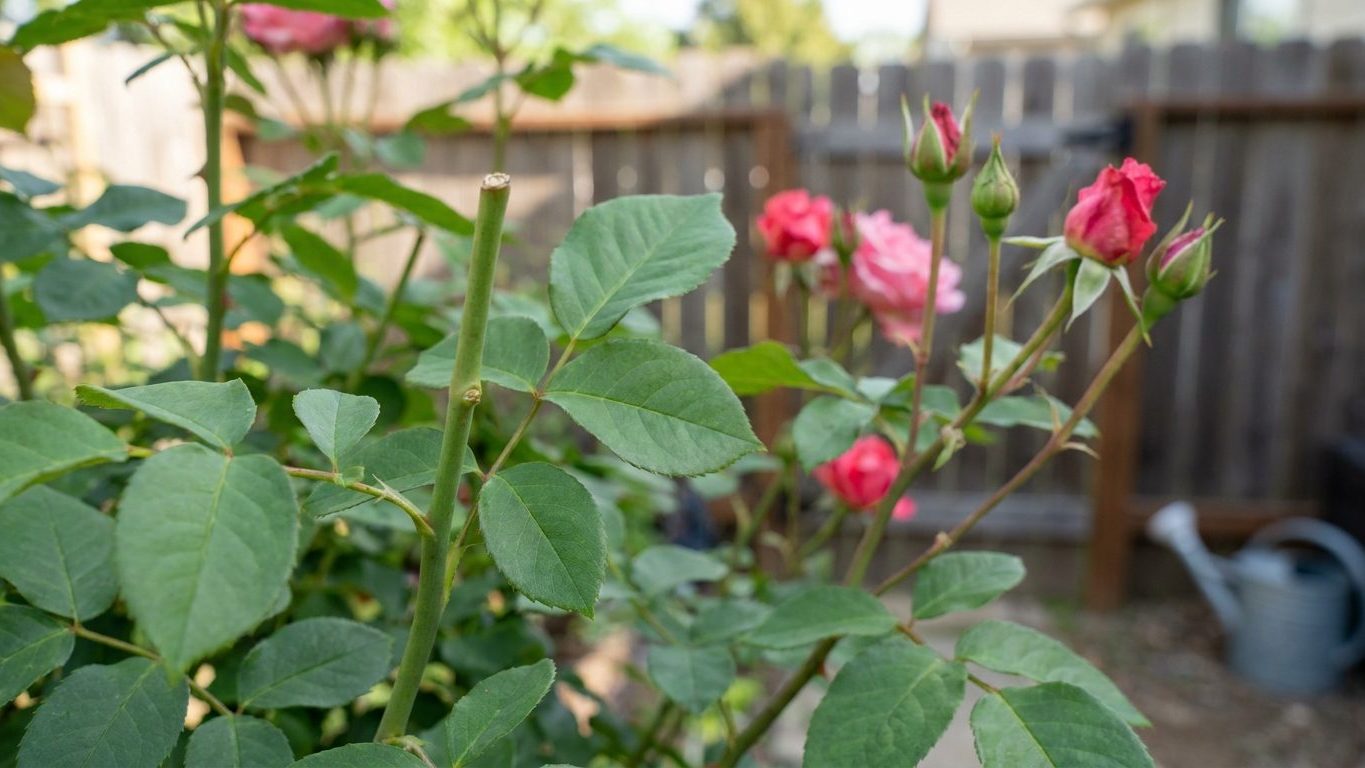

A rose bush that flowered heavily last year and barely blooms this year is almost never dying. The most common causes are blind wood (canes that grow but never set a bud), a pruning mistake made last winter, rootstock suckers taking over from the grafted variety, or a mature bush that needs renewal cuts. Disease is rarely the reason blooms simply vanish.
What you are looking at
Start by counting canes, not flowers. A bush that has the same number of healthy green canes as last year but produces fewer blooms per cane is showing a different problem than a bush that has fewer canes overall. The distinction matters because it points to two separate fixes.
Look closely at the cane tips. A cane that grew 8 to 12 inches, leafed out fully, and then simply stopped without forming a bud at the top is called a blind shoot. The stem itself looks completely healthy. There is no wilting, no discoloration, no spotting. It just never produced the swollen tip that would have opened into a flower. This is the single most common reason a rose bush “has fewer roses” while looking otherwise normal.
Compare that to a bush where new growth from the base looks different from the rest, thinner canes, smaller leaves with seven leaflets instead of five, flowers (if any) that are small, single, and often a different color than the variety you planted. That is not fewer blooms from the same rose. That is rootstock suckering, where growth from below the graft union has outcompeted the grafted variety, and the plant you’re looking at is gradually turning into the rootstock species instead of the rose you bought.
A third pattern: the bush lost leaves early to black spot or another foliar disease last season, went into fall thin and stressed, and simply didn’t store enough energy to push a full flush this year. In this case you’ll usually still find last year’s leaf litter with the telltale black or yellow spotting, and this year’s growth is often shorter overall, not just blind at the tip.
What this is not: rose rosette disease looks very different, with tight clusters of small deformed leaves, excessive thorniness, and thick red “witches’ broom” growth. If you see that pattern, it’s a separate and more serious problem, not simply a lighter bloom year.
What actually causes it
The common explanation, that a rose bush “needs more fertilizer” or “needs more calcium” to bloom, misses the actual mechanism in most cases. Blind wood happens because the terminal bud, the tiny growing point at the tip of a new cane, gets damaged or aborted before it can differentiate into a flower. That damage usually comes from one of three sources: thrips or aphids feeding directly on the meristem while it’s still soft, a late cold snap that nips the tip without killing the cane, or simply not enough light reaching that part of the plant to trigger flower formation.
Pruning timing is the other major driver, and it’s the one gardeners most often get wrong themselves. Roses that bloom on new wood need pruning done while the plant is dormant, cutting back to outward-facing buds so the plant channels energy into a smaller number of strong flowering canes. Prune too late, after growth has already started, and you remove the very buds that were about to become this season’s flowers. Prune too lightly, leaving old, congested wood, and the plant spreads its energy across too many weak canes instead of concentrating it into fewer strong bloomers.
Age plays a real role too. Rose bushes older than about eight to ten years without any renewal pruning tend to accumulate old, woody canes that flower less each season, even as the bush itself looks larger. The plant isn’t sick, it’s just carrying dead weight it never sheds on its own.
To tell these apart on your own bush: blind shoots with otherwise healthy leaves point to pests or timing; a change in leaf shape and flower color points to suckering; thin overall growth after a bad disease year points to stored-energy loss; and a bush that’s simply gotten woody and congested over many years points to age.
What to do now
Be honest about what’s already lost. A blind cane will not produce a flower this cycle, no matter what you spray or feed it. Cutting it back doesn’t recover the missed bloom, but it does help the next one. Cut the blind cane back to a healthy, outward-facing five-leaflet leaf, not all the way to the base. This tells the plant to push a new shoot from that point, and that new shoot has a real chance of flowering later in the same season, especially on repeat-blooming varieties.
If you’ve confirmed rootstock suckering, remove the suckers at their point of origin below the graft union, not by cutting them off at ground level, which just encourages more regrowth from the same spot. Pull soil away to find where the sucker attaches to the rootstock and cut it flush there. This won’t bring back this year’s lost blooms from the grafted variety, but it stops the rootstock from continuing to take over the plant’s energy.
Check the tips of remaining canes for thrips or aphids now, while there’s still time to protect the next flush. Small, distorted, or discolored buds that never fully open are a thrips signature, and a light insecticidal soap application on new growth can protect the next round of buds before they’re damaged.
If the cause was a thin, disease-stressed bush from last season, don’t push extra nitrogen fertilizer to “force” blooms now. That encourages more leafy growth at the expense of flowering and adds more foliage for disease to spread through. Focus instead on keeping the remaining leaves clean and intact so the plant can rebuild reserves for next year.
What does not work
Gardeners facing fewer blooms often reach for the same fix that’s popular for tomato problems: calcium. Crushed eggshells worked into the soil, foliar calcium sprays, and adding lime to soil that already has enough calcium do nothing for blind wood or reduced flowering. Roses that fail to bloom because of thrips damage, poor light, or bad pruning timing are not calcium-deficient. Even where a real calcium shortage exists in soil, the fix isn’t eggshells, which break down far too slowly to matter within a season, and it isn’t a foliar spray, since calcium moves through a plant slowly regardless of how it’s applied. If your soil hasn’t been tested and calcium hasn’t been confirmed as a problem, none of these remedies address the actual cause of fewer roses.
A second common mistake is dumping on extra high-nitrogen fertilizer to “wake the plant up.” This produces more leaves, sometimes more canes, but not necessarily more flowers, and it can make an already disease-stressed bush more attractive to aphids and more prone to black spot, which compounds the original problem.
A third habit that backfires: cutting the entire bush back hard mid-season, hoping to force a fresh flush. On repeat bloomers this can work in early spring during dormant pruning, but done mid-summer it just removes wood that was about to flower and delays the next bloom cycle instead of speeding it up.
Finally, spraying fungicide preventively when the real issue is pruning timing or rootstock suckering treats a problem that isn’t there. Fungicide protects healthy leaf tissue from disease; it does nothing for a blind shoot or a sucker outcompeting the grafted rose.
Preventing it next time
Correct dormant-season pruning matters more than any other single habit. Prune while the plant is still dormant, cut to outward-facing buds, and remove old, congested wood so the plant’s energy concentrates into fewer, stronger canes. This one change prevents more lost blooms than fertilizing, spraying, or watering adjustments combined.
Beyond that, inspect new growth tips for thrips or aphids every couple of weeks during the growing season, before damage shows up as a blind bud. Check below the graft union for suckers starting each spring, since they’re far easier to remove when small than after they’ve established.
Give the bush at least six hours of direct sun. Roses that gradually lose light, often because a nearby tree or shrub has grown taller, will bloom less every year even with perfect pruning and pest control.
For bushes past eight to ten years old, plan a renewal pruning: remove one or two of the oldest, thickest canes down at the base each year to make room for vigorous new growth, rather than letting the whole plant age uniformly.
Common questions
Will a blind rose cane ever flower? The specific cane that went blind won’t produce a bloom this cycle. Cut it back to a healthy leaf and the new growth that follows often will flower, especially on repeat-bloomers with enough of the growing season left.
Is fewer blooms a sign of disease? Usually not on its own. Disease-driven bloom loss is typically accompanied by visible leaf spotting, early leaf drop, or the distinctive tight, distorted growth of rose rosette disease. A healthy-looking bush with fewer flowers points more often to pruning timing, pests at the bud tip, or rootstock suckering.
Should I fertilize more if my rose is blooming less? Not as a first response. Extra nitrogen tends to push leafy growth rather than flowers and can worsen disease pressure. Address pruning, light, and pests first.
How do I know if it’s rootstock suckers and not just fewer flowers? Check leaf shape and flower color on the thin new growth. Rootstock suckers usually show seven leaflets instead of five and produce small, single flowers in a different color than the grafted variety, and they emerge from below the graft union, often below the soil line.