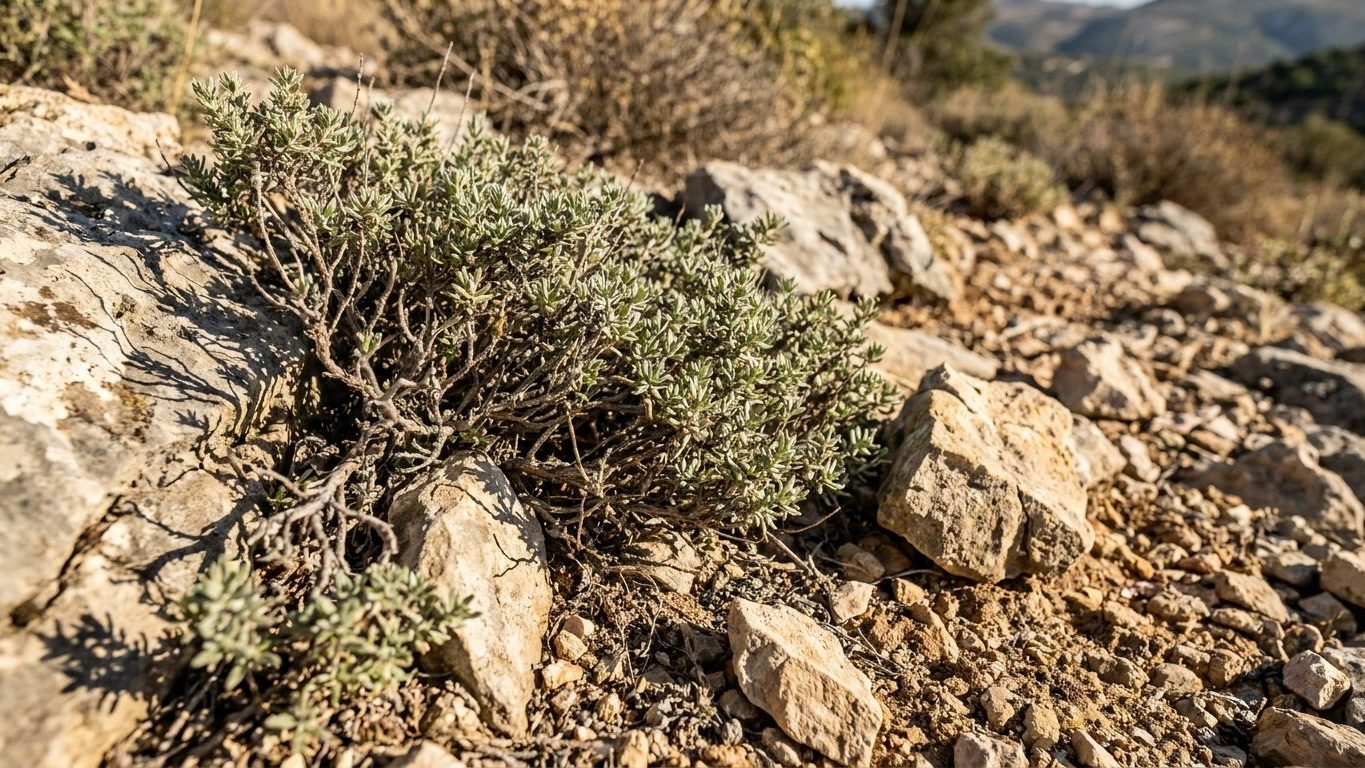

Thyme thrives on being ignored. Skip the fertilizer, skimp on water, plant it in soil most other herbs would call poor, and it rewards you with tight growth and concentrated flavor. Baby it with rich compost and daily watering, and it turns leggy, pale, and prone to rot. The answer to “how do I grow thyme” is almost always: do less.
What is actually going on

Thyme comes from the hillsides of the Mediterranean basin, where it grows wedged into limestone cracks and gravelly slopes that hold almost no organic matter. Rain falls in winter and then mostly stops for months. The plant evolved as a low, woody sub-shrub, not a leafy annual, built to survive on thin nutrition and long dry spells rather than to sprint through a growing season the way basil or cilantro do.
That origin explains nearly every quirk gardeners run into. A plant adapted to lean, fast-draining soil has roots that expect air pockets and mineral grit, not the moisture-retentive, nutrient-dense mix that vegetable beds are built around. Give thyme that kind of soil and the roots sit in dampness they were never designed to handle. The plant doesn’t just tolerate poor soil, it needs the drainage that poor, rocky soil happens to provide. Fertility becomes a liability instead of a gift.
The same logic applies to water. In its native range, thyme survives summer by shutting down growth and concentrating its resources into small, tough leaves. Regular irrigation on a schedule, the kind that keeps lettuce or parsley happy, tells the plant it doesn’t need to conserve anything, so it pushes soft, watery growth that has weak stems and thinner flavor. Gardeners who water thyme like the rest of the herb bed usually end up with a plant that looks fine for a few weeks and then collapses at the crown once summer humidity arrives.
Types worth knowing
“Thyme” covers a handful of related species rather than one plant. Common thyme (Thymus vulgaris) is the upright culinary standard most recipes assume. Lemon thyme is a citrus-scented relative used the same way in the kitchen. Creeping thyme (Thymus serpyllum and close relatives) spreads low and wide, useful as a groundcover between pavers, though it’s less concentrated for cooking. All three share the same core demand: sun, drainage, and restraint. Thyme also carries a long-standing medicinal reputation in various traditions.
In the garden
Once you accept that thyme wants less, the actual tasks are simple. The mistakes people make are almost always about doing too much, in the wrong direction, at the wrong time.
| Task | What to do | What happens if you get it wrong |
|---|---|---|
| Siting | Full sun, at least six hours a day, in the leanest, best-draining spot available, raised beds, gravel gardens, or containers with unglazed clay work well. | Planted in shade or in rich garden loam, thyme grows soft and sparse, flowers poorly, and becomes an easy target for fungal disease. |
| Soil and drainage | Mix in coarse sand or fine gravel if the native soil holds water; skip compost and rich mulch around the base. | Heavy, moisture-retentive soil around the crown leads to root rot, especially through a wet spring, and the plant can die within a single season. |
| Watering | Water deeply but rarely, letting the soil dry out fully between waterings; established plants often need none beyond regular rainfall. | Frequent shallow watering keeps the surface damp and the crown wet, which invites rot and produces watery, low-intensity leaves. |
| Pruning | Trim lightly after flowering and again in late summer, cutting back into green growth, never into bare wood. | Left unpruned, thyme turns woody and sprawling within two or three years; cut too hard into old wood and the stem often won’t resprout at all. |
| Harvesting | Snip sprigs regularly through the growing season, which acts as a light, continuous pruning. | A plant that’s never harvested grows leggy and flowers itself out, putting energy into seed instead of leaf. |
| Aging plants | Expect the center of the plant to go bare and woody after a few years; propagate new plants from healthy side growth or start fresh from seed or a nursery start. | Gardeners who keep an old, hollow-centered plant hoping it will fill back in usually just get a shrinkier version of the same problem, year after year. |
The woody, hollow center is the clearest sign that a thyme plant has reached the end of its productive life, not a sign that something was done wrong. It’s a normal life cycle for a woody perennial herb, and replacing the plant is the standard response rather than a failure to fix.
What it depends on where you are
Everything above holds true nationally: thyme wants sun and drainage everywhere from a Vermont raised bed to a Texas gravel garden. What changes by region is how long the growing season runs, how the plant handles winter, and how much summer humidity works against it.
In regions with hot, humid summers, the bigger risk isn’t cold, it’s fungal disease brought on by moisture sitting in dense foliage overnight. Gardeners in those climates often get better results by spacing plants further apart and choosing the airiest, most exposed spot in the yard, even if that means slightly less shelter in winter. In drier western and southwestern climates, the opposite trade-off applies: thyme can be one of the easiest herbs to grow with almost no supplemental water once established, but hard freezes without snow cover can stress plants that would otherwise sail through a milder, wetter winter further east.
Winter survival also depends heavily on local soil drainage in the cold months, not just on temperature. A thyme plant that would handle a hard freeze just fine in gritty, fast-draining soil can rot at the crown over the same winter if it’s sitting in heavier soil that stays saturated. Season length matters too, since a shorter growing season further north means less time for the plant to recover between prunings, which argues for lighter, more conservative cutting the further north the garden sits.
This page can’t tell you your first and last frost dates, your county’s average summer humidity, or how your particular soil drains after a storm. For that level of detail, the state-specific pages on this site cover thyme growing conditions region by region, and your local Cooperative Extension office can speak to soil and climate specifics no general guide can responsibly cover.
The mistake that costs the most
The single most expensive mistake with thyme is treating it kindly. Gardeners who succeed with basil, mint, or parsley bring the same instincts to thyme: rich soil, regular watering, occasional fertilizer to “help it along.” With thyme, every one of those instincts works against the plant.
The damage usually shows up slowly enough that the real cause gets missed. A thyme plant in good soil with regular watering often looks perfectly healthy for a month or two, growing soft and full, before it starts yellowing at the base, then collapsing at the crown during the first stretch of humid weather or heavy rain. By that point, it looks like a disease problem or a pest problem, when the actual cause was set weeks earlier by soil and water choices that had nothing to do with either.
The fix isn’t more attention, it’s less, applied . Plant thyme in the leanest, driest, sunniest spot available rather than the best spot in the herb bed. Skip the fertilizer entirely in most home gardens, since thyme grown in average or below-average soil fertility produces the same plant, and often a hardier one, than thyme pushed with feeding. Water only when the soil has gone fully dry, and resist the urge to check on it daily once it’s established. Thyme is one of the few plants in a home garden where benign neglect isn’t a compromise, it’s the actual instruction.