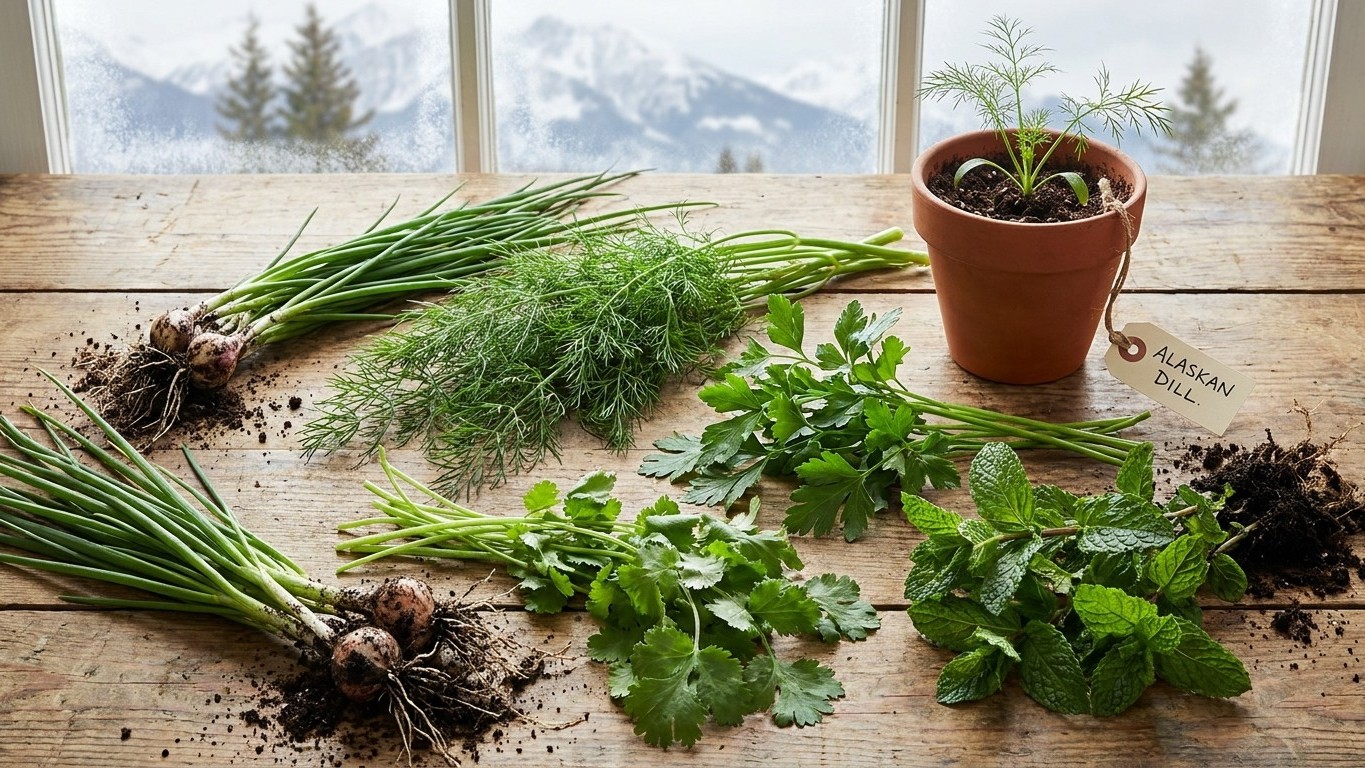

Arkansas gives you enough season, and enough heat, to grow nearly every kitchen herb well: basil, dill, and cilantro as heat-driven annuals, plus rosemary, sage, thyme, and oregano as perennials wherever winters stay mild enough to let them stand. The catch is that “mild enough” depends on which corner of the state you’re standing in.
The short answer for Arkansas
Start with the season itself. Using the 32F frost dates for the reference station, spring’s last freeze lands somewhere between March 12 and March 28, and the first fall freeze arrives between November 7 and November 20. Even taking the tightest combination of those windows, that’s roughly 224 frost-free days, and in a mild year it stretches past 250. That’s a long runway, and it changes which herbs are worth your garden space.
Heat-loving annuals are the easy winners. Basil, in particular, thrives on a 224-plus-day season because you can plant it once the soil’s warm, harvest hard all summer, and still have time for a second sowing before fall. Dill and other quick annuals fit the same pattern: sow, cut, resow, right through the warm months.
Perennial Mediterranean herbs, rosemary, sage, thyme, oregano, are where the answer gets conditional. The mean daily minimum of the coldest month at the reference station sits at 30.9F. That’s not a record low, it’s an average, and it tells you winter nights here are cold but not brutal in a typical year. Combined with a hardiness zone range of 6b to 8a across the state, that means these perennials can absolutely overwinter outdoors, but whether yours does depends on which end of that zone range you’re gardening in. In the warmer end, rosemary can stand outside year after year. In the colder end, the same plant is a coin flip most winters and a loss in a hard one.
Cool-season herbs, cilantro, parsley, chervil, need a different strategy entirely. They don’t fail from cold, they fail from heat, and Arkansas summers arrive fast and stay hot and humid for months. The useful move is to treat them as short-window crops bookending the growing season rather than season-long plantings.
So the short answer breaks into three buckets: annual heat lovers you plant and replant all summer, perennial Mediterranean herbs whose survival depends on where in the state you garden, and cool-season herbs you squeeze into spring and fall before the heat shuts them down.
What will not work here
The most common failure in Arkansas isn’t cold, it’s humidity meeting close spacing. Herbs bred for the dry air of the Mediterranean, lavender is the classic example, along with French tarragon, struggle here not because the thermometer is wrong for them but because damp, still air around their leaves invites root rot and fungal disease. Planting them at the spacing a seed packet recommends for a drier climate is a near-guaranteed way to lose them by midsummer. Wider spacing and sharper drainage aren’t optional extras here, they’re the difference between a plant that survives August and one that doesn’t.
Cool-season herbs planted on a normal-year assumption also fail regularly. Cilantro and chervil bolt once sustained heat sets in, and with the last 32F frost landing as late as March 28 in a cold year, gardeners who wait for that date to pass before sowing are cutting their productive window down to a few weeks before summer heat pushes these plants to flower. The fix isn’t a different herb, it’s an earlier sow date tied to the lighter 36F frost threshold rather than the hard freeze date.
The other predictable failure is treating the whole state as one hardiness zone when buying perennials. A rosemary variety rated hardy to USDA zone 7 sold at a regional nursery might sail through winter in the state’s warmer southern counties and die back to the roots, or die outright, in the cooler northern and higher-elevation counties. Because the hardiness range here spans 6b to 8a, that single plant tag doesn’t mean the same thing everywhere it’s sold.
Slow-maturing herbs that need a long, cool finish, some biennial seed-to-harvest crops among them, also run out of runway on the early end of the frost-date range. If your fall freeze lands on the early side, November 7 rather than November 20, that’s nearly two weeks of finishing time gone. Herbs that need every bit of the growing season to mature don’t have much slack to give.
What changes across Arkansas
Arkansas isn’t one climate wearing one name. The USDA hardiness zone range for the state runs from 6b up to 8a, and that spread matters more for herbs than most people expect, because it’s built on the average annual extreme minimum temperature, the coldest night a typical winter throws at a plant. A 6b winter can drop into the negative single digits on its worst night. An 8a winter, by contrast, rarely sees anything colder than the low teens.
That difference decides which perennial herbs are a permanent planting and which are an annual replant. In the higher-elevation Ozark and Ouachita areas toward the cooler end of the range, rosemary and even some sage varieties are safer treated as pot plants brought in for winter, or accepted as a yearly loss. Toward the warmer southern and eastern parts of the state, the same herbs can live outdoors for years, developing the thick, woody structure that only comes with age.
Thyme and oregano sit in between. Both tend to handle the colder end of the range better than rosemary does, but even they benefit from a thicker mulch layer over winter if you’re gardening on the 6b side rather than the 8a side.
None of this means there’s a single number a reader in Fayetteville or in El Dorado can use interchangeably. There isn’t one hardiness zone for Arkansas, there’s a range, and the two ends of it call for different bets on perennial herbs. Rather than guessing which end applies to your yard, check the current USDA Plant Hardiness Zone Map for your specific location before committing money to a perennial rosemary or a mature sage plant.
Where to check this for your own county
Everything above is a state-level picture, built from one reference station and a statewide zone range. Your county can, and often does, run earlier, later, colder, or milder than that. The University of Arkansas System Division of Agriculture Cooperative Extension Service is where that gap gets closed.
Two things are worth pulling from your county’s extension office specifically. First, a local planting calendar, if your county publishes one, will reflect actual soil temperature and frost patterns recorded near you rather than a single reference station that might sit a hundred miles away and several hundred feet different in elevation. Second, look for any list of herb or vegetable varieties that county agents have trialled locally. A variety that performs well in the sandy soils of one region can behave very differently in the heavier clay found elsewhere in the state.
This matters more for herbs than people assume, because most seed packets and nursery tags are written for a national audience, not for Arkansas’s particular combination of long, humid summers and a wide swing in winter severity from one end of the state to the other. A county agent’s recommendation is built on what’s actually grown, and failed, in your soil and your microclimate. It will beat a statewide generalization every time, including this one.
If your county office doesn’t publish its own calendar, the extension service can usually point you to the nearest one that shares your growing conditions closely enough to be useful, along with contact information for a local agent who can answer variety-specific questions directly.
Checking this against your own garden
Frost dates and hardiness zones describe an average year. Your yard, this year, is not obligated to match it. Three simple checks, using nothing but your hands and your eyes, will tell you more about your actual microclimate than any frost date.
Feel the soil before you trust the calendar. Push a finger a couple of inches into the bed where you plan to transplant basil or another warm-season herb. If it still feels cold and heavy rather than loosely warm, the soil hasn’t caught up to the air temperature yet, and warm-season transplants set into cold soil tend to sulk for weeks rather than take off.
Watch your overwintered perennials for the first sign of new growth at the base of the plant, not just at the tips. Rosemary, sage, or thyme that pushes fresh green low on old wood has made it through winter intact. Growth only at the very tips, with dead, brittle wood below, usually means the plant took real damage and may need cutting back hard or replacing outright, a much faster answer than waiting to see if it recovers.
Track how fast your cilantro or dill moves toward flowering once real heat arrives. If it bolts within a couple of weeks of a warm stretch, your particular spot runs hotter or drier than the state average, maybe from a south-facing wall or reflected heat off pavement, and next year’s planting should move earlier or into more shade. These three observations, taken together, tell you more about your own ground than a statewide frost map ever will.