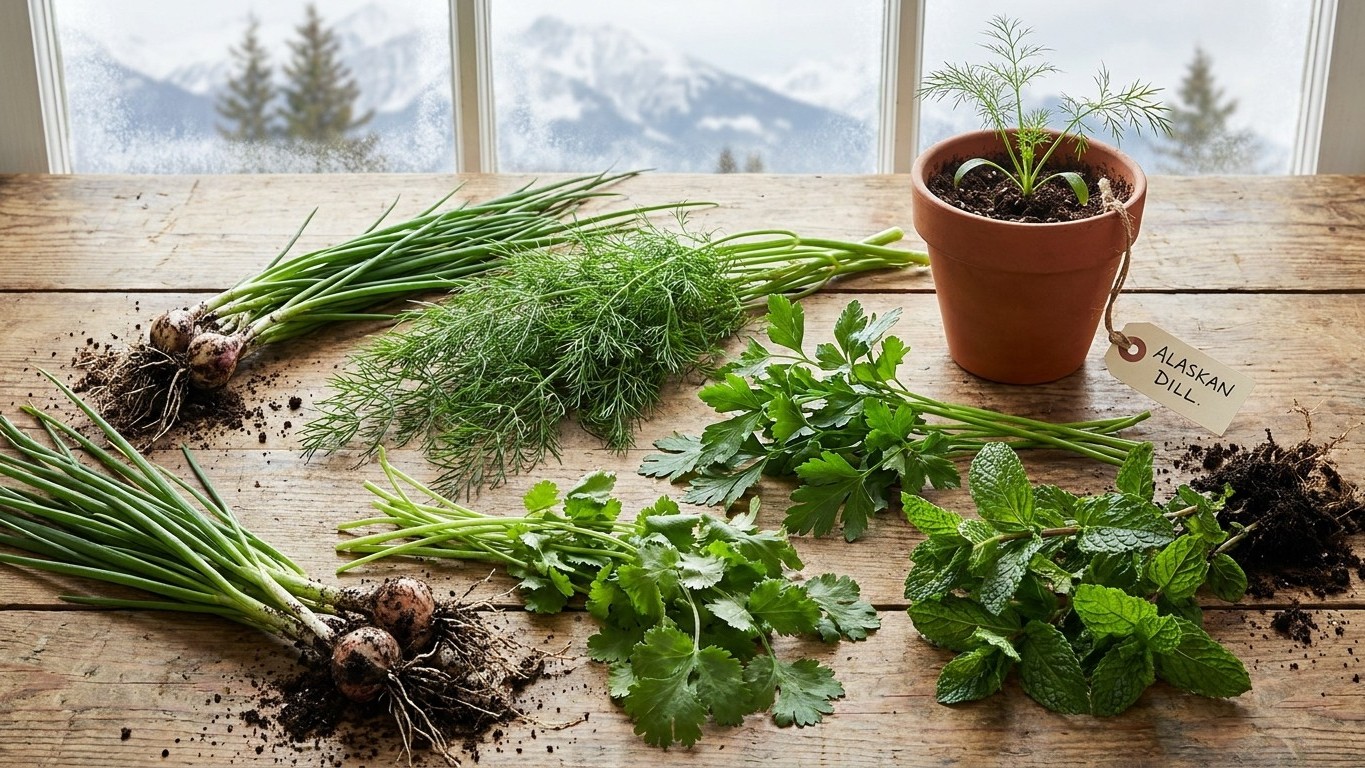

Connecticut‘s best herbs are the ones matched to a roughly 200-day season and a winter that regularly drops into the mid-20s: basil, dill, cilantro, and parsley as summer annuals; chives, thyme, sage, and oregano as hardy perennials; rosemary and bay kept in pots so they can come indoors before the first hard freeze.
The short answer for Connecticut
The frost-free window at the state’s mildest station, coastal Bridgeport, runs from a last spring frost of April 2 to April 12 to a first fall frost of October 28 to November 10. That’s a growing season of roughly 200 to 220 days at the shoreline, shorter inland. It’s enough time to grow nearly every culinary herb an American kitchen actually uses, but it is not enough heat, and not enough winter warmth, to grow everything.
The mean daily minimum temperature of the coldest month at that same station is 24.4°F. That single number does more to decide what survives in Connecticut than any planting date. It tells you which herbs can stay in the ground through January and which ones need to come inside or be replanted every spring.
Sort the decision by type instead of by individual variety, and it gets simple fast:
| Herb type | Examples | Status in Connecticut |
|---|---|---|
| Tender annuals | Basil, dill, cilantro, parsley | Reliable, full season available |
| Hardy perennials | Chives, thyme, sage, oregano | Overwinter in the ground statewide |
| Marginal woody perennials | Rosemary, bay, French lavender | Needs a pot and a winter indoors |
| Tropical/subtropical | Lemongrass, ginger, turmeric | Container only, treat as annual |
Basil and cilantro fit the season without any stretch. Chives, thyme, sage, and oregano are woody or clump-forming enough to shrug off a 24.4°F average low. Rosemary is the borderline case most Connecticut gardeners get wrong: it can survive a mild coastal winter in a sheltered spot, but a mean minimum in the mid-20s combined with wind and freeze-thaw cycling kills it in the ground almost everywhere else in the state. Grow it in a pot, and the whole calculation changes.
What will not work here
Tropical herbs are the clearest failure. Lemongrass, ginger, and turmeric want a long stretch of genuine heat, not just frost-free days. Connecticut’s 200-day window is long enough in calendar terms but the summer heat itself is moderate compared to what these plants evolved with. Left outdoors, they’ll grow slowly, sulk through cool nights, and never build the root mass they need before the October frost line arrives. They belong in containers that spend summer outside and winter on a windowsill, not in open garden soil.
Rosemary planted directly in the ground is the second common mistake. Gardeners see it thrive through a mild November and assume it’s hardy here. Then a January cold snap pushes well below that 24.4°F coldest-month average, and a plant that looked fine in December is brown and dead by March. The state’s own hardiness range of 6a to 7b matters here: even at the 7b end, in the mildest coastal pockets, in-ground rosemary is a gamble most years, not a sure thing.
Watering on a weekly schedule defeats shallow-rooted herbs during any stretch of summer dryness. Basil, cilantro, and parsley all root in the top few inches of soil. A dry week in July, common enough in a Connecticut summer even without drought conditions, will wilt these plants faster than a calendar-based watering routine can catch up with. Herbs need watering by feel, not by day of the week.
Close spacing is the failure that shows up less obviously, and later. Connecticut’s proximity to Long Island Sound and its humid inland river valleys both push relative humidity up during the growing season. Basil crowded tight against its neighbors develops downy mildew faster than the same variety spaced for airflow. Mint, already a spreader, mats down into a damp mass at close spacing and rots from the inside instead of drying out between rains. The fix isn’t a different herb, it’s more room between plants than a seed packet grown for a drier climate would suggest.
What changes across Connecticut
Connecticut isn’t one garden, and the hardiness range makes that explicit: the state spans zone 6a to 7b on the USDA map, built from average extreme minimum temperatures. That’s not a rounding error. It’s the difference between rosemary limping through most winters and rosemary dying every single one.
The reference station behind the frost dates in this article, Bridgeport, sits on Long Island Sound and is explicitly the mildest part of the state. Inland areas and the Litchfield Hills in the northwest corner freeze noticeably earlier in fall and thaw noticeably later in spring than the coastal dates given here. A gardener working from Bridgeport’s April 2 to April 12 last-frost window while actually gardening in the northwest hills is planting basil into soil that’s still too cold, and losing plants to a fall frost that arrived before the coastal date on the calendar.
There is no single planting date for Connecticut, and there is no single hardiness answer either. A reader gardening at higher elevation or further from the coast should shift the entire annual-herb calendar later in spring and earlier in fall, and should treat the marginal perennials, rosemary, bay, French lavender, as strictly annual or container plants rather than gambling on an in-ground overwinter that might work at the shoreline but almost never works inland.
The spread exists and roughly how it behaves can be described. It cannot tell you which end of that 6a-7b range your own yard sits in. That takes a map, not a guess based on which town you live in, since microclimates inside a single county can shift the effective zone by a full number.
Where to check this for your own county
The University of Connecticut runs the state’s Cooperative Extension Service at extension.uconn.edu, and it’s the next stop, not an optional one. State-level facts like the ones above describe Connecticut in general terms, anchored to one coastal weather station. A county recommendation is built from local trial data and local frost records, and it will beat a statewide answer every time they disagree.
Two things are worth looking for specifically once there. First, a county-specific planting calendar, if the local office publishes one, will replace the Bridgeport-based frost window used here with dates that reflect your actual distance from the coast and your actual elevation. Second, look for any herb or vegetable variety trials run in Connecticut conditions. Extension trials test how a given rosemary cultivar, lavender variety, or basil strain actually performs against local disease pressure and local winter minimums, information no seed packet or national gardening source can give you.
A statewide starting point is built from the best available climate normals. It was never built to replace what your county extension office already knows about your specific soil, elevation, and microclimate. Treat the two as sequential steps, not competing sources: read this for the shape of the problem, then read your county’s page for the specific answer.
Checking this against your own garden
Every date and temperature figure here is a normal, an average built from thirty years of data at one weather station. Your own garden will run a few days, sometimes a few weeks, ahead of or behind that average, and your own observation outranks the calendar every time the two disagree.
Soil warmth by feel is the first check, and the most useful one for basil especially. Push a finger a couple inches into the bed on a sunny afternoon. If it still feels cold rather than mild, basil transplants will sit and sulk no matter what the calendar says about frost being past. Wait for warmth you can feel, not a date you can read.
The first true leaves on direct-sown dill, cilantro, or parsley are the second signal. The first pair after the seed leaves tells you whether the spot gets enough sun and warmth to support real growth. Leggy, pale true leaves stretching toward one direction mean the bed is shadier or cooler than it looks on paper, and next year’s herb bed should move.
New green growth at the base of overwintered thyme, sage, or chives, once the danger of hard freezes has clearly passed, is the third and most reassuring check. It tells you the plant survived your specific winter, in your specific spot, regardless of what the state’s 24.4°F coldest-month average predicted. That single green shoot is worth more than any hardiness map for judging what your own patch of Connecticut can actually support.