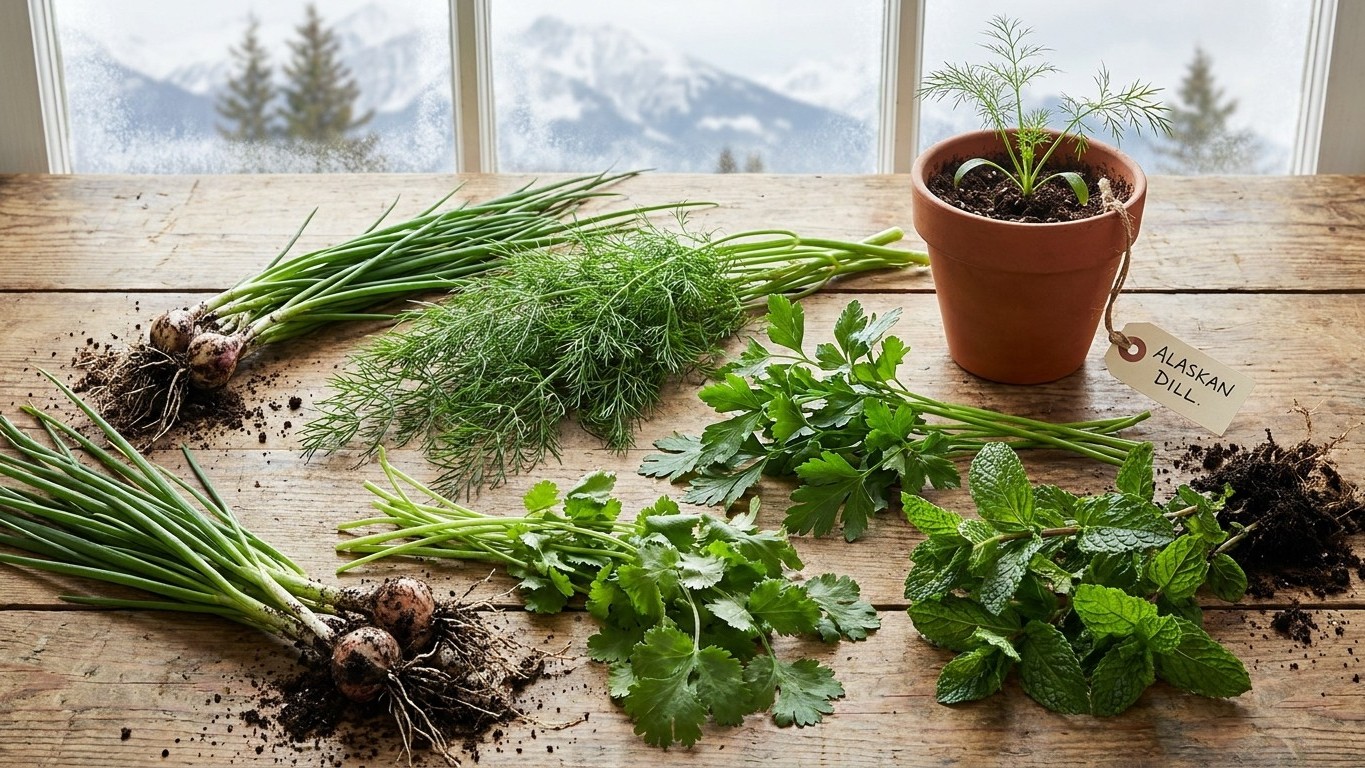

The safest herbs across Florida are the heat-and-humidity-tolerant kind, rosemary, oregano, Cuban oregano, Mexican tarragon, bay laurel, and lemongrass — because they shrug off the long, wet summers that define most of the state. Classic cool-climate herbs like French tarragon, true lavender, and dill struggle here, and the entire planting calendar flips depending on whether you garden in frost-prone north Florida or the frost-free south.
The short answer for Florida
Florida does not have one growing season. It has two calendars stapled together, and which one applies to you depends on where on the map you’re standing. Around Jacksonville, the last spring frost falls between February 16 and March 7, and the first fall frost lands between November 26 and December 13, based on 1991-2020 NOAA Climate Normals for that station. That gives north Florida a real, if short, winter dormancy, and it means basil, tender herbs, and anything killed by 32°F still needs to wait until mid-February at the earliest before it goes in the ground unprotected.
Move south, past Orlando or into Miami, and that frost window stops applying almost entirely. Those regions sit at the warm end of Florida’s hardiness range and the growing calendar inverts: winter becomes the easy, productive season, and summer becomes the obstacle, because heat and humidity, not cold, are what kill herbs there.
So the herb decision splits by type rather than by date. Woody Mediterranean herbs, rosemary, oregano, bay laurel, thrive statewide because Florida’s coldest month has a mean daily minimum of just 42.9°F at the reference station. That number is well above what these plants need to survive winter, so cold is not their limiting factor anywhere in the state; heat and drainage are. Tender annual herbs like basil do best planted after the local last frost in the north, or through the cooler months in central and south Florida where frost barely registers. Cool-season herbs, cilantro, dill, chervil, parsley, actually perform best in Florida’s mild winter almost everywhere, because Florida’s summer heat pushes them to bolt long before a northern gardener would even see flower stalks.
Lemongrass and Cuban oregano round out the list of reliable performers because both tolerate the combination of high humidity and intense summer heat that defeats so many other herbs here. Neither needs winter cold to thrive, and both handle the state’s rainy season without the fungal problems that hit denser, hairier-leaved herbs.
What will not work here

French tarragon is the clearest failure. It needs a real winter chill period to break dormancy properly the following spring, and Florida’s mild coldest-month average of 42.9°F simply doesn’t deliver enough sustained cold, even in the Panhandle. Gardeners who plant it usually get a sad, leggy plant that never develops the anise-sharp flavor tarragon is grown for. Mexican tarragon, an unrelated plant that tastes similar, exists specifically because it tolerates Florida heat and humidity that French tarragon cannot.
True lavender is the second predictable failure, and the reason isn’t cold at all, it’s humidity. Lavender evolved in dry Mediterranean summers with excellent drainage and low ambient moisture. Florida’s summer rainfall and heavy air humidity promote root rot and fungal disease on lavender roots and foliage almost regardless of soil amendment. Spanish lavender fares slightly better in some pockets, but even that variety needs sharp drainage most Florida yards don’t naturally have.
Cilantro and dill don’t fail outright, but they fail on timing if planted the way a northern gardening guide suggests. Both bolt, sending up a flower stalk and turning bitter, as soon as sustained heat arrives. In north Florida that means anything planted after the frost window closes in March has a narrow few weeks before summer heat ends the harvest. In central and south Florida, these herbs need to go in during the cooler months, not summer, because summer heat there arrives earlier and stays longer.
Basil, mint, and other close-growing, moisture-loving herbs run into a different problem: Florida’s humid summers create ideal conditions for fungal leaf spot and downy mildew when plants are spaced the way a drier-climate guide recommends. Tight spacing that would be fine in a dry western state traps humidity around Florida basil and mint, and growers who water on a fixed weekly schedule rather than checking soil moisture often end up encouraging the very fungal problems they’re trying to avoid.
What changes across Florida
Florida spans USDA hardiness zones 8b to 11b, one of the widest ranges of any state in the continental U.S. That’s the difference between a zone found in coastal Georgia and one found in the tropics, all inside a single state’s borders. There is no single answer to “when do I plant” or “what survives winter” for Florida as a whole, and any guide that gives you one flat date for the entire state is oversimplifying.
What that spread means in practice: a gardener near the Georgia border works with an actual, if mild, frost season, the same February-to-March last frost and November-to-December first frost window cited above. A gardener in the Keys or deep South Florida gardens in a functionally frost-free zone where the entire concept of a “last frost date” barely applies, and where the limiting factor is summer heat and afternoon downpours rather than winter cold.
For a gardener in north Florida, frost dates are real constraints: tender herbs wait until after mid-February at the earliest, and go into serious decline again once temperatures cool in late November. The shift for a reader in central or south Florida is to largely ignore those frost dates and instead plan around summer heat stress: cool-season herbs go in during fall and winter, and the riskiest months for heat-sensitive herbs are July and August, not January.
Because this range is so wide, the right move is not to guess which end of the zone spread applies to you. Check the current USDA Plant Hardiness Zone Map directly for your address, since even neighboring counties can land in different zones depending on elevation, coastal proximity, and urban heat effects.
Where to check this for your own county
Your county has its own extension office, and its recommendations will beat anything a statewide page can offer, because they’re built from local trials rather than one airport’s 30-year averages.
The University of Florida’s IFAS Extension network runs county offices statewide, and the entry point is Solutions for Your Life, UF/IFAS’s public extension portal. From there you can find your county’s office directly rather than relying on a state-level average.
Once you’re on your county’s page, look for two specific things. First, a local vegetable and herb planting calendar, which will reflect your county’s actual frost pattern (or lack of one) rather than the Jacksonville-area dates used in this article. Second, look for any variety trial results or master gardener recommendations specific to herbs, since county extension offices frequently test which basil, rosemary, or cilantro varieties hold up best against local pest pressure and soil type, information a statewide guide simply can’t capture.
Treat this article as the broad orientation and your county extension office as the fine print. If the two disagree on a planting date or a variety recommendation, go with the county office every time. It’s working from local data, not a single distant weather station.
Checking this against your own garden
Every date in this article is a probability built from decades of past weather, not a guarantee about this year. Your own garden will tell you more than any calendar can, if you know what to watch.
Start with soil warmth, felt with your hand a couple inches down first thing in the morning. Cold, damp soil that feels noticeably cooler than the air means it’s still too early for warm-season herbs like basil, no matter what the calendar says. Soil that feels warm even before sunrise is a sign your particular spot, maybe a south-facing bed against a wall, is running warmer than the general forecast for your area.
Watch how fast seedlings push their first true leaves, the second set that appears after the initial rounded seed leaves. A quick turnaround, just a week or two, tells you conditions are genuinely warm and active for that herb. A long stall with only seed leaves showing usually means the soil is still too cool or too wet, even if the calendar says you’re past the frost window.
Finally, watch for early bolting, the sudden vertical flower stalk that shoots up on cilantro, dill, or basil. If it happens weeks earlier than expected, that’s your garden telling you summer heat is arriving faster in your specific yard than the regional average suggests, often because of pavement nearby, a south-facing wall, or reflected heat off a fence. That single observation is worth more for planning next year’s timing than any calendar date.