
Winter Squash in Colorado waits for the soil, not the calendar: plant after the frost risk passes in your zone, expect roughly 142 to 164 frost-free days depending on your station, and irrigate through a dry, moderately hot summer rather than counting on rain to fill the fruit.
When the soil is warm enough in Colorado

The question every Colorado gardener asks in spring isn’t really “when does it stop frosting” but “when is the ground warm enough to hold a squash seed without it rotting.” At the Denver reference station (USW00003017), NOAA’s 1991-2020 Climate Normals put the last spring frost somewhere between May 1 and May 11, based on the 30-70% probability band for a 32F freeze. That’s a range, not a single date, and it’s worth sitting with that for a second: it means in three years out of ten, frost risk lingers past May 11, and in three years out of ten it’s gone before May 1.
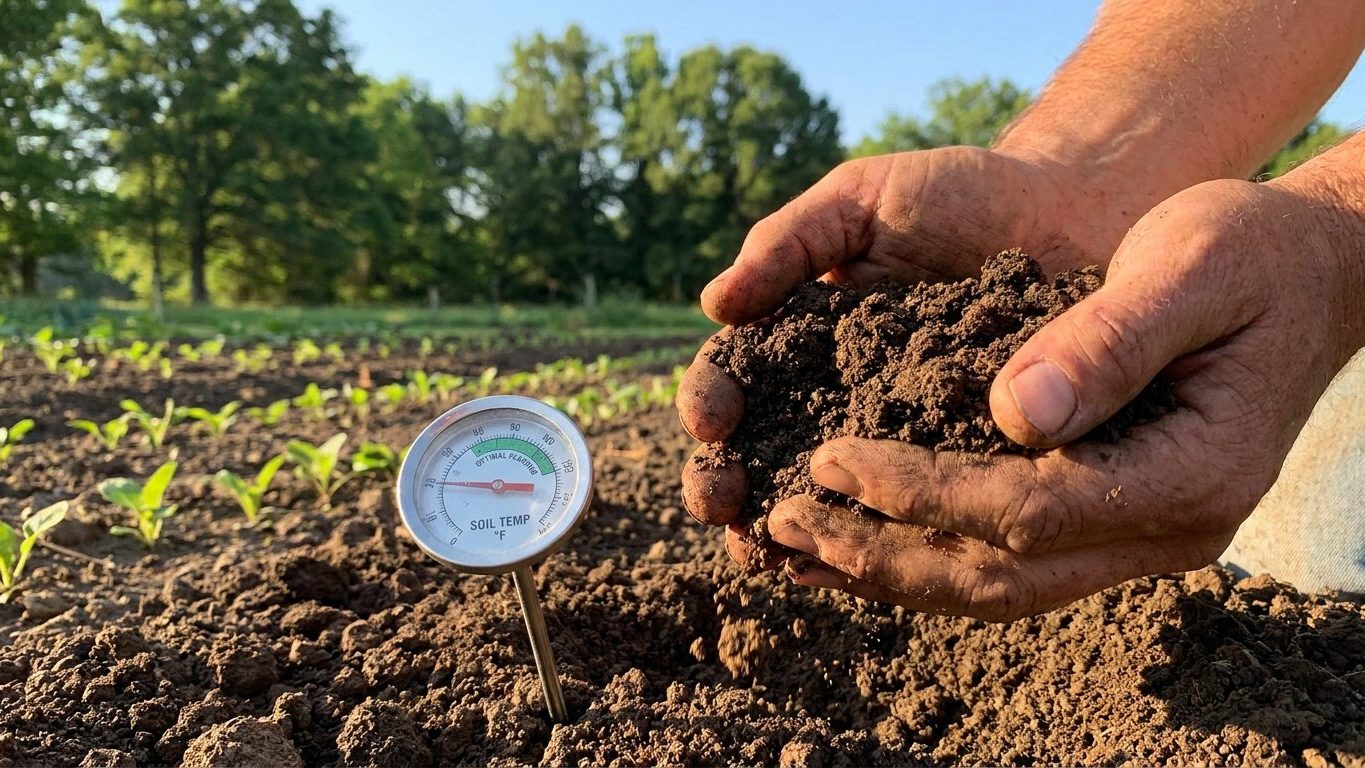
Frost is a proxy, and a slightly misleading one. Winter squash germinates and grows in soil that’s stayed warm for several days running, and soil warms on a lag behind the air. A morning without frost doesn’t mean the top few inches of dirt have shaken off the cold they banked all winter. Gardeners who direct-seed the week the frost date passes often watch nothing happen for ten days, then wonder why. The fix isn’t a different date, it’s checking the ground itself, or starting seedlings indoors and setting them out once the soil feels warm to the hand and stays that way overnight.
Elevation complicates this further than almost anywhere else in the country. Denver sits at 5,280 feet on the plains, and the frost window above applies there and to similar elevations along the Front Range. Mountain towns run a dramatically shorter season and can see frost in July some years. The Western Slope runs on its own pattern again, shaped by different air drainage and elevation. Colorado’s USDA Hardiness Zones span 3b to 7b, a spread wide enough that a recommendation calibrated to Denver can be flatly wrong two hours away in either direction.
This is exactly the gap a state extension service is built to close. Colorado State University Extension (extension.colostate.edu) tracks local frost behavior and soil conditions county by county, which matters more here than the frost date itself. No cultivar name belongs in this conversation yet, because the right type for a Front Range garden and the right type for a mountain valley aren’t the same, and guessing wastes a season.
How long the season lasts here
Run the subtraction using both NOAA-sourced dates and the growing window comes out uneven, which is the honest answer. Take the earliest last frost (May 1) against the latest first fall frost (October 12) and the season stretches to about 164 days. Take the later last frost (May 11) against the earlier fall frost (September 30) and it shrinks to roughly 142 days. Most years land somewhere between.
| Scenario | Last spring frost | First fall frost | Approximate window |
|---|---|---|---|
| Longest likely season | May 1 | Oct 12 | ~164 days |
| Shortest likely season | May 11 | Sept 30 | ~142 days |
What does 142 to 164 days actually buy a squash grower? Winter squash needs the fruit to mature fully and cure on the vine before frost shuts things down, since an immature squash won’t cure properly in storage no matter what you do to it afterward. A window on the shorter end of that range leaves little room for error: one late spring cold snap or one early fall frost, and the difference between a full harvest and a bin of unripe fruit narrows to almost nothing.
That tightness also answers the second-planting question before it’s asked. A 200-plus day growing season elsewhere might allow a spring sowing and a summer succession sowing of a faster crop behind it. Colorado’s window, even at its longest, doesn’t leave that kind of slack for winter squash specifically, since the fruit itself needs most of the season just to fill and cure once. A single, well-timed sowing is the realistic plan for most of the state, which also raises the value of starting seedlings indoors rather than direct-seeding, since transplants buy back a couple of weeks the outdoor calendar won’t grant. For crops where succession sowing does make sense in this climate, the succession sowing guide on this site walks through which vegetables tolerate a second round and which don’t.
Heat and water in Colorado

Heat load and rainfall are the two numbers that decide how much work the middle of the season is going to be, and Colorado’s figures point in a clear direction. The Denver reference station averages 39.6 days a year at or above 90F, per NOAA’s 1991-2020 Climate Normals. That’s meaningful heat stress across roughly six weeks of summer, spread out rather than concentrated, which matters for a vine crop that’s setting and filling fruit right through that stretch.
Rainfall doesn’t offset it. Summer rain (June through August) totals about 5.7 inches, against 14.5 inches for the full year, meaning more than a third of the state’s already modest annual rain has to arrive outside the growing season for the summer figure to run this low. Broken down by month, June averages 1.94 inches, July 2.14, and August, the driest of the three, just 1.58.
| Month | Average rainfall |
|---|---|
| June | 1.94 in |
| July | 2.14 in |
| August | 1.58 in |
Under two inches a month, with August (often the exact stretch when squash fruit is sizing up) the driest of the three, isn’t enough to carry a vine crop on rainfall alone. This is where irrigation stops being optional and becomes the thing that decides the harvest. A sandy garden bed will need water more often than these totals suggest, since rain that does fall soaks straight through; a clay-heavy bed holds moisture longer but can also stay too wet after a rare downpour. Either way, a rain gauge on the actual plot tells a gardener more than a regional average ever will.
The flip side of a dry summer is lighter disease pressure. Powdery mildew and the fungal issues that plague Winter Squash in humid regions need moisture sitting on the leaf surface, and Colorado’s climate mostly denies them that. The tradeoff is straightforward: less spraying and scouting for mildew, more attention paid to the hose. Consistent deep watering, not frequent shallow watering, keeps the root zone from drying out between the infrequent rains without inviting the rot that comes from waterlogged soil.
Which winter squash suit Colorado
Put the season length and the climate together and the choice comes down to type, not variety name. A 142-to-164 day window rewards earlier-maturing types of winter squash over the longest-season kinds, since there’s little margin if a cold snap arrives on the early side of the fall frost range. Within that constraint, types that tolerate heat stress without dropping blossoms hold an edge during the stretch of 90-degree days, and types bred or trialled for airflow around dense foliage do better in gardens where irrigation keeps the soil surface consistently damp, since damp soil under thick leaves is still the one condition that invites fungal trouble even in a dry state.
Disease resistance matters here too, just less urgently than in a humid climate. Colorado’s low summer rainfall already does a lot of the work a resistant variety would otherwise be doing, so the priority shifts toward earliness and heat tolerance first, disease resistance as a secondary filter rather than the deciding factor.
None of that translates into a specific variety name on this page, and that’s deliberate rather than an oversight. The types trialled and recommended for Front Range gardens won’t match what performs on the Western Slope or in a mountain valley three zones colder, and a name printed here without that local testing behind it is a guess dressed up as advice. Colorado State University Extension (extension.colostate.edu) publishes the variety trial results and planting guidance specific to county-level conditions, which is the only recommendation actually built on this state’s soil, elevation, and microclimates rather than a national average. Starting there, with a garden’s specific elevation and last-frost history in hand, turns a generic “winter squash” plan into one calibrated to the actual patch of ground being planted.