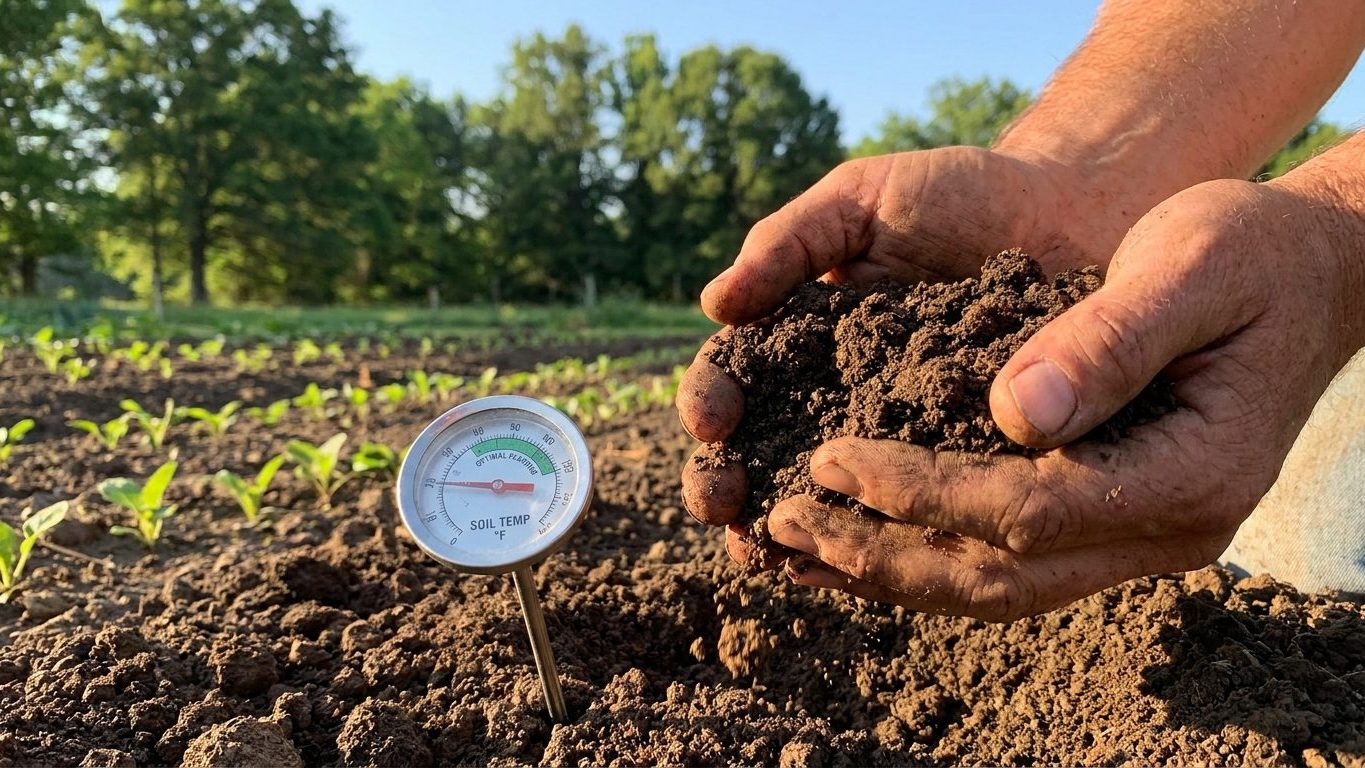

The short answer: in Delaware, winter squash goes into warm ground from late April through mid-May, well after the frost risk of early spring has passed, and it needs to be off the vine and cured before the first hard freeze arrives in late October or November. The state’s Zone 7a-8a rating and its Mid-Atlantic humidity both shape which types do best and how much water they’ll need along the way.
When the soil is warm enough in Delaware

NOAA’s 1991-2020 Climate Normals put the last spring frost at the Wilmington reference station (USW00013781) somewhere between April 3 and April 14. That’s a 30-70% probability band, not a guarantee, and it’s worth reading that way: some years the freeze risk clears earlier, some years it lingers past the 14th. Gardens outside the immediate Wilmington area, especially in low-lying or rural spots, often see frost hang on a week or two longer than the airport station reports.
Here’s the part that trips people up: frost date and planting date aren’t the same thing. Winter squash doesn’t care what the thermometer says about air temperature at 6 a.m. It cares about soil temperature, and soil takes time to catch up once the air stops freezing. A garden bed can sit at 50°F or cooler for a week or two after the last frost has technically passed, and squash seed sitting in cold, damp soil just rots instead of sprouting. That’s why most Delaware gardeners wait until late April at the earliest, and often into the first half of May, before direct-seeding or setting out transplants.
The safest approach is to treat the frost window as a floor, not a starting gun. Watch the soil itself: a simple soil thermometer pushed a couple of inches down should read consistently in the 60s before winter squash seed goes in. If you’re starting transplants indoors instead, aim to have them ready to set out right around that soil-warmth threshold rather than the calendar date, since transplants set into cold soil stall just as badly as seed does.
What you plant matters here more than exactly when. Rather than chasing a specific variety name, think in terms of squash types, since a moschata-type squash, an acorn-type, or a hubbard-type all behave differently in cool, damp soil and in the length of time they need to mature. Delaware’s own Cooperative Extension keeps current variety trial data for the state, and that’s the resource to check before buying seed, since named cultivars come and go from trial lists as breeding improves disease resistance and yield.
How long the season lasts here
Subtract the two frost windows from the same Wilmington station and Delaware’s frost-free season runs roughly 206 to 207 days, depending on where in each band a given year falls. Start counting from the earlier end of spring frost (April 3) to the earlier end of fall frost (October 26) and you get 206 days; run it from the later end of each band (April 14 to November 7) and it’s 207. Either way, that’s a long window by East Coast standards, and it changes the math for winter squash growers in a real way.
A season that long means the first sowing is rarely the only shot. Winter squash types typically need somewhere in the range of two and a half to three and a half months on the vine, and with over 200 frost-free days on the books, there’s room for a second sowing four to six weeks after the first without pushing the harvest past frost risk. That second wave can act as insurance against a poor germination stand, a hail event, or squash vine borer damage that takes out an early planting, and it can also stagger the harvest so curing and storage don’t all land in the same two-week stretch.
Whether that second planting makes sense depends on what happened with the first. If early-season transplants got hit by cutworms or the vines never really took off, direct-seeding a backup batch in early June is a reasonable move given how much season is left. If the first planting is healthy and vining well by mid-June, there’s less reason to crowd the bed with a second round, since winter squash takes up real ground space and airflow between plants matters for disease control later in the season. The site’s succession sowing guide walks through the timing logic in more detail, including how to judge whether a stand is worth replacing versus supplementing.
One practical note on method: with a season this long, the case for transplanting versus direct-seeding is less urgent than it is in shorter-season territories. Winter squash resents root disturbance, and where the frost-free window is tight, gardeners often start seed indoors just to buy a few extra weeks. In Delaware, there’s less need to take that risk with the roots, since direct-seeding after the soil has warmed usually leaves plenty of time to reach maturity anyway.
Heat and water in Delaware

The Wilmington reference station averages 17.6 days a year at or above 90°F. That’s a real but moderate heat load, not the kind of extended, punishing heat that forces growers elsewhere to obsess over shade cloth and midday wilting. It’s enough heat, though, to matter for a crop that spends its whole season filling out a hard-shelled fruit, since heat drives evaporation from both the soil and the plant, and a squash vine under water stress during fruit set will often abort young fruit rather than push them to maturity.
Rainfall works in the grower’s favor here more than it works against them. Summer rain across June, July, and August averages about 13.1 inches at the same reference station, broken down as 4.67 inches in June, 4.41 in July, and 3.98 in August, the driest of the three months. That’s a reasonably generous supply by national standards, and it means Delaware isn’t the kind of hot, dry territory where irrigation is the deciding factor in whether a crop matures at all. It’s closer to a moderate middle ground: enough heat to need attention, enough rain to usually avoid drought stress, but with August consistently the tightest month for natural rainfall.
That August dip is worth planning around, since it lines up with the exact period when many winter squash plantings are filling out fruit and building the sugars that determine storage quality. A stretch of dry August weather layered on top of 90-degree days can pull moisture out of the root zone faster than an occasional summer thunderstorm replaces it, particularly on sandier Coastal Plain soils that drain quickly. Clay-heavier soils inland hold moisture longer, which shifts the watering schedule in the opposite direction. Either way, a rain gauge on the actual plot tells a grower more than any regional average can, since a single storm that dumps an inch in twenty minutes mostly runs off rather than soaking into the root zone.
Humidity is the other side of this equation, and it’s not one the rainfall number captures directly. Warm, damp air sitting over a squash patch for days at a time is exactly the condition that favors powdery mildew and other foliar diseases, which is a bigger practical threat in a Mid-Atlantic humid summer than outright drought. Spacing plants for airflow and watering at the base rather than overhead both reduce that risk, and they matter more in Delaware’s climate than they would in a drier western state.
Which winter squash suit Delaware
Reasoning from the state’s own numbers points toward a fairly wide range of workable types, but with one filter that matters more than the rest. Since the frost-free season runs over 200 days, maturity length isn’t the limiting factor it is in shorter-season territories further north, which means the choice comes down more to disease resistance and heat tolerance than to squeezing in enough growing days.
Given the region’s humid summers, types bred or selected for resistance to powdery mildew and other foliar disease deserve first consideration, since that’s the pressure most likely to cut a season short here, not an early frost. Types that tolerate a bit more heat stress without dropping fruit are worth favoring too, given the 17.6-day average above 90°F, though that’s a moderate number rather than an extreme one, so it shouldn’t dominate the decision the way it would in a hotter southern state.
What this page won’t do is hand over a specific variety name, and that’s a deliberate choice rather than an oversight. Seed catalogs rotate cultivars constantly, breeding programs update disease resistance packages every few years, and a name that performed well in a university trial five years ago may already be outclassed by something newer. Delaware’s Cooperative Extension runs its own variety trials and publishes current recommendations that reflect what’s actually performing well in the state’s soils and climate right now, which is a level of specificity no general guide can match responsibly. That’s the resource worth checking before ordering seed, and it’s a better bet than any single name printed here.