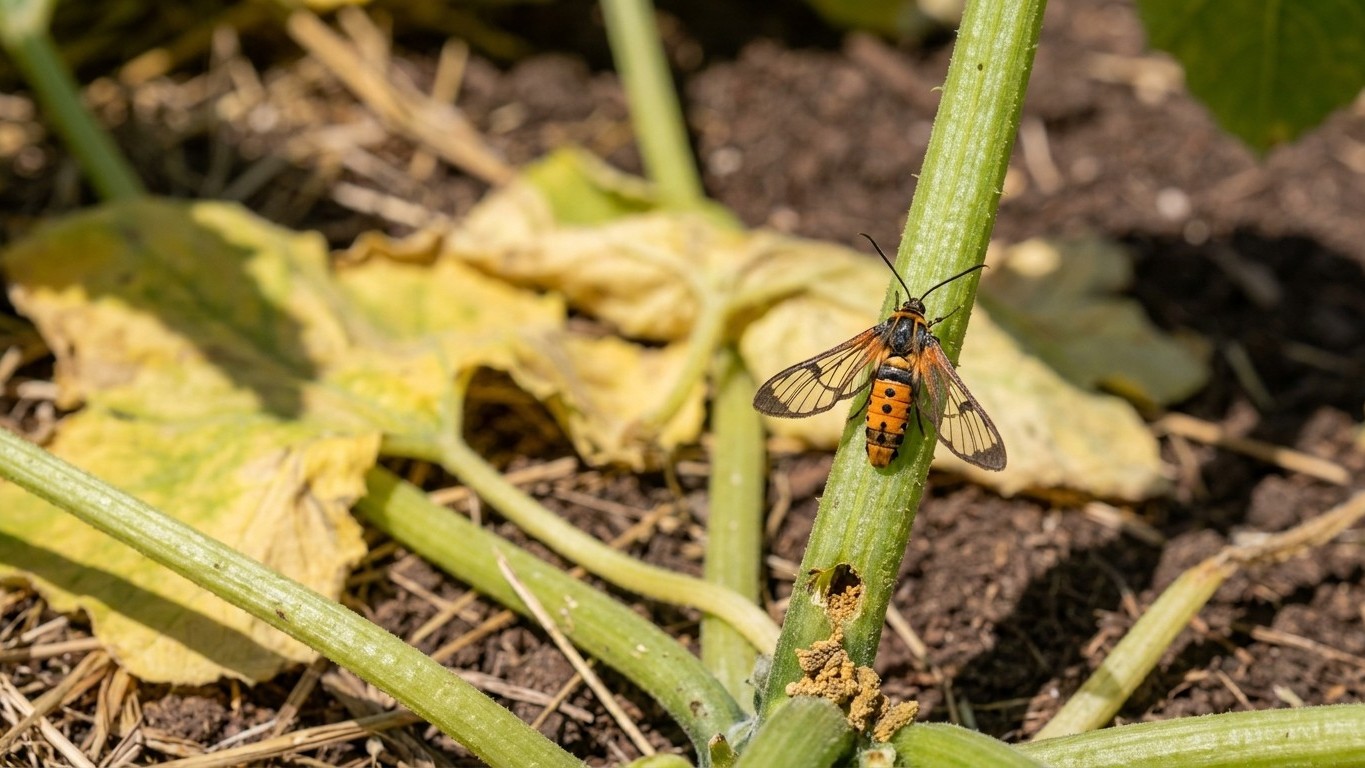

Squash vine borer moths start emerging in Delaware around late June, with peak egg-laying running through July into early August. If your zucchini or pumpkin vines collapse seemingly overnight in midsummer despite plenty of rain, this pest is almost always the reason. The window to act runs from late June through Labor Day, and missing it usually means losing the plant.
The weeks to watch

Delaware sits mostly in USDA hardiness zones 7a and 7b, with Sussex County running slightly warmer than New Castle County thanks to coastal moderation. That few-degree difference matters for this pest. Squash vine borer overwinters as a pupa buried one to two inches deep in the soil, and it waits for ground temperatures to climb into the 60s before adults dig out and take flight.
In practice, that means moth activity typically starts in the last week of June across the state and runs strong through July. The insect itself doesn’t look like a typical moth. It’s often mistaken for a wasp, with an orange abdomen marked by black dots and a wingspan that flutters more like a hummingbird than a fluttering butterfly. Females lay eggs individually at the base of squash stems, usually within the first few inches of soil, and each one can produce over a hundred eggs across her short adult life.
North of the 40th parallel, squash vine borer usually completes just one generation per year. Delaware straddles that line closely enough that most of the state sees one clean generation, but growers in Sussex County occasionally report a partial second flight in September during unusually warm falls. That’s worth knowing if you’re growing fall pumpkins or a late crop of winter squash near Delmarva’s southern edge.
Which Squash Are Most at Risk
Not every squash variety gets hit equally hard. Zucchini, yellow summer squash, and pumpkins (all Cucurbita pepo varieties) are the borer’s favorite targets because their hollow stems make an easy tunnel for larvae. Butternut squash and other Cucurbita moschata types have naturally solid stems and thicker vine walls, which makes them noticeably more resistant. Gardeners who’ve lost zucchini three years running often switch to butternut with much better luck, not because they’re doing anything differently, but because the plant itself is harder to bore into.
Spotting the Damage Before the Vine Dies
The giveaway sign is frass, a sawdust-like material that piles up near the base of the stem where the larva has been chewing. It looks almost like wet sawdust or coarse coffee grounds, and it’s usually the first visible clue days before the plant shows any real stress.
By the time a whole runner wilts suddenly during the heat of the day, despite the soil being moist, the larva has usually already done significant internal damage. A single borer can hollow out enough of a main stem to cut off water and nutrients to the entire plant. Cutting open a wilted stem near the base often reveals a cream-colored larva up to an inch long, sometimes more than one, quietly feeding inside the pith.
Checking stems weekly starting in late June, right at the soil line and up the first six inches of vine, catches the problem while it’s still manageable. This is tedious work, but it’s the single most reliable way to intervene before a plant is beyond saving.
What Actually Stops Squash Vine Borer
No single method eliminates this pest completely, but a few tactics, used together, cut losses dramatically for Delaware gardeners.
Timing the planting matters more than most people think. Squash planted very early, so it’s already flowering and setting fruit before the June moth flight begins, often outruns the worst of the damage. Alternatively, some growers delay planting a second summer squash crop until mid-July, after the first wave of egg-laying has passed, to get a clean fall harvest.
Row covers work, but only with the right timing. Floating row covers placed over young plants block moths from reaching the stems, but they need to come off once flowers open so bees can pollinate. That leaves a narrow window of protection, which is why row covers work best paired with early planting so the vulnerable stem-base period happens entirely under cover.
Physical barriers at the stem base stop egg-laying directly. Wrapping the lower few inches of stem in aluminum foil or a strip of nylon stocking, right where it meets the soil, denies the female moth a place to lay eggs. It sounds almost too simple, but Extension trials across the mid-Atlantic have shown it reduces infestation rates meaningfully when applied before the moths arrive, not after.
Weekly inspection and surgical removal saves plants already infested. If frass shows up at the stem base, a gardener can slit the stem lengthwise with a sharp knife, fish out the larva, and then mound moist soil over the wound. Many vines recover and keep producing after this crude but effective intervention, especially if it happens within a few days of the first frass sighting.
Fall sanitation breaks next year’s cycle. Removing and destroying vines immediately after harvest, rather than leaving them to decompose in place, denies overwintering larvae a place to pupate. Tilling the soil in fall exposes any pupae already underground to cold temperatures and hungry birds, cutting down the population that emerges the following June.
Where Insecticides Fit In
Once a larva is inside the stem, sprays don’t reach it, which is why timing insecticide use around egg-laying rather than after wilting shows up is the only way it helps. Products containing spinosad, applied to the base of stems weekly from late June through mid-July, target newly hatched larvae before they tunnel in. Kaolin clay, dusted heavily on stems, works as a physical deterrent rather than a poison, making the surface unappealing for egg-laying females. Neither approach helps once a vine is already wilting; both work as prevention layered on top of row covers and stem checks, not as a rescue treatment.
Some Delaware gardeners plant a “sacrifice” hill of blue hubbard squash, a variety moths strongly prefer, several feet from the main crop. The borers concentrate their egg-laying there, and that trap crop gets pulled and destroyed once it’s clearly infested, taking a chunk of the local moth population with it before it can spread to the rest of the garden.
Yellow pumpkins destined for October porches face a particular risk in Delaware because their long season overlaps with both the primary June-July flight and, in Sussex County, that occasional September second wave. Growers aiming for Halloween pumpkins often find that a mid-season stem check, done around the Fourth of July and repeated three weeks later, catches most problems before the vines need to bulk up fruit through late summer heat.
Related guides
- Squash vine borer in Maryland: When It Shows Up and What Stops It
- Squash vine borer in Pennsylvania: When It Shows Up and What Stops It
- Squash vine borer in Georgia: When It Shows Up and What Stops It
- Squash vine borer in Illinois: When It Shows Up and What Stops It
- Colorado potato beetle in Delaware
- Mexican bean beetle in Delaware
- Squash vine borer in Indiana: When It Shows Up and What Stops It
- Squash vine borer in Newfoundland and Labrador: When It Shows Up and What Stops It