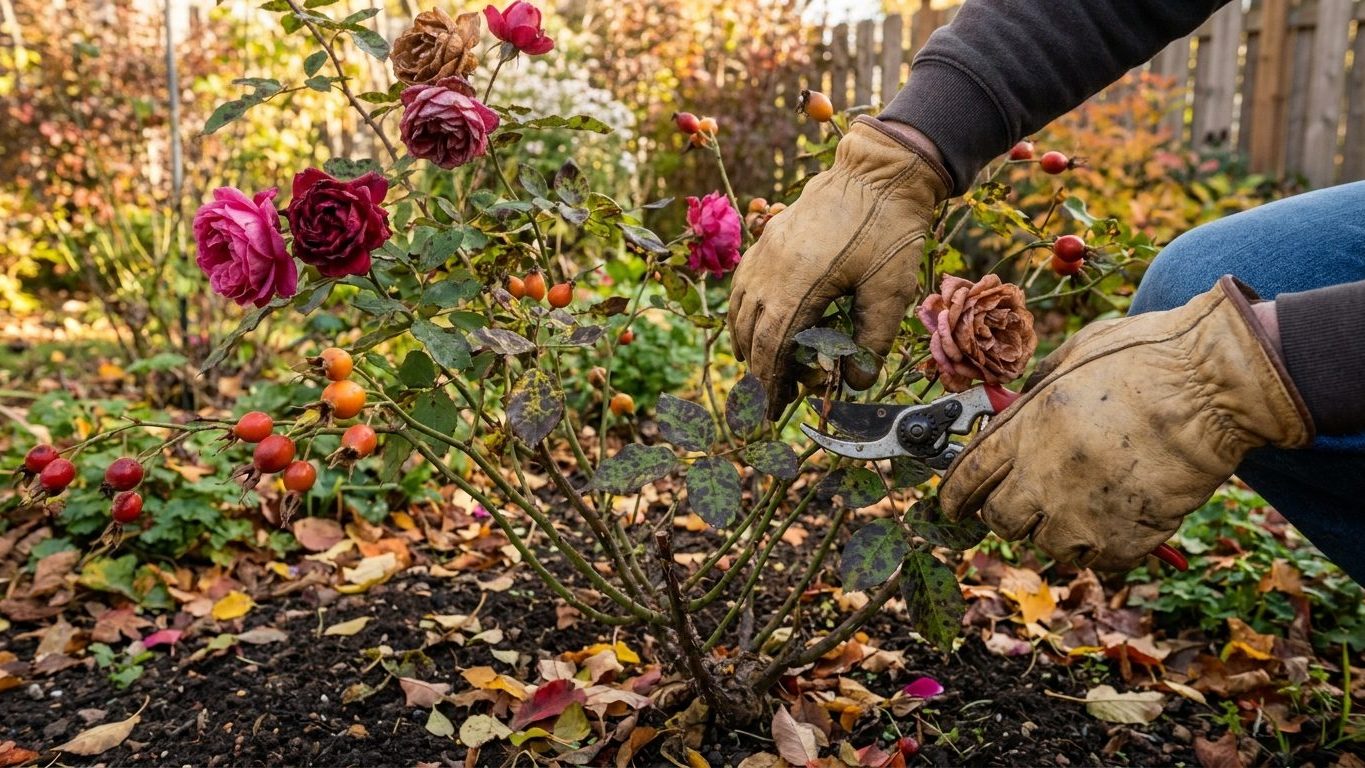

Fall rose care means stopping the habits that push soft growth, cleaning up disease sources on the plant and the ground, and letting the bush shift into dormancy on its own schedule. The heavy pruning happens later, in late winter. Right now the job is subtraction, not addition.
Why this matters
Every deadheading cut you make tells the rose to push a new shoot. That’s useful in June. In fall, a new shoot has no time to mature before cold weather arrives, and shoots too soft to ripen in time are the first thing frost damages. Stopping the cuts, not any signal from the plant itself, is what lets the wood harden on its own.
Skip the fall cleanup and you’re not just leaving a mess. Black spot overwinters in fallen leaves and in lesions on the canes themselves, so raking leaves without checking the canes only solves half the problem. Powdery mildew doesn’t bother with leaf litter at all: it overwinters in dormant buds and on stems, waiting for next spring’s humidity. A rose that goes into winter with clean, ripened wood and no lingering leaf debris starts the next season with far less disease pressure than one left to fend for itself.
When to do it
Forget the calendar. Watch the plant instead. The clearest signal is the last flush of blooms slowing down and fading without much follow-up bud production, which means day length has dropped enough to start the plant’s natural wind-down. Around the same time, hips begin turning from green to red, that accessory fruit is edible and its coloring is a visible marker that the flowering season is winding down, though it doesn’t cause dormancy itself.
Once you see that shift, it’s time to stop deadheading and stop feeding nitrogen. Both push new growth, and new growth this late in the season is exactly the soft tissue that frost kills first. Leaf cleanup and the removal of clearly diseased or damaged canes can happen anytime after that point, right up until the ground freezes hard. The heavier structural pruning most roses need yearly happens in late winter instead, and the exact timing depends entirely on your USDA hardiness zone. That’s a local decision, not a national one, so check the guide for your state before you cut back canes hard.
How to do it
Start with what to stop. Cut off deadheading duty entirely once flowering slows for the season, and let the last round of spent blooms turn into hips instead of cutting them away. Skip the fall fertilizer application too, even the slow-release kind, since any nitrogen still available in the soil will get pulled up into new shoots that won’t have time to ripen.
Cleaning up the ground and the canes
Rake fallen leaves out from under the plant and dispose of them away from the garden rather than composting them in a pile that sits near your roses, since that’s where black spot spores persist over winter. While you’re at it, walk each cane from base to tip and look for lesions, cankers or obvious disease damage; those need to come out now rather than waiting for late winter, because leaving infected wood in place all winter just gives the disease more time to spread into healthy tissue at the next warm spell.
Use clean, sharp bypass pruners for this, and wipe the blades with rubbing alcohol between plants if you’re working on more than one rose, especially if any of them showed disease symptoms during the growing season. A clean cut just above a healthy bud, angled slightly so water runs off, heals faster than a ragged one.
What to leave standing
Resist the urge to cut every stem down to the crown. Dead stems should be cut back to 12 to 24 inches and left standing rather than removed entirely, because hollow or pithy stem sections at that height provide nesting habitat for native stem-nesting bees over winter. That’s a deliberate compromise: tidy enough to remove disease risk, generous enough to support pollinators that will be back in your garden come spring.
Watering and checking the rootstock
Give the plant a deep, slow watering before the ground freezes solid, especially if fall has been dry; a well-hydrated root system handles winter cold better than a drought-stressed one. Finally, check the tag or your original purchase records for whether your rose is budded onto rootstock or grown on its own roots. Hybrid teas, grandifloras and many climbers are typically budded, which means the swollen union near the base is the part that needs winter protection. Most modern landscape shrub roses, Knock Out and Drift among them, are own-root with no union at all, so it’s the crown at soil level that matters instead. The depth and method of that protection depend on your zone, and belong on your state’s page rather than here.
What goes wrong
The single most common mistake is fall pruning that’s too aggressive. Cutting a rose back hard in October looks like diligence, but it does the opposite of what you want: every cut stimulates a new shoot, and a flush of soft new growth right before frost is more vulnerable than the mature wood you removed. If you see blackened, mushy tips on canes in early winter, that’s usually the signature of late soft growth that never got the chance to ripen.
Fertilizing in fall falls into the same trap. It reads as extra care, feeding the plant before winter, but nitrogen at this stage does the plant no favors. The symptom shows up the same way: a burst of tender new growth that dies back hard at the first real freeze, sometimes taking healthy older wood with it if the damage travels down the cane.
Cleaning up leaves while ignoring the canes is a partial fix that feels complete. Gardeners rake diligently, bag the leaves, and assume black spot is handled, not realizing the fungus is also sitting in lesions on the stems themselves. The following spring, the same infection reappears from cane tissue even though the leaf litter never returned.
Removing every scrap of dead wood, right down to the crown, is well-intentioned but works against the stem-nesting bees that rely on those 12 to 24 inch stubs over winter. A perfectly bare, stripped bush is not automatically the healthiest one.
Doing it differently
Growing method changes some of the details, even though the core fall tasks (stop deadheading, stop feeding, clean up disease sources) stay the same everywhere.
| Growing method | What changes in fall |
|---|---|
| Containers | Soil dries and freezes faster than ground beds; move pots against a sheltered wall or into an unheated garage once hard freezes are consistent in your zone, and check moisture more often since container roots dry out even in cold weather. |
| Raised beds | Better drainage than heavy clay ground soil lowers the risk of crown rot over a wet winter, but raised soil also cools and warms faster, so watch for premature bud break during a mild winter spell. |
| Greenhouse or high tunnel | Extended warmth can keep roses flowering and pushing growth well past when outdoor plants have slowed down; you’ll need to force the stop on feeding and deadheading manually rather than waiting for the plant to signal it. |
| In-ground, open bed | Standard timeline applies: watch bloom slowdown and hip coloring, then stop deadheading and feeding as described above. |
Variety type matters for one specific reason: ramblers flower from old wood, while climbers flower from new wood. Hard-pruning a rambler in fall or winter removes the wood that would have carried next year’s flowers, so any cane removal on a rambler should be limited to genuinely diseased or damaged sections rather than routine tidying. Disease resistance itself doesn’t sort neatly by group either; it varies by cultivar, and a modern shrub rose bred for resistance can outperform a classic old garden rose growing right next to it.
Common questions
Are rose thorns dangerous?
Not in the way the name suggests. They are prickles, not true thorns, growing from the outer skin of the stem rather than as a modified woody structure, which is why they snap or rub off sideways instead of breaking like wood.
Should I cut off rose hips in fall?
No, once you’ve stopped deadheading for the season, let hips develop and turn from green to red. They’re an edible accessory fruit and removing them at this point only prompts the plant to push more new growth it doesn’t need before winter.
Do I need to prune my roses in fall?
Most roses require yearly pruning, but that heavier structural work happens in late winter, not fall. Fall pruning should be limited to removing diseased or unsafe canes, cut back to healthy tissue, leaving dead stems trimmed to 12 to 24 inches standing for nesting bees.
What pests or diseases should I watch for in fall?
Keep an eye on documented rose problems including botrytis, blights, powdery mildew, leaf spots and anthracnose among diseases, and Fuller rose beetle, Japanese beetle, rose chafer, rose thrips, and southern red mite or two-spotted mite among pests, remembering that the mites are arachnids, not insects, so treatments aimed at insects alone won’t touch them.