
Manitoba gardeners can plant winter squash outdoors once the soil has warmed past the average last spring frost of May 23, and expect the vines to finish by the average first fall frost of September 22, a growing window of roughly four months. That’s tight for a crop that needs every one of its days to mature fully before the cold arrives, which makes variety choice and timing far more important here than in milder territories.
When the soil is warm enough in Manitoba

The average last spring frost at Winnipeg Richardson Int’l A, the reference station for the province, falls on May 23, according to Environment and Climate Change Canada’s Canadian Climate Normals for 1981-2010. That’s a mean date, not a guarantee. In one year out of two, frost arrives later than May 23, so treating it as a green light is a mistake seasoned gardeners learn to avoid.
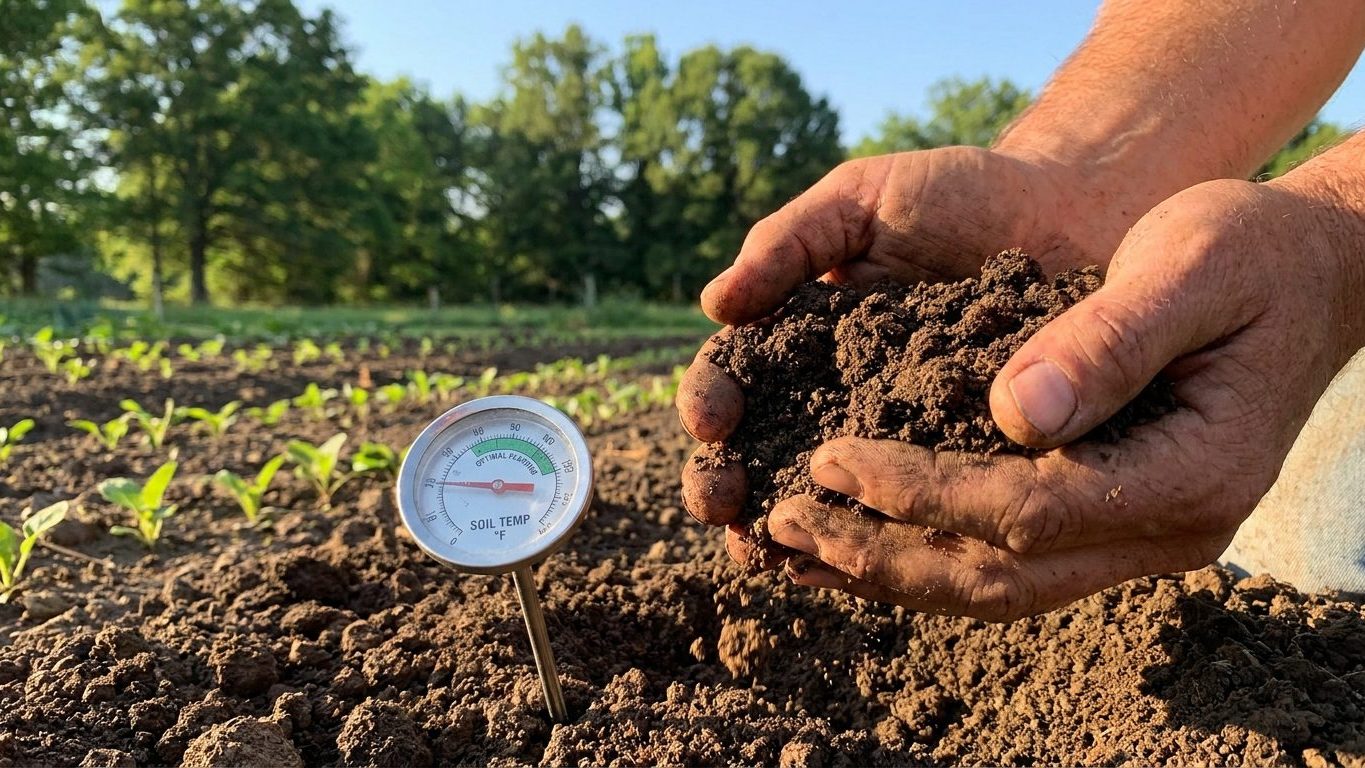
Winter squash doesn’t actually care about frost dates. It cares about soil temperature, and that’s the detail most planting calendars skip. Squash seed rots in cold, wet ground long before frost is even a risk, so the practical rule is to wait until soil at seed depth stays consistently warm, days after the frost risk has technically passed. In a province where the average last frost sits as late as May 23, pushing seed into the ground earlier than that rarely gains anything, because the soil hasn’t caught up with the calendar yet.
This is also where Manitoba’s size becomes relevant. The May 23 figure comes from one station near Winnipeg. Move north, or gain elevation, and that date drifts later, sometimes by weeks. A garden in the Interlake or up toward Dauphin doesn’t share Winnipeg’s soil-warming schedule, even if it shares the province.
What this means for direct seeding versus transplants
Given how late the soil warms and how short the season runs afterward, many Manitoba gardeners start winter squash indoors three to four weeks before their expected outdoor planting date, then transplant once the soil is reliably warm. This buys back some of the growing time that a direct-seeded crop would lose waiting on the ground to catch up. Squash transplants poorly if roots are disturbed, so pot sizes that avoid root circling matter more here than in a longer-season territory where a slow start is easily absorbed.
Whatever the calendar says, the safest local check isn’t a date at all. It’s the soil itself, felt by hand at planting depth, warm and workable rather than merely frost-free.
How long the season lasts here
Subtract May 23 from September 22 and the frost-free window at the Winnipeg reference station runs about four months, close to 122 days. That’s the ceiling, not a promise, since both dates are averages and either one can move against the gardener in a given year.
A four-month window is workable for winter squash, but it’s not generous. Winter squash types run long in the ground, and in Manitoba’s case, the frost-free stretch barely covers what a full-season type needs to mature and cure on the vine. This changes the calculus around succession sowing that gardeners in longer territories take for granted. In places where the frost-free period stretches to five or six months, a second sowing a few weeks after the first is a reasonable hedge against a lost planting or an early harvest for fresh eating. In Manitoba, that math rarely works. A squash sown in June, on top of one already growing since late May, is unlikely to finish before the average first fall frost of September 22, and an unfinished winter squash is essentially a wasted one, since it won’t cure or store properly.
That reality pushes the decision earlier rather than later. The first sowing, timed to the soil warming after May 23, is effectively the only sowing that matters for a harvest meant to store through winter. It also strengthens the case for transplants discussed above: a transplant that skips a week or two of slow germination in cool soil is a week or two added back to a season that has none to spare.
Readers weighing whether a second planting could still work, for fresh eating rather than storage, or comparing how this window stacks up against other territories, can walk through the specifics in this site’s succession sowing guide, which covers how to judge whether a given frost-free length supports one planting or two.
Heat and water in Manitoba

Winnipeg’s reference station records an average of 0.0 days a year at or above 90°F, per the 1981-2010 Canadian Climate Normals. That’s not a rounding artifact. It means summer heat load here is essentially absent by the standards that drive irrigation planning in hotter parts of North America. Winter squash grown in Manitoba isn’t fighting heat stress or scorched leaves; it’s fighting time.
This changes which risks actually matter. In a hot, dry territory, the gardener’s main job is keeping enough water moving to the root zone so fruit can fill out under stress. In Manitoba, with zero days above 90°F, that pressure barely exists. What replaces it is a cooler, damper set of problems: powdery mildew on the leaves, fruit that ripens slowly because heat units accumulate at a modest pace, and a narrower margin for a wet stretch to stall the crop right when it should be finishing.
Rainfall reinforces this picture rather than complicating it. Summer rainfall across June, July and August averages about 9.7 inches at the Winnipeg station, broken down as 3.54 inches in June, 3.13 in July, and 3.03 in August, the driest of the three months, against 20.5 inches for the full year. That’s a reasonably even, moderate supply, not the kind of gap that forces daily irrigation the way a hot, dry territory does. The bigger risk isn’t drought stress on the vine; it’s excess moisture sitting on foliage during a cool stretch, which is exactly the setup that favors mildew and slows fruit maturation at the worst possible point in a short season.
None of this is a claim about any individual garden. The reference station sits near Winnipeg, and both the heat and rainfall figures are provincial normals from a single point, not a description of every yard in Manitoba. A rain gauge on the actual plot, and attention to airflow around the vines in a wet week, tell a gardener more than the averages ever will. But the direction is clear: this is a territory where the clock, not the thermometer or the hose, sets the limits on a winter squash crop.
Which winter squash suit Manitoba
Given a frost-free window that runs roughly four months and a summer with essentially no extreme heat, the types of winter squash that make sense here are the earliest-maturing ones, chosen for their ability to finish and cure before the average first fall frost of September 22, rather than for size or storage life alone. A type bred for long, hot growing seasons elsewhere is a poor match for a province where the soil itself is late to warm.
Disease resistance matters here in a way it might not in a drier territory. With moderate, evenly spread summer rainfall and no heat load to dry foliage quickly, mildew pressure builds over a damp season, so types noted for better resistance to powdery mildew are worth prioritizing over types chosen purely for an early maturity date.
This page won’t name a specific variety, and that’s a deliberate choice rather than an omission. Seed catalogs list days-to-maturity figures that vary by trial location, soil, and even the specific season, and a name that performed well in a warmer or longer-season province carries no guarantee here. What actually holds up in Manitoba conditions changes from year to year and is exactly the kind of local trial data that Manitoba Agriculture tracks and gardeners rely on more than any generic list. The province’s extension service, at gov.mb.ca/agriculture, publishes the varieties tested for the shorter, cooler Manitoba season, and that’s the recommendation worth following, not one improvised on a page that has no way to verify it against local trial results.
Refusing to name a cultivar isn’t a gap in this guide. It’s the honest answer for a province where hardiness zone 3b, on the Canadian system used by Natural Resources Canada, already tells a gardener the season is short and the margin for error is small. Pairing that zone information with the extension service’s own trial results is a more reliable path than any single name printed here could ever be.