
Winter squash grows successfully in Montana, but the calendar here punishes guesswork more than in most states. Between a frost window that can close in early October and elevation swings that shift everything by weeks, the safe answer is: plant by type, watch your soil, and lean on your local extension office rather than a seed packet’s generic promise.
When the soil is warm enough in Montana

Gardeners always ask for a date. The honest answer starts with one, then complicates it. At the NOAA reference station used for this territory (USW00024033, near Billings), the 1991-2020 Climate Normals put the last spring frost in the window of April 29 to May 10, based on the 30-70% probability band for a 32°F freeze. That’s not a single day circled on a calendar. It’s a range where frost has historically had a meaningful chance of showing up, which means treating May 10 as a hard finish line is already gambling with the later end of that band.
The frost date behind the number
Billings sits in one of Montana’s milder valleys. That caveat matters more here than in flatter states, because a mountain valley an hour away can see frost in June, or in August, in a bad year. If your garden sits at higher elevation or in a low frost pocket, the Billings window is a starting reference, not your own forecast. A frost date, wherever it comes from, is a probability built from thirty years of history. It tells you what usually happens. It doesn’t promise anything about this particular spring.
Why soil temperature matters more than the calendar
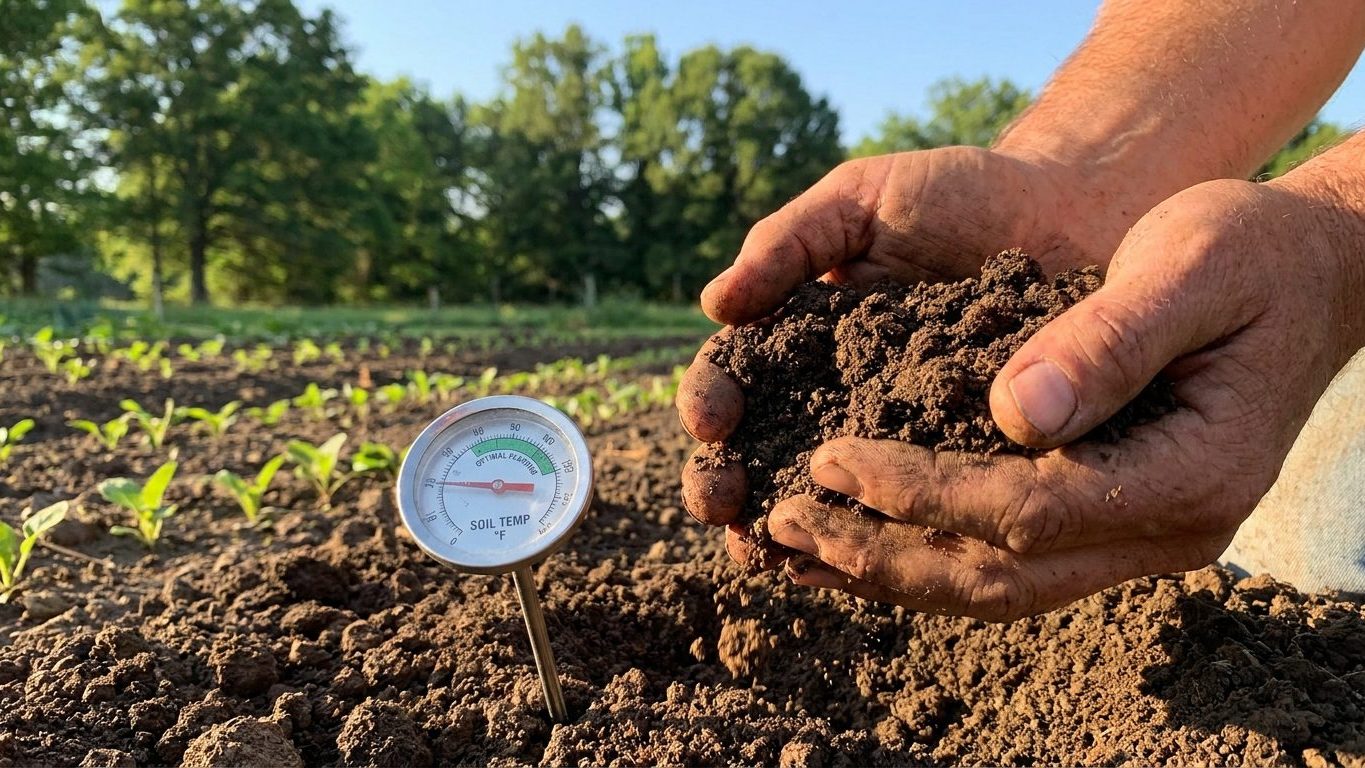
Winter squash seed doesn’t care what the frost date says. It cares whether the soil has warmed enough to germinate without rotting, and that lag between “frost risk has passed” and “soil is actually warm” can run one to three weeks depending on how wet and shaded the ground is. A frost-free morning on a cold, saturated bed still stalls squash seed. This is the detail that trips up gardeners moving to Montana from milder states: they plant on the frost date because that’s the habit, and the seed just sits there while slugs and damp air work against it.
The practical fix is a soil thermometer pushed two inches down, checked in the morning for a few consecutive days before committing seed to the ground. Waiting an extra week past the frost window, rather than planting exactly on it, costs almost nothing against a short Montana season and buys real insurance against a cold snap or a slow-warming clay bed. For gardeners who want a head start without gambling on the soil, starting seed indoors under cover and transplanting once nighttime lows stabilize is the standard workaround, though squash roots resent disturbance more than most vegetables, so that transplant has to be handled gently and early, before roots circle the container.
How long the season lasts here
Subtracting the two frost dates gives the real budget a Montana gardener works with. Last spring frost runs April 29 to May 10; first fall frost arrives October 1 to October 14, both from the same NOAA 1991-2020 Climate Normals station near Billings. Counting from the later end of spring to the earlier end of fall, the frost-free window is roughly five months at its most generous, and can run shorter in a year that frosts early or late on the wrong sides of those bands.
What that window allows, and what it doesn’t
Five months, at best, sounds workable for winter squash, which typically needs most of a full growing season to mature fruit that will actually cure and store. But that number is the ceiling for the mildest years at the mildest reference point in the state. In practice, Montana’s window doesn’t leave room for a forgiving margin. A first sowing that gets delayed by two weeks because of a cold, wet spring can push maturity dangerously close to that October frost band, with squash still filling out on the vine when the first hard cold arrives.
That tight math changes the strategy compared to states with a longer season. A second sowing of squash later in summer, the kind of succession planting that makes sense where the frost-free window runs six or seven months, generally isn’t realistic here for winter squash specifically, because a second crop started in June or July would need to mature by early October with no cushion. The one sowing you get is the one that counts, which raises the stakes on timing it well and on choosing a type suited to a shorter run. Readers weighing whether a second planting makes sense for other crops, or whether Montana’s window supports it for anything at all, can check the site’s succession sowing guide for how that math works crop by crop.
The tight window also affects whether transplanting is worth the risk described above. In a longer-season state, a failed or slow transplant can be replaced by direct-sown seed with time to spare. In Montana, that safety net is thinner, so a transplant that gets checked for circling roots and hardened off properly before it goes in the ground matters more than it would somewhere with a wider margin for error.
Heat and water in Montana

Winter squash is the crop where the length of the season decides almost everything else, because the fruit has to mature fully on the vine before frost. An immature squash doesn’t cure properly in storage and doesn’t keep, no matter how carefully it’s handled afterward. That single fact makes Montana’s numbers on heat and rainfall worth reading closely, because they say less about comfort and more about whether fruit gets the runway it needs.
28.3 days above 90°F: what that heat does
At the Billings reference station, the 1991-2020 Climate Normals count an average of 28.3 days a year at or above 90°F. That’s a real, if moderate, heat load, enough to drive meaningful water demand through midsummer and to push squash vines into stress if soil moisture runs short during fruit set. It’s not a desert-level number, and it doesn’t turn Montana into a hot-climate growing region. It simply means summer heat, when it arrives, arrives with enough intensity that a dry stretch during flowering or fruit fill can cost yield, even in a state better known for its cold winters than its hot summers.
4.3 inches of summer rain: not enough on its own
Summer rainfall across June, July, and August averages about 4.3 inches at the same station, out of 14.3 inches for the full year, with August running driest at just 0.87 inches. Broken down, that’s 2.22 inches in June, 1.22 in July, and 0.87 in August, a rainfall pattern that tapers off right as squash plants are typically filling fruit and need water most. That figure never reads alone. On sandy soil it soaks through and disappears within a day; on clay it lingers longer but often arrives as a single storm that runs off more than it soaks in. Combined with 28.3 days of 90°F-plus heat driving evaporation, this is a summer where irrigation, not rainfall, carries winter squash through its filling stage. A rain gauge on the actual plot, tracked against how quickly the topsoil dries between waterings, tells a gardener more than any regional average can.
Because Montana’s numbers land in a moderate middle ground rather than either extreme, the risks aren’t the mildew and slow ripening that plague cool, damp coastal summers, nor the relentless heat stress of a true desert climate. The real risk here is a short window compounding with irregular rain: a squash plant that stalls during a dry, hot stretch in July may not fully recover the lost time before the fall frost arrives.
Which winter squash suit Montana
Everything above points toward a type-based decision rather than a hunt for one specific seed packet. Montana’s tight frost-free window, running roughly five months at best from the Billings normals, favors the earliest-maturing types of winter squash over the long-season kinds bred for regions with six or seven frost-free months to spare. A type that needs every extra week that Montana doesn’t reliably have is a type set up to fail here, no matter how well it’s grown.
Types that fit a short window
Within that constraint, the moderate heat load (28.3 days above 90°F) and the taper in summer rainfall toward a dry August argue for types that tolerate some water stress during fruit fill without dropping flowers, paired with growing practices, like mulching to hold soil moisture and spacing vines for airflow, that reduce the disease pressure that can build up even in a climate that isn’t especially humid. Vines given room to breathe and roots given consistent moisture through July and August handle Montana’s summer swings better than vines crowded together and left to dry out between waterings.
Why this page won’t name a variety
What won’t appear here is a specific cultivar name. Montana’s hardiness zones range from 3a to 6a on the USDA Plant Hardiness Zone Map, built from 1991-2020 extreme minimum temperature averages, which means a variety trialled and recommended for a warmer valley can perform very differently in a colder mountain pocket just a short drive away. The named varieties that actually earn a recommendation are the ones tested locally, season after season, by researchers who track how they perform against this state’s specific frost timing, heat load, and rainfall pattern, not a generic list written for the country as a whole.
Montana State University Extension maintains that kind of locally trialled variety information, along with guidance specific to different valleys and elevations across the state. For a crop where the wrong type, planted a week late in a short season, can mean fruit that never finishes curing before the first hard frost, that local trial data is worth more than any single article can offer.