
Winter squash is a marginal crop in Newfoundland and Labrador, not an easy one. The island’s cool, short, damp summers mean the crop that succeeds here is the earliest-maturing type, started indoors, moved out only once soil warms, and grown with airflow to fight off mildew rather than heat stress. It works, but the margin for error is thin.
When the soil is warm enough in Newfoundland and Labrador

Gardeners want a date, so here it is: the average last spring frost at St. John’s A, per Environment and Climate Change Canada’s 1981-2010 Climate Normals, falls on May 30. That’s a mean, not a guarantee. Half the years on record, frost showed up later than May 30 at that station. Treat it as the middle of a window, not a green light, and remember that St. John’s A is one station on one coast: inland valleys and anywhere at higher elevation typically lag behind it by days or weeks.
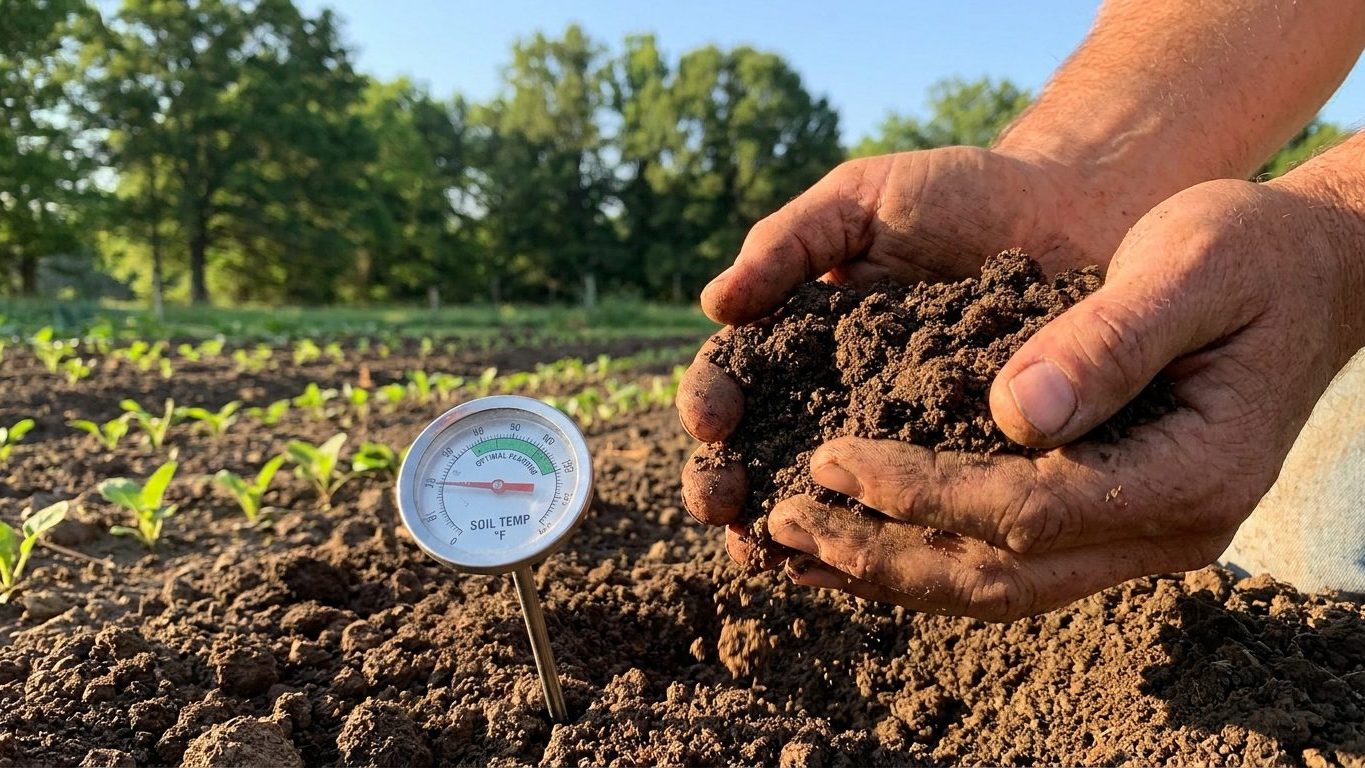
Frost dates matter for winter squash mostly as a proxy. The real trigger isn’t the air, it’s the soil. Squash seed germinates poorly and transplants sulk when soil temperature sits in the low 50s Fahrenheit or below, and that threshold is usually reached some days to a couple of weeks after the last frost risk has passed, once the ground has had a stretch of sun to catch up. In a province where cloud cover and coastal fog are common even in June, that lag can stretch longer than gardeners moving here from milder regions expect.
What that means for timing
Practically, this points to starting seed indoors rather than direct-sowing in the ground. Four to five weeks before the soil is expected to be workable and warm gives seedlings a head start without them outgrowing their pots, which winter squash resents (root disturbance sets the plants back hard). Direct-seeding is an option only in the warmest microclimates of the province, and even then it’s a bet against a cool spring.
Resist the pull to push transplants out the moment the calendar clears May 30. A single cold, wet week can stall growth for a month or invite rot at the stem. Watching soil temperature with a simple probe thermometer, rather than trusting the frost date alone, is the more reliable habit.
None of this is about variety selection yet, and it shouldn’t be: no cultivar overcomes a soil that’s still too cold. What it changes is method. Cold frames, black plastic mulch to pre-warm beds, and floating row cover at transplant time all buy the extra week or two that this province’s slow spring often demands. For which specific types have actually performed well in provincial trials, the Newfoundland and Labrador Forestry and Agrifoods Agency is the source to check, at gov.nl.ca/ffa, since local trial data changes and this page isn’t the place to freeze a variety name in text.
How long the season lasts here
Subtracting the two ECCC normals for St. John’s A gives a frost-free window of roughly 140 days, running from the average last spring frost on May 30 to the average first fall frost on October 17. That’s the number to plan around, with the same caution attached to both ends: each is a mean, and in any given year either frost can arrive earlier or later than the average.
140 days sounds generous next to some short-season prairie or mountain regions, and on paper it can be enough for the earliest winter squash types to mature and cure before frost. But the number flatters the reality slightly, because the useful growing window isn’t the full 140 days. Take off the two to three weeks lost waiting for soil to actually warm past frost date, and the practical stretch available for a squash plant to grow, flower, set fruit, and finish ripening on the vine shrinks closer to 110-120 days in a typical year.
One sowing, not two
That’s tight enough that a second, later sowing of winter squash isn’t realistic here the way it might be for quick greens or radishes. Winter squash needs its full run without interruption, so the first sowing is effectively the only sowing. This changes how much risk is worth taking with transplants: because there’s no room to redo a failed start, checking root health before setting plants out (gently sliding a seedling from its pot to confirm roots are white and not circling or brown) is worth the extra minute it takes, since a weak transplant here doesn’t get a second chance the way it might in a longer-season territory.
Gardeners further inland or at elevation, where frost normals run behind the St. John’s A reading, should assume an even narrower window and lean harder toward the earliest-maturing types and transplants over direct seeding. For a fuller look at how to sequence plantings when the season allows it, and why this province generally doesn’t, the site’s succession sowing guide lays out the reasoning territory by territory.
Heat and water in Newfoundland and Labrador

Here’s the number that separates this province from most winter squash country: 0.0 days a year above 90°F, per the ECCC 1981-2010 normals for the St. John’s reference station. Not a handful of hot days, not an occasional heat spike. None. Winter squash is a warmth-loving crop by nature, and Newfoundland simply doesn’t deliver the heat load that pushes fruit to size up and sugar up quickly elsewhere in North America.
That absence of heat is the single biggest fact shaping how this crop behaves here. Without hot stretches to speed ripening, the fruit’s entire success depends on using every day of the growing window well, because there’s no late-summer heat surge to make up for a slow start. This is also why season length, covered above, matters more here than it would in a hot climate: a short cool window and a lack of heat compound each other, and the type of squash chosen (early, compact, quick to mature) matters more than any trellising trick or feeding schedule.
Rain that doesn’t need much help
Water tells a similarly northern story. Summer rainfall across June, July and August averages about 11.4 inches at the same station, split fairly evenly: June 3.84 inches, July 3.61 (the driest of the three), August 3.94. That’s a wetter summer than many winter squash territories see, and it means irrigation is rarely the limiting factor here the way it is in hot, dry regions where squash vines need supplemental water to fill fruit through August heat.
The trade-off is disease pressure, not drought. A cool, damp summer with no heat spikes to dry foliage quickly is exactly the setup that favors powdery and downy mildew on squash leaves, along with slower fruit ripening generally. Spacing plants for airflow, watering at the soil line rather than overhead, and removing affected leaves promptly matter more in this climate than any watering schedule does. This is a province where the gardener’s job is managing dampness and slow ripening, not managing heat stress or drought, and treating it like a hot-climate garden (worrying about irrigation timing over airflow) misreads the actual risk.
Which winter squash suit Newfoundland and Labrador
Given a roughly 110-120 day practical window, no days above 90°F, and a cool damp summer prone to mildew, the reasoning points toward a specific type of winter squash rather than any single named variety: the earliest-maturing types available, chosen for compact vine habit that allows tighter spacing and better airflow, and ideally with some noted tolerance to powdery mildew.
Vining growth habit deserves a second thought in this climate. Sprawling vines that touch damp soil and shade their own foliage hold moisture longer and mildew faster, so more compact or bush-type winter squash, or vines trained up a support to lift leaves into moving air, work with this province’s weather rather than against it. In a hot, dry province, the priority would flip toward giving roots shade and consistent moisture; here, airflow and quick maturity are the two criteria that actually matter.
This page won’t name a specific cultivar, and that’s deliberate rather than an oversight. Which named varieties have actually performed well in Newfoundland and Labrador conditions is trial data, and it shifts as new types come onto the market and older ones get dropped from seed catalogs. A name printed here could be outdated or simply wrong for a reader’s particular corner of the province, whether that’s a warmer Avalon Peninsula garden or a cooler inland one. The Newfoundland and Labrador Forestry and Agrifoods Agency, at gov.nl.ca/ffa, tracks what’s actually been trialled locally, and that’s the recommendation worth following, because it’s grounded in this province’s soil and seasons rather than a general description of a type.
Worth noting too: this province’s Canadian plant hardiness rating for the reference city is zone 6a on Natural Resources Canada’s system, which runs on seven climate variables and does not convert to the single-variable USDA zones used elsewhere on this site. A gardener comparing notes with someone gardening in a USDA zone 6a should not assume they’re comparing the same climate at all.