
Yukon’s growing season is short and cool: the average frost-free window runs from June 5 to August 25, about 81 days, in a territory rated Canadian hardiness zone 1b. Winter squash, a crop that needs its fruit fully mature before frost, can still work here, but only with the earliest maturing types, transplants started indoors, and every trick available for pulling extra warmth into the soil.
When the soil is warm enough in Yukon

The last frost date, and its limits
The frost date everyone asks about is June 5, the average last spring frost recorded at the WHITEHORSE A station by Environment and Climate Change Canada, drawn from the 1981-2010 Canadian Climate Normals. That date is a mean, not a guarantee. In one year out of two, frost lands later than June 5, sometimes weeks later at higher elevations or in cold-air pockets away from the valley floor where the station sits. Treat it as the midpoint of a window, never as the day it’s safe to set squash outside.
The WHITEHORSE A station sits in one valley, and a territory this size isn’t one climate. Communities to the north or at higher elevation typically see both a later last frost and an earlier first one, shrinking the whole window further than the numbers above suggest.
Getting soil warm faster
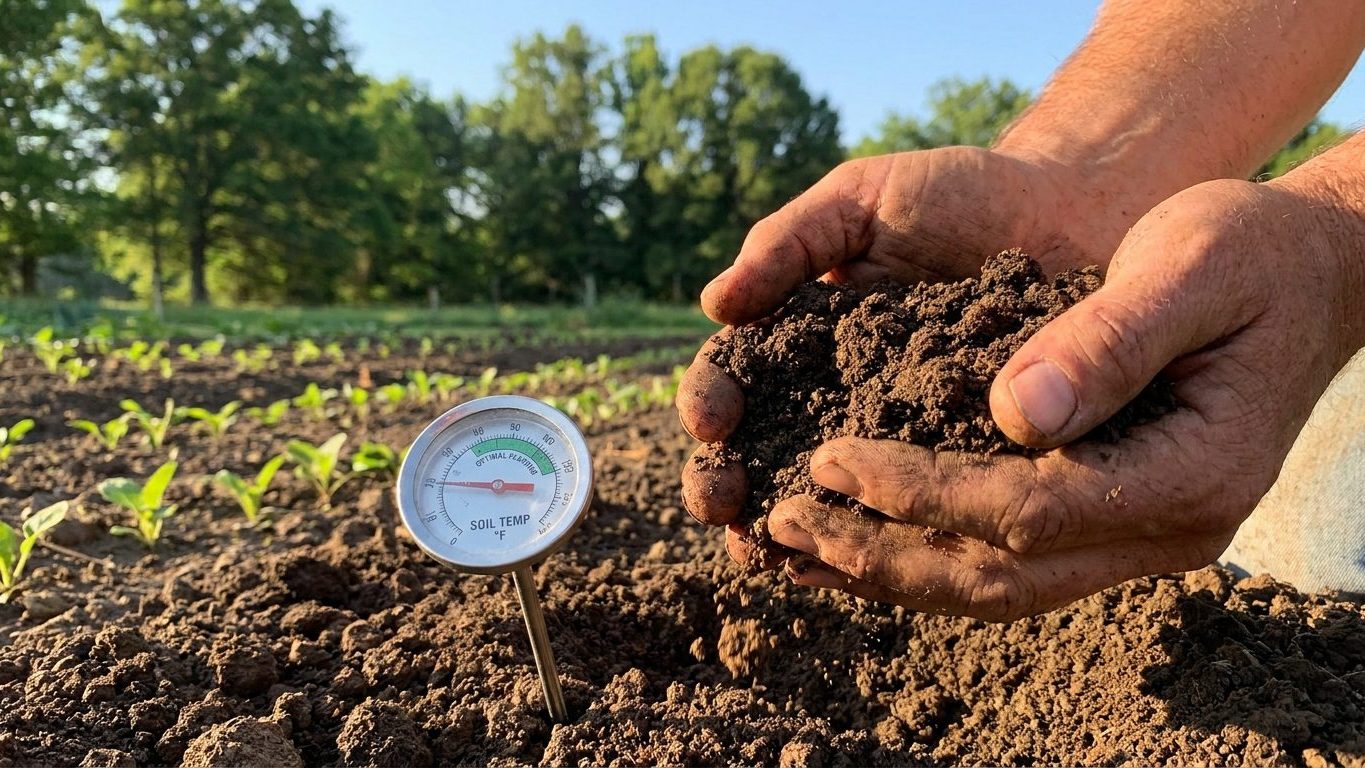
Frost is only the first hurdle. Soil warms slower than air, and winter squash seeds barely bother to germinate until the ground itself holds real heat, not just frost-free skies overhead. A soil thermometer pushed a few inches down usually tells the real story better than the calendar does: squash want soil that stays warm through the day and night, not just above freezing for a few hours at dawn. In a territory sitting at Canadian hardiness zone 1b (a rating built from seven climate variables, not the single-factor USDA scale used elsewhere on this site; the two systems don’t convert, so don’t try to match this zone to an American number), raised beds and containers warm noticeably faster than open ground, often the difference between a squash crop that gets going in June and one that idles until July.
That gap between frost risk ending and soil actually being ready is why direct-seeding winter squash outdoors in Yukon is a gamble many gardeners skip. Starting seed indoors three to four weeks before the last frost date, then transplanting once nights stay reliably milder, gets plants a head start they can’t make up any other way. Black plastic mulch or a floating row cover laid over the bed a week or two before transplanting pulls extra heat into the soil, another way to close the gap without waiting on the weather to decide. Gardeners who push too early usually lose nothing to frost itself, but to seed and transplants sitting in cold, wet ground and rotting before they ever put on a true leaf.
How long the season lasts here
What an 81-day window rules out
Subtract the two dates from the Whitehorse A normals, June 5 for the average last spring frost and August 25 for the average first fall frost, and the frost-free window comes out to roughly 81 days. That’s the full growing season, not just for squash but for everything else too, and it’s short by any standard used across this site.
An 81-day window rules out a lot of what gardeners farther south take for granted. There’s no room here for a second sowing after a spring crop finishes; whatever winter squash goes into the ground has to be the only sowing of the year, planned around the earliest possible start and the latest safe finish. Anyone curious about staggering plantings for a longer harvest can look at our succession sowing guide, useful for other territories in this series, but largely academic here: there simply isn’t enough season left over to stagger anything.
Why transplants beat direct seeding here
That shortness also tips the balance toward transplants rather than direct seeding. In a longer season, direct-seeded squash often catches up to transplants by midsummer; the check that comes from root disturbance and hardening off costs little when there are three or four extra weeks to spare. Not here. Every week gained by starting seed indoors and moving it out as a hardened transplant is a week the plant gets to spend filling out fruit instead of germinating and putting on early leaves. That’s why how well a plant recovers from being moved actually matters in Yukon in a way it barely does farther south: a slow, sulky transplant recovery can eat a tenth of the whole season before the plant even starts vining.
Timing at the far end matters just as much as timing at the start. Winter squash needs its fruit fully mature and its skin properly hardened before frost, not just alive at the first fall frost but finished. With August 25 as the average date the first frost arrives, and half of all years running later than that, a plant still setting new fruit in early August won’t finish anything worth storing. The whole season, from transplant date to last realistic harvest, has to be planned backward from that date, not forward from spring enthusiasm.
Heat and water in Yukon

No heat load, a different risk
Zero. That’s the average number of days a year the reference station at Whitehorse reaches 90°F, according to the Canadian Climate Normals for 1981-2010. Winter squash grown in much of the US relies on summer heat to push fruit through its filling stage quickly; Yukon gardeners don’t have that tool available, and shouldn’t plan around it.
What replaces heat stress as the main risk here is the opposite problem: a cool summer that keeps growth slow no matter how well the plants are watered. With no meaningful heat load pulling moisture out of the soil, water isn’t disappearing to evaporation the way it would in a hot, dry state. But cool, damp conditions bring their own trouble for squash, powdery mildew and other fungal issues thrive in vines that stay slightly cool and slow-drying, and slow ripening simply means fewer warm days accumulate before that August 25 average frost date closes things out.
Rainfall by month
Rainfall doesn’t help much either way. Summer rain across Whitehorse averages about 4.2 inches over June, July and August combined, out of 10.3 inches for the full year, and it isn’t spread evenly:
| Month | Average rainfall |
|---|---|
| June | 1.28 in. |
| July | 1.5 in. |
| August | 1.41 in. |
June, the month plants are usually just going into the ground as transplants, is also the driest of the three, which matters because that’s exactly when consistent soil moisture does the most to help a young plant establish roots before the short season runs out. A dry June paired with a cool one rewards a gardener with a watering can more than one hoping rainfall alone will carry seedlings through.
None of this adds up to drought stress the way a hot southern state experiences it. It adds up to a growing environment where warmth, not water, is the scarce resource, and where the gardener’s job is less about protecting plants from heat and more about giving them every extra degree and week available: raised beds that warm faster, row cover that traps heat at night, siting squash on the sunniest, most sheltered spot in the yard. Air circulation still matters; cramped, damp foliage in a cool climate invites mildew just as surely as it does anywhere else, so spacing plants for airflow remains worth doing even where heat itself is never the enemy. That combination, essentially no heat and a short cool window, is also why the type of squash chosen matters here more than almost any technique a gardener can apply.
Which winter squash suit Yukon
Types suited to a short, cool season
In a territory with roughly 81 frost-free days and no meaningful summer heat, the type of squash chosen does more to determine success than any amount of mulch or row cover. Types that mature quickly, generally in smaller fruit sizes, ask for less total time from transplant to harvest than large-fruited types bred with longer, warmer seasons in mind:
- Acorn types, generally among the earliest to mature
- Delicata types, also fast and compact
- Buttercup types, moderate season length
- Hubbard and butternut types, typically the longest season needed
That’s not a guarantee any particular type will finish in a Yukon summer, only that the earliest-maturing types give a gardener here the best odds of a fully cured, storable squash before the average August 25 frost. Airflow matters more than shade in this climate. Where a hot, dry state might plant squash for some afternoon shade to protect fruit from scorch, that’s not a concern in a territory averaging zero days above 90°F. What matters instead is spacing vines and foliage so air moves freely between them, since cool, damp conditions are exactly what mildew and other fungal diseases favor. Disease resistance, especially to powdery mildew, is a far more useful trait to look for here than heat tolerance ever would be.
Why no variety name appears here
This page won’t name a specific variety, and that’s a deliberate choice, not an oversight. Cultivar names get tested, dropped, and replaced constantly, and a variety that performs well in one trial garden can flop in another with different soil, wind exposure, or microclimate, even within the same territory. What actually holds up year over year is the type of squash and the growing practice around it: earliest-maturing types, transplants over direct seeding, attention to airflow. For the actual varieties trialled and recommended under Yukon conditions, Agriculture and Agri-Food Canada is the resource built for exactly that question, since the territory’s own agricultural extension page didn’t respond reliably to a direct check. That’s the one recommendation worth following past what any general gardening article, including this one, can responsibly offer.