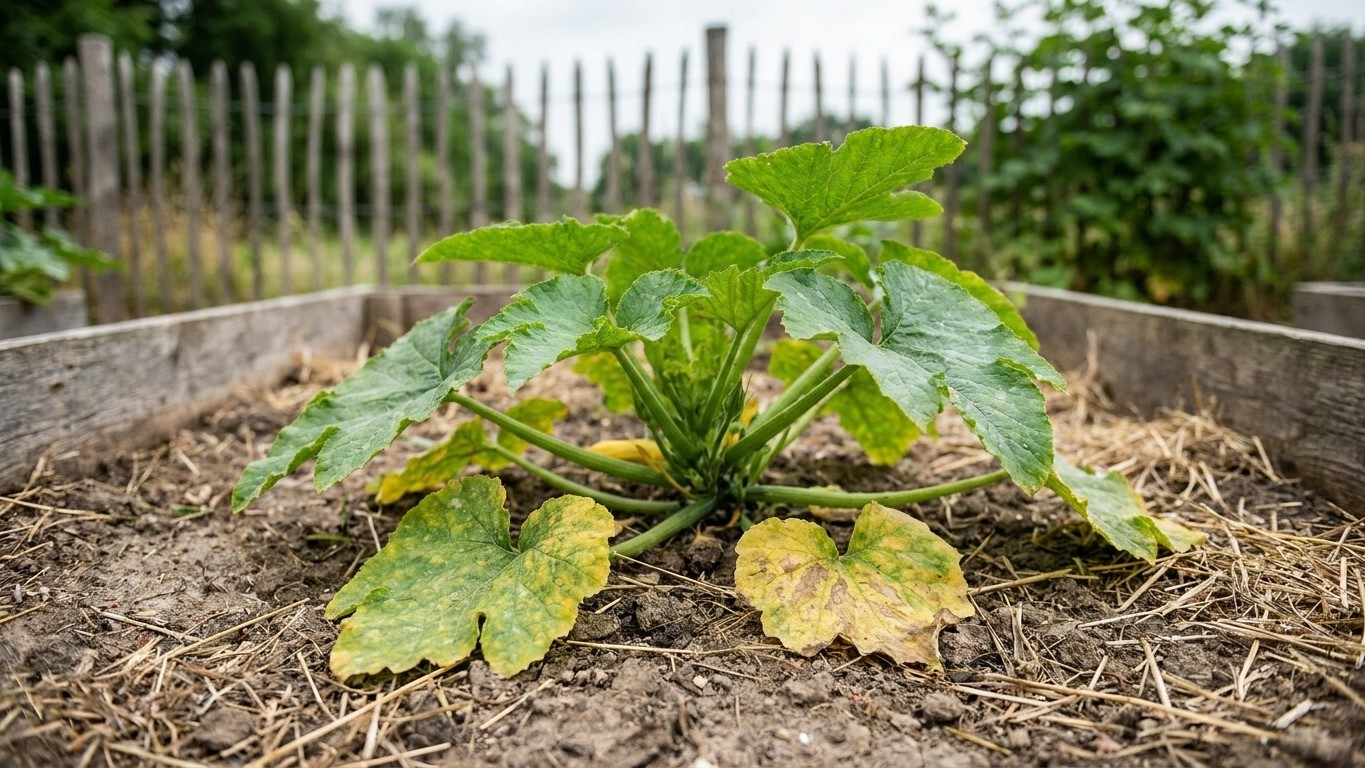

For most of West Virginia, butternut and acorn squash are the safest bet, followed by delicata and small kabocha. Hubbard and other giant, slow-curing types work in the river valleys but push their luck in the higher counties, where the growing season starts later and ends sooner than the state capital’s numbers suggest.
The short answer for West Virginia
Start from the frost dates at the reference station in Charleston, the closest full climate record for the state. The last spring freeze there falls between April 9 and April 23, and the first fall freeze arrives between October 18 and November 1. Stack those two windows against each other and the frost-free stretch runs between 178 and 206 days, depending on where in each window a given year lands. That is long enough, in the valley, for nearly every winter squash sold in a seed catalog, including the 100-to-115-day Hubbard types that other states have to skip.
Heat load is the second variable, and it points a different way. Charleston averages only 16.0 days a year at or above 90°F. That is a moderate number, not a hot one. It means the squash that struggle here are not the ones needing warmth to set fruit, they are the ones needing a long stretch of dry heat to cure a thick rind before storage. Winter squash cure best with warm, airy weather in the final two to three weeks before harvest, and West Virginia’s summers, humid and rain-fed rather than dry and blazing, don’t hand that over as reliably as a place like Kansas or Nebraska does.
That combination, a long enough season but a humid rather than a scorching one, favors squash types that mature at a moderate pace and cure quickly once cut, over types bred for arid climates with long dry autumns.
Squash types ranked for West Virginia’s season
| Type | Typical days to maturity | Fit for West Virginia |
|---|---|---|
| Acorn | 80-95 | Strong fit, cures fast, forgiving of a shorter effective season |
| Delicata | 80-100 | Strong fit, thin rind cures quickly in humid air |
| Butternut | 90-110 | Strong fit, solid stem resists squash vine borer, common statewide |
| Buttercup / Kabocha | 95-110 | Good fit in valleys, needs a full season to sweeten |
| Hubbard / Blue Hubbard | 105-120 | Workable in the valley, risky at elevation |
What will not work here
The type most likely to disappoint is the giant, slow Hubbard-family squash planted anywhere but the lowest valleys. A 115-day squash needs every one of those days to fill out and harden its shell, and in a county sitting well above Charleston’s elevation, the effective frost-free window can run considerably shorter than the 178-to-206-day range measured at the reference station. A vine still setting fruit in late September, with a first freeze arriving weeks earlier than the valley average, ends up with soft-shelled squash that rot within a month instead of storing through winter.
Weekly watering schedules built for a drier climate also fail here, just not for the reason gardeners expect. West Virginia’s summer rain is not thin, it totals about 13.8 inches across June, July and August, with July alone averaging 5.38 inches. The problem is how it arrives: as thunderstorms that dump an inch or more at once and run off rather than soak in, followed by stretches dry enough that a shallow-rooted vine still wilts. A once-a-week soak misses both halves of that pattern. Squash in this state need a rain gauge check after each storm, not a calendar reminder.
Tight spacing is the third common failure, and it is a humidity problem more than a heat problem. With only 16 days a year above 90°F, mildew and fungal blight, not heat stress, are what actually take down a squash patch here. Vines planted at the spacing recommended for a dry Western state trap moisture between leaves after every storm and stay damp long enough for powdery mildew to take hold, especially once August’s relatively lighter rain (3.75 inches, the driest of the three summer months) still leaves the air humid even as the soil dries. Leaving at least 4 to 5 feet between hills and orienting rows to catch prevailing airflow does more to prevent disease loss here than any fungicide schedule.
What changes across West Virginia
The USDA Plant Hardiness Zone Map places the state across a genuinely wide band, zone 5a to zone 7a, based on average annual extreme minimum winter temperature. That is not a rounding difference. It is the gap between a mild Ohio River Valley winter and a mountain winter closer to what New England sees, and it changes far more than which perennials survive.
A grower in the lower elevations along the Ohio or Kanawha valleys, close to the 7a end of that range, works with something close to Charleston’s own numbers: the longer end of the 178-to-206-day frost-free season and a summer that occasionally brushes 90°F. A grower higher in the Alleghenies or in the eastern panhandle’s higher ground, closer to 5a, faces a shorter growing season, a later last frost, and an earlier first one, none of which show up in the Charleston-based figures cited above, because those numbers come from a river-valley station and the caution attached to them says so directly.
The practical shift for anyone gardening toward the cooler end of that range is to lean harder on the fast end of the squash lineup, acorn and delicata over Hubbard, and to start seedlings indoors rather than direct-seeding, buying back the weeks a shorter season takes away. This page can’t tell an individual reader which zone their own garden sits in. The USDA’s hardiness zone map, searchable by ZIP code, settles that question in about ten seconds.
Where to check this for your own county
Everything above comes from a single reference station in Charleston, and West Virginia’s terrain makes that station a poor stand-in for the whole state. The next step, for anyone gardening outside the Kanawha Valley, is the WVU Extension service, the land-grant office responsible for county-level agricultural guidance across the state.
Two things there matter more than anything on this page. The first is the county-specific planting calendar, built from local frost records rather than a single valley station, which will show whether a given county’s safe planting window runs earlier, later, or roughly in line with the dates cited here. The second is the list of squash varieties that county agents have actually trialed in local demonstration gardens, information a general statewide page has no way to include, because performance in an Eastern Panhandle orchard county and performance in a southern coal-country hollow can differ enough to matter.
A county-level recommendation beats a state-level one every time, for the simple reason that it is built from closer, more specific data. This page describes West Virginia broadly, using one river-valley station’s climate normals as its anchor. A county extension office describes one piece of that state, using records collected there. Contacting the local WVU Extension office before finalizing a planting plan is the single step most likely to correct whatever this page gets wrong for a specific address.
Checking this against your own garden
No planting calendar, state or county, replaces what a gardener can see and feel in their own soil. Three signs, checked without any equipment, tell a grower more about their own microclimate than any date on this page.
The first is soil temperature by hand. Squash seed sits and rots in cold, wet soil rather than germinating; soil that feels merely cool to bare fingers, not cold, and dry enough not to cling in a clump, is close to ready. The second is the first flush of male flowers, which open days ahead of the female flowers that actually set fruit. Their appearance is a plant-confirmed signal that the vine considers conditions warm enough to reproduce, regardless of what the calendar says.
The third is the speed of true leaves after germination. Seedlings that push out their first true leaves within 10 to 14 days of sprouting are growing in conditions close to ideal for that spot; a slower emergence, even from the same seed packet planted the same week, usually points to a colder or shadier microclimate than the surrounding county average, the kind of local variation that no frost-date table, state or county, can fully capture.