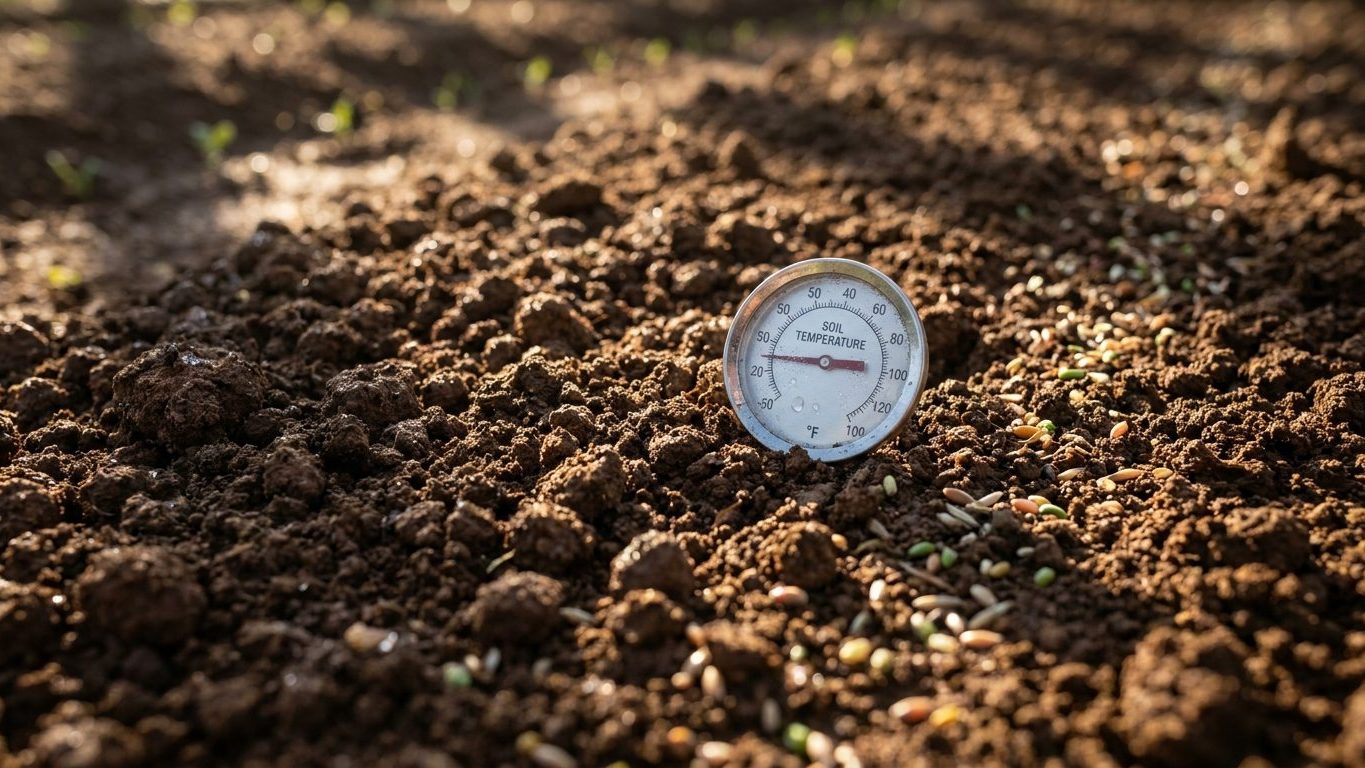

In most of Maryland, cover crops can go into the ground once soil temperatures climb into the mid-50s, which usually happens two to three weeks after the last frost risk fades in spring, and again in early fall as the summer garden winds down. The exact date shifts with your county and your soil, but the mechanism behind it is the same everywhere in the state.
When the soil is warm enough in Maryland
Gardeners ask for a date, but the honest answer is a window. According to NOAA NCEI’s 1991-2020 Climate Normals for Maryland (based on 32°F freeze probabilities), the last spring frost typically falls between April 3 and April 16. That’s the 30-to-70 percent probability band, meaning even inside that window, frost is a coin flip in either direction some years, not a guarantee.
Here’s the part that trips people up: frost date and planting date aren’t the same thing. Frost measures air temperature at a specific hour. Cover crops don’t care about air temperature nearly as much as they care about soil temperature a few inches down, and soil lags behind air by days, sometimes weeks, depending on how much sun the bed gets and whether it’s covered in mulch or bare. A frost-free morning on April 10 doesn’t mean the soil has caught up yet. It often hasn’t.
What that means in practice is patience. Legumes like clover and vetch tend to germinate once soil hits the mid-40s to low-50s range, while warm-season options wait longer, often into May, before they’ll push through with any vigor. Cool-season grains and brassicas are more forgiving and can go in earlier, closer to that April frost window, because they tolerate a cold snap without much damage.
Why the frost date is a starting point, not a rule
Treat April 3 to April 16 as the earliest the ground has a realistic shot at being workable and warm enough to matter, not as a countdown you set a calendar reminder for. Western Maryland, up in Garrett and Allegany counties, runs weeks behind this window because of elevation. The Eastern Shore, by contrast, tends to warm faster and can sometimes be sown a bit ahead of it. If you garden in either of those zones, lean on your own soil thermometer rather than a statewide average.
What governs how much seed you actually need per bed isn’t a number this page can responsibly hand you. Seeding rate depends on the species you choose, whether you’re broadcasting or drilling, and the source of your seed, and getting it wrong either wastes seed or leaves gaps weeds are happy to fill. The University of Maryland Extension publishes rate tables by species and method, and that’s the number worth trusting over a generic figure.
Termination is the other piece people ask about early, and it’s simpler than it sounds: no herbicide needed. Mowing, crimping, or simply letting a hard frost do the work are the standard mechanical routes, and which one you pick depends on the species and how far along it is when you’re ready to plant your next crop.
How long the season lasts here
Maryland’s frost-free season, bookended by that April 3-16 spring window and a first fall frost landing between October 26 and November 5 (same NOAA NCEI 1991-2020 normals), runs somewhere in the range of roughly 193 to 216 days depending on where in those two windows your particular fall lands relative to your particular spring. That’s a rough six and a half to seven months of growing room before the ground shuts down for winter.
That’s a genuinely long window by national standards, and it changes what’s worth attempting. A gardener in a shorter-season state might get one shot at a cover crop between harvest and hard frost. Here, there’s often enough daylight and warmth left after a summer vegetable bed clears out in August or September to grow a full cover crop cycle, let it establish real biomass, and still have time to terminate it before the ground truly locks up in November.
It also opens the door to succession sowing, planting a second round of cover crop, or staggering plantings across different beds so soil is never bare for long stretches. If your garden empties out in stages rather than all at once, which is typical when you’re pulling tomatoes in September but cleared the peas back in July, that long shoulder season lets you match the cover crop to each bed’s actual clearing date instead of waiting for one big fall planting day. The site’s succession sowing guide walks through how to stagger those windows so nothing sits idle.
What a shorter local window changes
Not every Maryland garden gets the full six-and-a-half months. In Garrett County’s higher elevations, both ends of that window compress, spring arrives later and fall arrives sooner, which shrinks the usable season and makes a single fall sowing the more realistic plan rather than two. In that situation, the choice of species matters more than the calendar, since a slower-establishing option loses the argument against one that gets full ground cover before the first hard freeze locks things down. It’s also where transplanting instead of direct-seeding a fall cover crop can pay off, since a few weeks’ head start under lights or in a cold frame recovers time the compressed window would otherwise cost you.
Heat and water in Maryland
For most vegetable crops, the summer heat and humidity numbers drive the conversation. For cover crops, the real story is winter, because that’s what decides whether a species survives to spring or dies back on its own and becomes mulch. Baltimore’s coldest month averages a daily minimum of 25.4°F, according to NOAA NCEI’s 1991-2020 Climate Normals, and that single figure does more to shape a Maryland cover crop plan than any summer statistic.
That 25.4°F average low sits solidly in USDA Hardiness Zone territory that spans 5b to 8a across the state, per the USDA Plant Hardiness Zone Map (2023 edition, built on 1991-2020 normals). That’s a wide range for one state to cover, and it matters which end you’re on. Baltimore, as the reference point, lands somewhere in the middle of that spread, while the mountainous west runs colder and the Eastern Shore runs milder. A recommendation dialed in for Baltimore’s winter won’t necessarily hold for Garrett County or for Ocean City, so treat the state figure as a starting point, not a verdict for your specific yard.
Here’s why that cold snap number matters more than it sounds like it should: some cover crop species are killed outright by a hard winter, turning into a dead mat of mulch by spring that never needs mechanical termination at all. Others shrug off 25.4°F lows and keep growing, which means they’ll need to be mowed or crimped by hand before you can plant into that bed. Get the species wrong for your zone, and a plant meant to die back conveniently becomes a weed instead, still standing and setting seed right when you wanted the bed clear.
This page isn’t going to walk through a specific days-above-90°F count or a summer rainfall figure for Maryland, because pinning a cover crop decision to a hot, wet summer misses the point. Cover crops here are a fall-to-spring project far more than a summer one. The one summer-adjacent detail worth knowing: Maryland’s humidity doesn’t disappear once the leaves change, and damp, mild fall stretches can invite mildew on a cover crop stand that’s left too dense or too wet at the base, which is one more reason airflow and a clean termination timeline matter as much as the species you pick.
Which cover crops suit Maryland
The right family of cover crop for a Maryland garden comes down to three things: how much season you actually have left, how cold your specific winter runs, and how much humidity your beds sit in. None of that gets solved by a species name pulled from a national list, because a cultivar bred and trialled for a dry Midwestern winter isn’t the same plant performing under Baltimore’s 25.4°F average lows or the Eastern Shore’s milder ones.
As a rule of thumb by type: legumes are the group most gardeners reach for when the goal is feeding the soil ahead of next year’s vegetables, since they partner with soil bacteria to pull nitrogen from the air rather than needing it added, though how much nitrogen ends up available to your next crop depends on the species, how much biomass it built, and when and how you terminate it, not on a number this page can hand you. Cool-season grains handle Maryland’s spring and fall frost windows without much fuss and are often the easiest entry point for a first-time cover crop bed. Brassicas break up compacted soil with an aggressive root system and tend to winter-kill reliably in the colder parts of the state, which is exactly the outcome you want if you’d rather not mow anything come spring.
Why this page won’t name a variety
Naming a specific cultivar here would be a disservice, not a shortcut. Seed performance varies by soil type, by which side of the state you garden on, and by results from actual trial plots, and the University of Maryland Extension runs and publishes exactly those local trials. Their variety recommendations reflect what’s actually been tested against Maryland winters and Maryland humidity, county by county, which is a level of specificity no general article can responsibly replicate. That’s the resource worth checking before buying seed, not a generic list ranked for a national audience.
The same logic applies to seeding rates and to termination: rates depend on species, method, and seed source, and termination on this site means mechanical work, mowing, crimping, or simply letting a hard frost finish the job, never a chemical shortcut. Match the type to your season length and your winter, confirm the specific variety with your local extension office, and the rest of the plan follows from there.