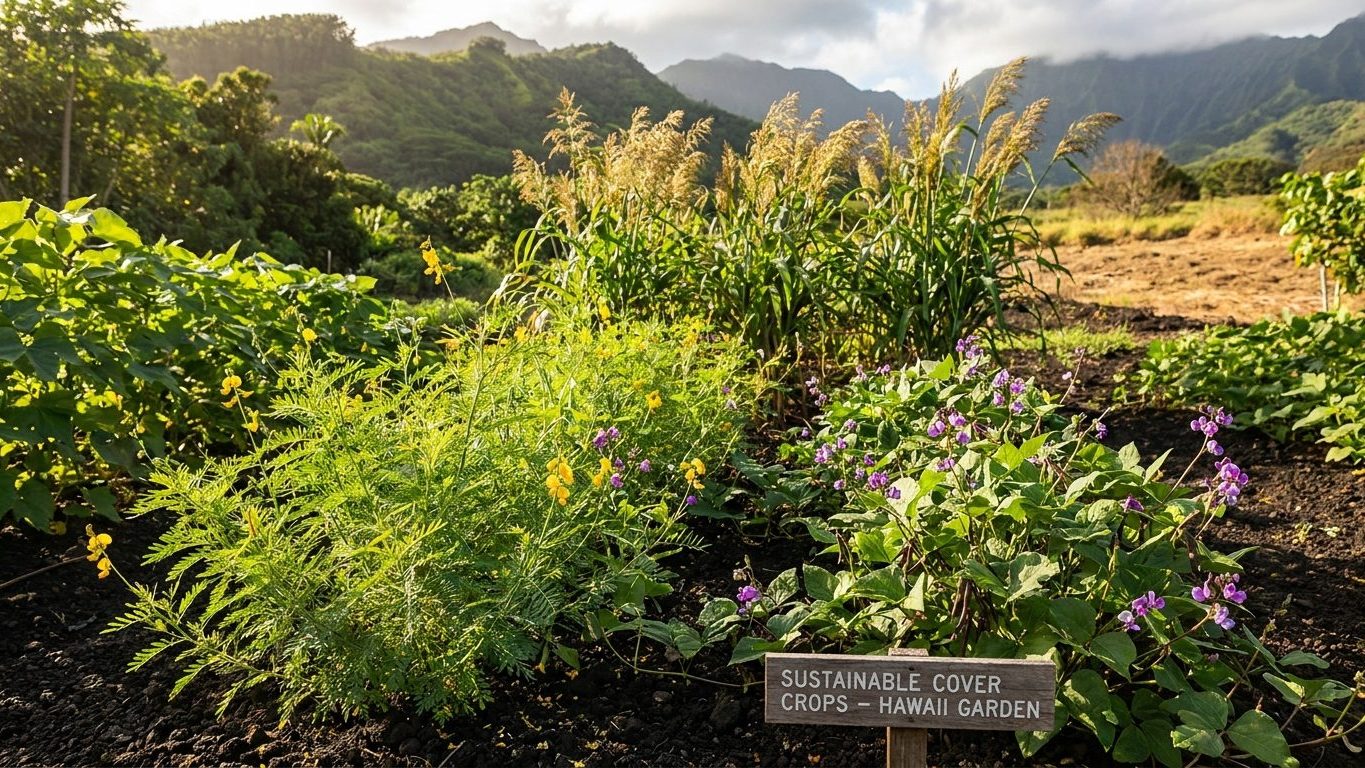

Winter cereal rye, crimson clover, and hairy vetch are the strongest full-season choices for Delaware gardens and farms, thanks to a coldest-month mean minimum of just 25.6°F that lets true winter-hardy species keep growing straight through the cold months. Buckwheat fills the short summer gaps between cash crops. Oilseed radish works, but with a catch explained below.
The short answer for Delaware
Delaware’s frost window runs from a last spring frost of April 3 to April 14 down to a first fall frost of October 26 to November 7, at the reference station used by NOAA (USW00013781). That gives a frost-free stretch of roughly 195 to 218 days, plenty of room to squeeze a fall cover crop in after a summer harvest and still have it established before the ground cools for good.
The number that actually decides which species survive here is the coldest month’s mean daily minimum: 25.6°F. That’s mild by Mid-Atlantic standards, and it changes the math on which cover crops behave the way their seed packet promises. Cereal rye shrugs off temperatures far colder than that and keeps some green tissue through most Delaware winters. Crimson clover and hairy vetch, both rated hardy into USDA zone 6, treat a 25.6°F average minimum as an easy winter, not a stress test.
The type of cover crop to pick depends on what job needs doing, not just what survives:
| Goal | Best type for Delaware | Why it fits the frost numbers |
|---|---|---|
| Full winter ground cover | Cereal rye | Handles cold well below 25.6°F, keeps growing into late fall |
| Nitrogen for spring vegetables | Crimson clover or hairy vetch | Winter-hardy in zone 7a-8a, no winterkill expected in a mild year |
| Loosening compacted soil | Oilseed radish | Grows fast in the fall window, but may not reliably winterkill here |
| Filling a short summer gap | Buckwheat | Fast growth suits the warm months, killed cleanly by the first fall frost |
Anyone planting a mix should lean on the legumes and cereal rye for the bulk of the acreage or bed space, and treat radish and other winterkill-dependent species as a bonus rather than the backbone of the plan.
What will not work here
Cover crops that are marketed as “reliable winterkill” species are the ones most likely to disappoint a Delaware gardener. Oats and oilseed radish are typically sold on the promise that cold will finish them off by spring, leaving a dead mat of residue that’s easy to plant into. That promise assumes winters colder than what Delaware actually delivers. With a coldest month mean minimum of 25.6°F, both crops can survive a mild winter here, especially in the milder pockets of the state, leaving a live stand that needs mowing or tilling in spring instead of the dead mulch the plan called for.
Dense, tightly spaced stands of any cover crop run into trouble in a Mid-Atlantic summer, not because of heat and drought, but because of humidity. Delaware summers are humid, not arid, and a thick planting of buckwheat or a legume like cowpea, seeded at rates meant for a drier climate, holds moisture between plants long after a rain. That’s the setup for powdery mildew and root rot, not for a thriving stand. Thinner spacing or a lower seeding rate than the bag recommends for a dry-climate garden is the safer call here.
Late fall planting is another trap. A gardener who harvests tomatoes or peppers in late September and then tries to establish a clover or vetch stand is racing a first frost that can arrive as early as October 26. Legumes generally need several weeks of real growth before cold slows them down, and a planting squeezed into the last three weeks before that early end of the frost window often barely germinates before growth stalls. The fix isn’t a different species, it’s an earlier planting date, worked backward from the early end of that frost range rather than the late end.
Finally, cover crops bred for much colder winters than Delaware sees, the kind sold for northern Plains or upper Midwest rotations, add nothing here. Their extreme cold tolerance is wasted, and growers usually pay for that trait in seed cost without gaining anything a standard cereal rye or crimson clover wouldn’t already deliver at 25.6°F.
What changes across Delaware
Delaware sits across USDA hardiness zones 7a to 8a, according to the USDA Plant Hardiness Zone Map’s 2023 edition, built from 1991-2020 average annual extreme minimum temperatures. That’s not a wide spread compared to a mountain state, but it’s enough to change how confidently a grower can lean on winter survival or winterkill.
The northern part of the state, closer to the Wilmington reference station used for the frost and coldest-month figures above, sits toward the cooler 7a end of that range. A grower there can expect the cold-hardy species, cereal rye, hairy vetch, crimson clover, to behave close to the numbers cited here, and can expect oats and radish to have a somewhat better chance of the winterkill they’re often planted for.
Further south and toward the coast, conditions shift toward 8a, milder winters, and a first fall frost that may run later within the October 26 to November 7 window. In that milder end of the state, the winter-hardy legumes and cereal rye have even less trouble, but the winterkill-dependent species become less predictable still. A radish or oat stand planted there is more likely to need mechanical termination in spring rather than dying on its own.
There is no single answer for the whole state on this point, only a range from 7a to 8a. A grower shouldn’t guess which end of that range applies to their own address. The USDA Plant Hardiness Zone Map is the tool built for that question, and checking it against a home address is a five-minute step worth taking before ordering seed based on numbers meant to describe the entire state.
Where to check this for your own county
Everything above describes Delaware as a whole, built from one reference weather station and a statewide hardiness zone range. A county-level recommendation from a local Cooperative Extension office will always beat a state-level page like this one, because it accounts for local soil, local microclimate, and years of trial data specific to that county rather than a single airport station.
The University of Delaware Cooperative Extension is the office to check. Two things are worth looking for there specifically. First, a local planting calendar for cover crops, which will adjust the fall planting window described above for the actual county rather than the Wilmington-area frost dates used on this page. Second, any variety trial results for that county. Extension offices routinely test cereal rye, clover, and vetch varieties against local disease pressure and local winters, and a variety that performs well in trials run in New Castle County isn’t automatically the same recommendation that would come out of a Sussex County trial closer to the coast.
A call or visit to the local extension office also answers a question this page can’t: how the current season’s actual weather compares to the 1991-2020 averages cited here. Climate normals describe a 30-year pattern, not what’s happening in the ground this particular fall. Local extension staff and county agents track that in real time, and that’s exactly the kind of detail that turns a statewide estimate into a planting decision worth acting on.
Checking this against your own garden
Every frost date and hardiness figure on this page describes an average. The soil in front of a grower on any given day outranks all of it, and three simple checks tell more than a calendar ever will.
The first is soil warmth, felt by hand a couple of inches down. Cereal rye and clover germinate in cool soil and don’t need much convincing, but a stand that goes in when the soil still feels genuinely cold, not just cool, tends to sit and sulk rather than grow. That feel is a better guide to timing than counting days from a frost date built from an airport station.
The second is watching for the first sign of frost damage on tender leaves, blackened or wilted tips on a buckwheat or squash leaf. That tells a grower a frost happened at their specific address that morning, regardless of what the forecast said for the wider region, and it’s the clearest confirmation that the growing season for tender crops has actually ended there.
The third is comparing how fast true leaves appear on the same cover crop seeded in two different spots in the same yard, a low corner versus a spot near a south-facing wall, for instance. A noticeable lag in one spot points to a cooler microclimate right there, whether from shade, drainage, or elevation, and that’s worth remembering the next time seed goes in the ground, no matter what a statewide page says the average date should be.