
South Dakota gardeners plant cover crops in two windows: once the spring frost risk fades and the soil itself warms, and again in late summer ahead of the first fall freeze. The state’s cold winters, with a coldest-month minimum around 8.5°F, do most of the termination work without any help from you. What actually changes the answer is your county’s own frost timing and which species can survive that cold without becoming a spring chore you didn’t plan for.
When the soil is warm enough in South Dakota
The date question comes first, so here it is: at the reference station used for this page (USW00014944), the last spring frost falls somewhere between April 29 and May 9, based on NOAA’s 1991-2020 climate normals. That’s not a single day. It’s a probability band, and it applies to one weather station, not to every yard in the state. Gardens outside town, at elevation, or in low-lying frost pockets typically see their last frost land later than this window, sometimes by one to two weeks. Check your own county’s data before you trust this figure with your seed.
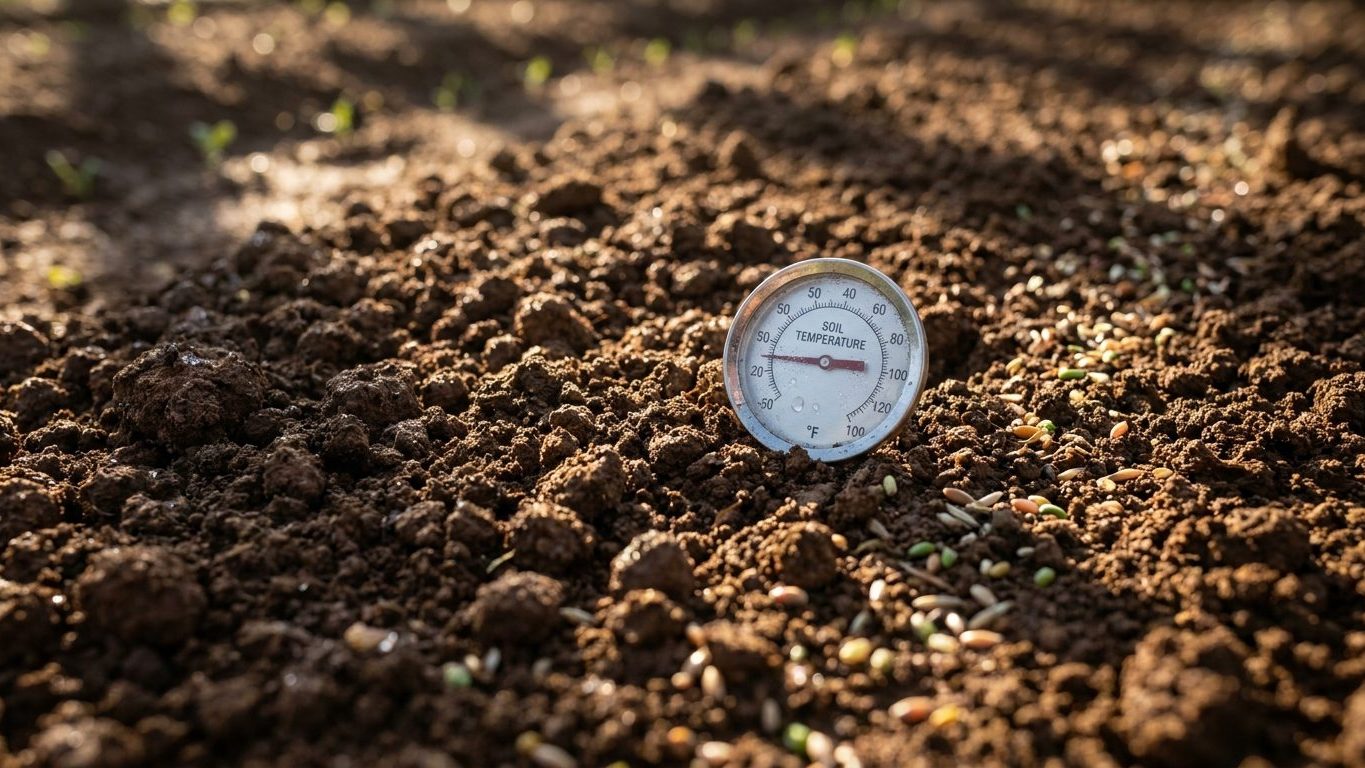
Here’s the part that trips people up: frost date is a stand-in for the real thing you’re waiting on, which is soil temperature, not air temperature. A morning with no frost risk can still sit over ground that’s barely above 40°F, especially after a wet spring or under heavy clay that holds cold longer than sandy loam. Cover crop seed germinates on soil temperature, not on the calendar, so treat the frost window as the earliest reasonable date, not the day you sow.
What goes in the ground, and when
Cool-season species tolerate the lag best. Oats, field peas, and brassicas like radish or turnip germinate in cool soil and don’t mind a cold snap right after emergence. Buckwheat waits longer, since it’s frost-tender and won’t forgive an early gamble. Warm-season options such as cowpeas or sudangrass need soil that’s properly warmed, generally weeks past that last frost window, not days.
Seeding rate is where a lot of good intentions go wrong. Rate depends on the species, the seeding method (broadcast versus drilled), and even the seed lot’s germination percentage, so there’s no single number that works across a state this size. Your best move is a call to South Dakota State University Extension, where the rate recommendations are tied to the actual conditions of this region.
Termination here is mechanical, not chemical. That means mowing, crimping, or simply letting a hard frost do the job on a tender species. No herbicide step belongs in this plan, and none is needed if you time your planting and your kill correctly.
How long the season lasts here
Take the safe end of both frost windows, the latest likely spring frost (May 9) and the earliest likely fall frost (September 24), and you get a growing window of roughly 138 days, call it four and a half months. That’s the conservative number, built from both official dates in the record, not a guess filling in a gap.
What does 138 days actually allow? Enough time for one full cover crop cycle from seed to maturity if you sow right after the spring frost risk clears, then terminate before a summer vegetable crop goes in. It’s also enough time, if you’re efficient, to run a short cool-season cover crop in spring, follow it with a fast vegetable planting, and still get a second cover crop established in late summer ahead of the fall frost. What it does not give you is the long shoulder season that southern gardeners use to stack three or four plantings back to back. In South Dakota, the fall window is the one you can’t waste, since anything sown too late won’t establish enough root or top growth before a hard freeze shuts things down.
This is also where the transplant question gets interesting. Since the window is moderate rather than generous, starting a cover crop from a root check or a quick indoor start can buy you an extra week or two of usable growing time on the back end, which matters more here than it would in a longer-season state. If you’re weighing that tradeoff, our succession sowing guide walks through how to stack plantings inside a window this size without running out of season.
Heat and water in South Dakota
For most vegetable crops, the summer heat count and the rainfall total decide the plan. For cover crops in this state, that’s not where the real decision sits. The number that actually drives everything here is winter cold, specifically the coldest month’s average daily minimum, which sits at 8.5°F at the Sioux Falls reference station, inside a hardiness zone range of 3b-5b across the state.
That cold does something useful: it decides which species die back on their own and which ones survive to become a spring problem. A cover crop that reliably winterkills at 8.5°F, something like oats or most brassicas, turns into a dead mat of mulch by the time the ground thaws, no mowing or tilling required. A cover crop bred for winter hardiness, like cereal rye, shrugs off that same cold and comes back green in spring, which means you now own a mechanical termination job, mowing or crimping it down before it sets seed and turns from a cover crop into next year’s weed problem.
This is the opposite of the calculation gardeners make in a mild climate, where the same rye or vetch would winterkill on its own and a species like oats would need active management because it never dies back at all. In South Dakota, the cold does the sorting for you, but only if you pick the species with that cold in mind rather than picking whatever’s cheapest or easiest to find.
The first fall frost also sets a hard boundary on your last useful sowing date. Anything planted too close to that September 24-October 4 window won’t have time to put down enough root before the freeze arrives, and a thin, poorly rooted planting doesn’t protect soil over winter the way a mature stand does. Sow late-summer cover crops with real margin, not right up against the frost date on the calendar.
Which cover crops suit South Dakota
Choose by type first, not by brand or variety name, because the type tells you how it behaves against this state’s winter. Three broad groups cover most of what works here.
- Winterkill species (oats, most brassicas like radish or turnip, and some pea varieties): these die back at or below the coldest-month minimum here, leaving a mulch layer with zero spring termination work.
- Winter-hardy species (cereal rye, hairy vetch in the milder pockets of the 3b-5b range): these survive the winter and need a mechanical kill, mowing or crimping, before they set seed in spring.
- Warm-season fillers (buckwheat, cowpeas, sudangrass): useful for a short summer window between two other plantings, but they won’t survive any frost at all, spring or fall.
Disease pressure and airflow matter less here than in humid, hot-summer states, since the dry pattern that follows the state’s cold winters tends to keep fungal issues down. Where humidity does spike after a wet spring, dense stands of any species benefit from a bit more row spacing than the bag suggests, simply to let the canopy dry out between rains.
What this page won’t do is name a specific cultivar, and that’s deliberate. The named varieties that actually perform well in a given county, tested against real Sioux Falls or Rapid City winters, are the only recommendation worth trusting, and that data lives with South Dakota State University Extension, not with a general guide like this one. The same goes for seeding rate and any legume’s nitrogen contribution: both depend on species, stand density, and how mature the crop is at termination, none of which this page can know for your specific plot. Get the local numbers, then let the state’s own winter do the sorting.